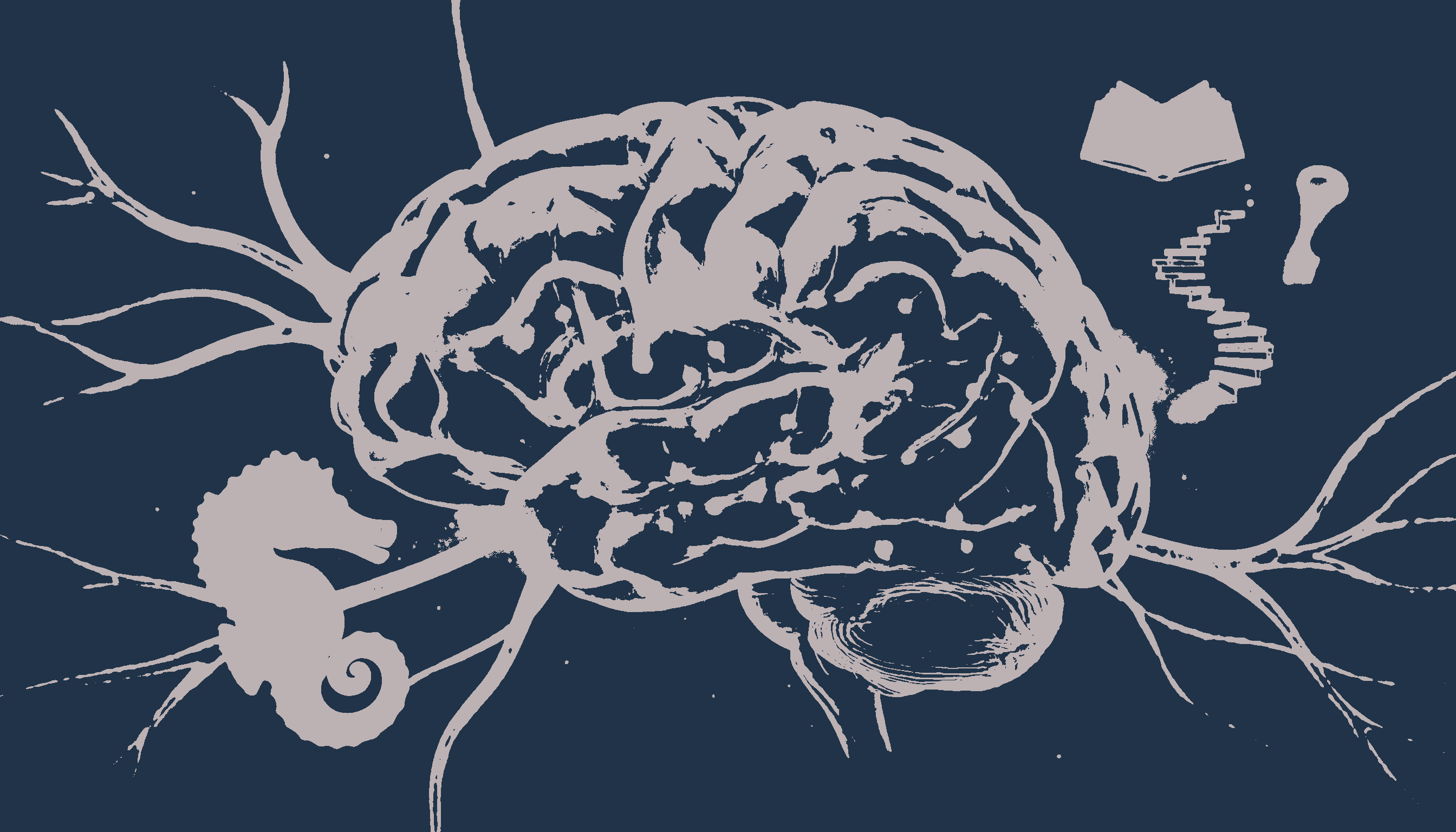
Brain Development and Memory Enhancement in 2026
A Comprehensive Guide to Optimizing Cognitive Performance
The human brain has long been one of science's greatest mysteries a three-pound organ responsible for every thought, memory, emotion, and decision we experience. For decades, researchers believed the brain was essentially fixed after childhood, a finished product incapable of significant change. Today, that view has been completely overturned. In 2026, the science of brain development and memory enhancement has evolved to a point where improving cognitive performance is not just possible it is increasingly practical, accessible, and evidence-backed.
Thanks to breakthroughs across neuroscience, artificial intelligence, and cognitive science, we now understand that the brain is a dynamic, adaptable organ capable of meaningful growth at any stage of life. Whether you are a student preparing for exams, a professional seeking sharper focus, or an older adult looking to preserve mental clarity, the tools and strategies available today are more powerful than ever before.
What Is Neuroplasticity and Why It Matters
At the core of modern brain science lies a single transformative concept: neuroplasticity. Neuroplasticity refers to the brain's remarkable ability to reorganize itself by forming new neural connections throughout life. This capacity for structural and functional change is what makes learning, memory, and recovery from brain injury possible.
When you learn a new skill, repeat a behavior, or expose yourself to a new environment, your brain physically rewires itself. Neurons that fire together wire together meaning that repeated experiences strengthen the pathways associated with those experiences. This is why practice makes perfect, and why consistent habits shape not just behavior but brain structure itself.
The key benefits of neuroplasticity are wide-ranging:
- It supports lifelong learning by maintaining the brain's capacity to absorb new information
- It enhances memory retention by reinforcing neural pathways connected to meaningful experiences
- It enables recovery from brain injuries by allowing healthy regions to compensate for damaged ones
Modern research confirms that neuroplasticity is not limited to youth. Adults and even elderly individuals retain this capacity, meaning that cognitive improvement is never truly out of reach.
Brain Development Happens Throughout Life
One of the most important and liberating discoveries in neuroscience is that brain development does not stop in childhood or adolescence. For much of the twentieth century, scientists believed that the brain was largely fixed by early adulthood that whatever neural architecture you developed by your mid-twenties was essentially what you were stuck with. We now know this to be false.
The adult brain continues to generate new neurons in certain regions, most notably the hippocampus, the area most closely associated with memory and learning. This process, known as neurogenesis, means that the brain has an ongoing capacity to create new cells and form new connections well into old age provided it is given the right conditions to do so.
What this means practically is profound:
- Your brain keeps evolving beyond childhood, shaped by every new experience and challenge
- Adults can still improve memory and intelligence through deliberate practice and lifestyle choices
- Aging does not mean automatic cognitive decline much of what we associate with aging brains is actually the result of lifestyle, not biology
This new understanding is reshaping education, mental health treatment, workplace productivity strategies, and how we think about aging. It offers hope not just to those worried about cognitive decline, but to anyone who wants to continue growing intellectually throughout their life.
How AI Is Transforming Memory Enhancement
Artificial intelligence is no longer just a tool for automation it is becoming a powerful ally in the pursuit of cognitive enhancement. In 2026, AI-driven applications are revolutionizing how we understand, monitor, and improve human memory and brain function.
Personalized learning systems powered by AI can now analyze an individual's cognitive patterns, identify weaknesses in memory retention, and deliver tailored training exercises that target those specific gaps. Rather than one-size-fits-all programs, these systems adapt in real time to the learner's progress, maximizing efficiency and engagement.
Brain activity tracking tools some non-invasive and wearable now allow researchers and individuals to monitor cognitive performance over time. These devices can detect patterns associated with optimal brain states, alerting users when they are most receptive to learning or most at risk of mental fatigue.
Perhaps most significantly, AI is enabling earlier detection of cognitive decline. By analyzing subtle changes in language patterns, memory test performance, and behavioral data, AI systems can flag early warning signs of conditions like Alzheimer's disease years before traditional symptoms appear opening a window for intervention that was previously unavailable.
How Memory Works: Latest Scientific Insights
Memory, once thought to be a single unified system, is now understood to be a complex and distributed network of processes. Recent research has fundamentally updated our picture of how the brain stores and retrieves information.
Memory is not stored in one location. Instead, different types of memory procedural, semantic, episodic, emotional are encoded and maintained across distinct but interconnected regions of the brain. The hippocampus plays a key role in forming new memories, while the prefrontal cortex is critical for working memory and decision-making. Long-term memories are gradually consolidated and distributed across the cortex through a process that occurs largely during sleep.
Crucially, memory is reconstructive rather than reproductive. When we recall a memory, we are not playing back a recording we are actively rebuilding it from fragments, influenced by our current emotional state, knowledge, and expectations. This makes memory both impressively flexible and surprisingly susceptible to distortion.
Key Insight: The brain has far greater storage capacity than previously believed some estimates suggest it can hold approximately 2.5 petabytes of information, equivalent to roughly three million hours of video.
The Role of Emotion in Memory Formation
One of the most powerful and consistent findings in memory research is the influence of emotion on what we remember. Emotionally charged experiences are encoded more deeply and retrieved more readily than neutral ones. This is why you can vividly remember where you were during a significant life event, but struggle to recall what you had for lunch three days ago.
The amygdala, the brain's emotional processing center, plays a central role in this phenomenon. When you experience something emotionally significant, the amygdala signals the hippocampus to pay close attention and strengthen the memory trace. This creates what researchers call a "flashbulb" effect a heightened clarity and durability of emotionally salient memories.
This has significant practical implications for learning and memory enhancement:
- Emotional experiences are far easier to remember than dry, abstract information
- Meaningful, personally relevant content improves retention dramatically
- Storytelling and narrative structures strengthen memory because they embed information in an emotional and relational context
Educators, trainers, and speakers who understand this principle know that engaging the emotions of their audience is not just good entertainment it is good neuroscience. When information connects to something you care about, it sticks.
7 Proven Ways to Improve Memory Naturally
While technology and neuroscience continue to advance, some of the most effective memory enhancement strategies remain grounded in basic, evidence-backed habits. Here are seven approaches with strong scientific support:
1. Exercise Regularly
Physical activity is one of the most powerful tools for brain health. Aerobic exercise in particular stimulates the release of brain-derived neurotrophic factor (BDNF), a protein that promotes the growth of new neurons and strengthens existing connections. Even moderate exercise such as a 30-minute walk five times a week has been shown to improve memory, focus, and processing speed.
2. Get Quality Sleep
Sleep is not a passive state it is when the brain does much of its most important work. During deep sleep, the brain consolidates the memories formed throughout the day, transferring information from short-term to long-term storage and clearing out metabolic waste products that accumulate during waking hours. Chronic sleep deprivation dramatically impairs memory formation and recall.
3. Eat Brain-Healthy Foods
The brain consumes approximately 20% of the body's energy despite making up only about 2% of its weight. Fueling it well matters enormously. Omega-3 fatty acids (found in fatty fish, walnuts, and flaxseeds) support neuronal membrane health. Antioxidant-rich fruits and vegetables protect against oxidative stress. A Mediterranean-style diet has been consistently linked to reduced cognitive decline and better memory performance in aging populations.
4. Practice Mindfulness and Meditation
Regular mindfulness practice has been shown to increase gray matter density in the prefrontal cortex, improve attentional control, reduce stress-related cortisol levels (which damage hippocampal cells over time), and enhance working memory capacity. Even ten to twenty minutes of daily meditation can produce measurable cognitive benefits within weeks.
5. Keep Learning New Skills
The brain thrives on novelty and challenge. Learning a new language, instrument, craft, or discipline forces the brain to form new connections and strengthen existing ones a process sometimes called "cognitive reserve." People with greater cognitive reserve demonstrate greater resilience against the effects of aging and neurological disease.
6. Use Memory Techniques
Ancient techniques like the method of loci ("memory palace"), spaced repetition, visualization, and active recall are not just folklore they are among the most evidence-supported strategies for improving memory retention. Spaced repetition in particular, which involves reviewing information at increasing intervals, exploits the brain's natural forgetting curve to lock information into long-term memory with remarkable efficiency.
7. Stay Socially Active
Human beings are fundamentally social creatures, and our brains reflect this. Regular social interaction stimulates multiple cognitive domains simultaneously language, emotion, theory of mind, memory providing a rich form of mental exercise. Studies consistently show that socially engaged individuals exhibit slower cognitive decline and better memory performance in later life.
What Are SuperAgers?
Perhaps the most inspiring evidence that memory enhancement is possible at any age comes from a group researchers have dubbed "SuperAgers" individuals over the age of 80 whose memory performance rivals that of people decades younger. Studies of SuperAgers have revealed that their brains are structurally distinct: they retain a thicker cortex and more neurons in memory-related regions than typical older adults, and they show lower levels of a protein associated with Alzheimer's disease.
What makes SuperAgers different? Research points consistently to lifestyle factors: lifelong physical activity, strong social connections, a sense of purpose, regular mental challenge, and a positive emotional outlook. SuperAgers are not immune to the passage of time, but they have intentionally or not maintained the habits that keep the brain vital and resilient.
Their existence is a powerful proof of concept: aging does not equal cognitive decline. The brain's trajectory is shaped far more by how we live than by the simple fact that we are getting older.
The Future of Brain Development and Memory Enhancement
The coming decade promises even more dramatic advances in our ability to understand and enhance the brain. Several emerging technologies are poised to reshape what is possible:
- Brain-computer interfaces (BCIs) are moving rapidly from the laboratory toward clinical and eventually consumer applications. These devices, which create direct communication pathways between the brain and external computers, may eventually enable individuals to augment memory, accelerate learning, or restore cognitive function lost to injury or disease.
- Non-invasive brain stimulation techniques including transcranial magnetic stimulation (TMS) and transcranial direct current stimulation (tDCS) are already being used in research and clinical settings to enhance attention, working memory, and learning. As these technologies become more refined and accessible, they may become standard tools for cognitive optimization.
- Cognitive enhancement therapies, informed by advances in genetics, pharmacology, and AI, are being developed to target the specific molecular and cellular mechanisms underlying memory formation and decline.
The frontier of brain science is expanding rapidly, and with it, the realistic possibilities for human cognitive enhancement. What was once the domain of science fiction the ability to meaningfully boost memory, accelerate learning, or protect the brain against the effects of aging is becoming the domain of clinical research and practical application.
Conclusion
The story of brain development and memory enhancement in 2026 is ultimately a story of possibility. The old narrative that the brain peaks in youth and declines from there has been replaced by a far more hopeful and accurate picture: a brain that remains adaptable, improvable, and responsive to how we treat it throughout the entirety of our lives.
The strategies are not secrets. They are grounded in rigorous science, accessible to virtually anyone, and their effects compound over time. The most powerful investment you can make in your cognitive future is not a supplement or a gadget though technology increasingly plays a supporting role but a sustained commitment to the habits, experiences, and relationships that keep the brain growing. Your brain is not a fixed resource. It is a living, dynamic system, and it is waiting for you to challenge it.
Ready to put this into practice?
Free quizzes and a new daily challenge — play in about 2 minutes, no sign-up.
Train Your Brain Today GK Practice Quiz