Politics Quiz

Answer all 10 questions

Time Remaining --:--
Time Elapsed 00:00

0 / 10 answered

Answered 0 / 10
0%

Question Navigator

Done Flagged Pending

Difficulty Breakdown

Easy 6 questions
Medium 3 questions
Hard 1 questions
Sound Feedback
Sound On

Politics Quiz

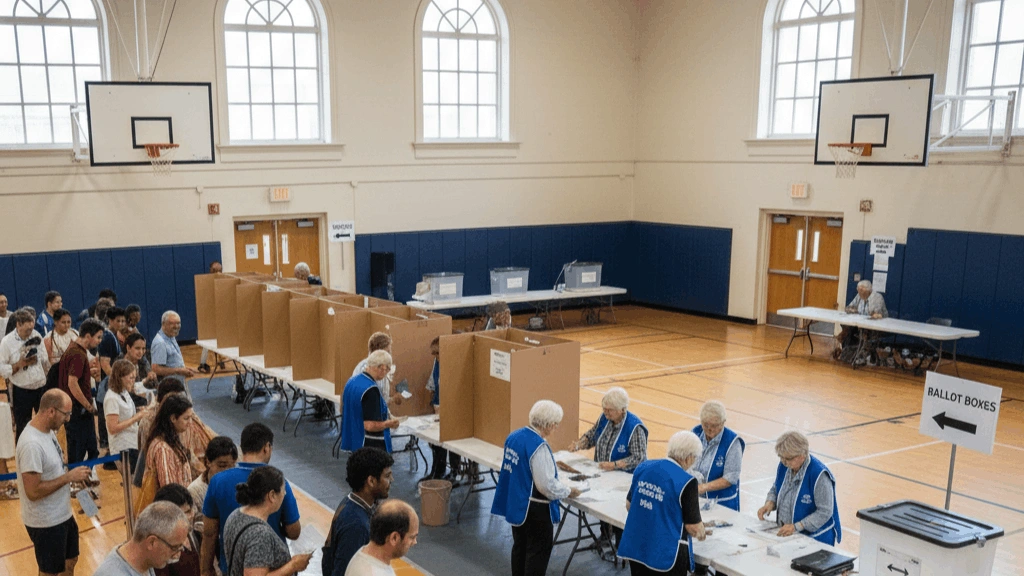
Politics is the study and practice of how power is organised, contested, and exercised within societies. It covers political systems ranging from democracies and republics to authoritarian regimes and monarchies; the workings of governments and parliaments; electoral processes; and the ideologies — Read more

10 Questions ~5 min 6 Easy 3 Medium 1 Hard
Difficulty Filter All 10 questions

Q1. Who led the Bolshevik Revolution in Russia in 1917?

Easy
A
Leon Trotsky
B
Joseph Stalin
C
Vladimir Lenin
D
Karl Marx
Time on this question: 0s

Q2. Which philosopher wrote 'Leviathan' arguing for a strong central government?

Medium
A
John Locke
B
Jean-Jacques Rousseau
C
Thomas Hobbes
D
Immanuel Kant
Time on this question: 0s

Q3. What is a 'signing statement'?

Hard
A
President's written approval of a bill
B
A presidential document interpreting a new law
C
A veto message
D
An executive order
Time on this question: 0s

Q4. What is the term for the principle that no one is above the law?

Easy
A
Democracy
B
Separation of Powers
C
Rule of Law
D
Civil Liberty
Time on this question: 0s

Q5. What is a 'caucus' in US politics?

Easy
A
A formal ballot
B
A local meeting to select party candidates
C
A Senate committee
D
A presidential debate
Time on this question: 0s

Q6. What is a 'unicameral' legislature?

Easy
A
A parliament with two chambers
B
A parliament with one chamber
C
A parliament with three chambers
D
A military legislature
Time on this question: 0s

Q7. Which leader unified Italy in the 19th century?

Medium
A
Giuseppe Mazzini
B
Count Cavour
C
Giuseppe Garibaldi
D
Victor Emmanuel II
Time on this question: 0s

Q8. Which ideology is associated with Ayn Rand's philosophy of individual achievement?

Medium
A
Collectivism
B
Objectivism
C
Communitarianism
D
Egalitarianism
Time on this question: 0s

Q9. Which country's parliament is called the 'Duma'?

Easy
A
Ukraine
B
Poland
C
Belarus
D
Russia
Time on this question: 0s

Q10. What is the significance of the Universal Declaration of Human Rights (1948)?

Easy
A
First trade agreement
B
First global statement of fundamental human rights
C
First nuclear treaty
D
First environmental agreement
Time on this question: 0s