Economics / Finance & Investment 0 / 10 answered
--:--
00:00 elapsed

What is 'Liability'?

A
Something a epeerson or company owes
B
A profit
C
An investment
D
An asset
Time on this question: 0s

What is 'Venture Capital'?

A
Personal savings
B
Funding for startups/new firms
C
Government debt
D
Money for old firms
Time on this question: 0s

A company that owns, oepeerates, or finances income-generating real estate and allows retail investors to buy shares in its portfolio is called a:

A
Mortgage Backed Security (MBS)
B
Collateralized Debt Obligation (CDO)
C
Sepeecial Purpose Acquisition Company (SPAC)
D
Real Estate Investment Trust (REIT)
Time on this question: 0s

In stock trading, what is a "short sale"?

A
Buying a stock and holding it for less than a year to avoid long-term capital gains
B
Selling a stock quickly because it is losing value
C
Buying a fraction of a single share because the full price is too high
D
Selling borrowed shares with the hoepee of buying them back later at a lower price
Time on this question: 0s

What is 'ROI'?

A
Return on Income
B
Return on Investment
C
Rate of Inflation
D
Risk of Investment
Time on this question: 0s

A graphical representation showing the mathematical relationship between interest rates and the maturities of different government bonds is called the:

A
Yield curve
B
Phillips curve
C
Lorenz curve
D
Laffer curve
Time on this question: 0s

What is 'Bonds'?

A
Debt instruments/loans to gov or firms
B
Shares in a company
C
Cash
D
Gold
Time on this question: 0s

Which tyepee of investment fund is generally restricted to wealthy individuals and institutions, utilizing highly aggressive strategies like short selling and high leverage?

A
A hedge fund
B
An index fund
C
A money market fund
D
A target-date fund
Time on this question: 0s

Investment capital aggressively directed towards companies that are strictly not publicly traded on a stock exchange is broadly classified as:

A
Mutual fund investing
B
Retail investing
C
Private equity
D
Index fund investing
Time on this question: 0s

Financing provided by investors to startup companies and small businesses that are believed to have massive long-term growth potential is called:

A
Factoring
B
Venture capital
C
Reverse factoring
D
Mezzanine debt
Time on this question: 0s

Economics / Finance & Investment options
10 questions ~5 min
About this quiz
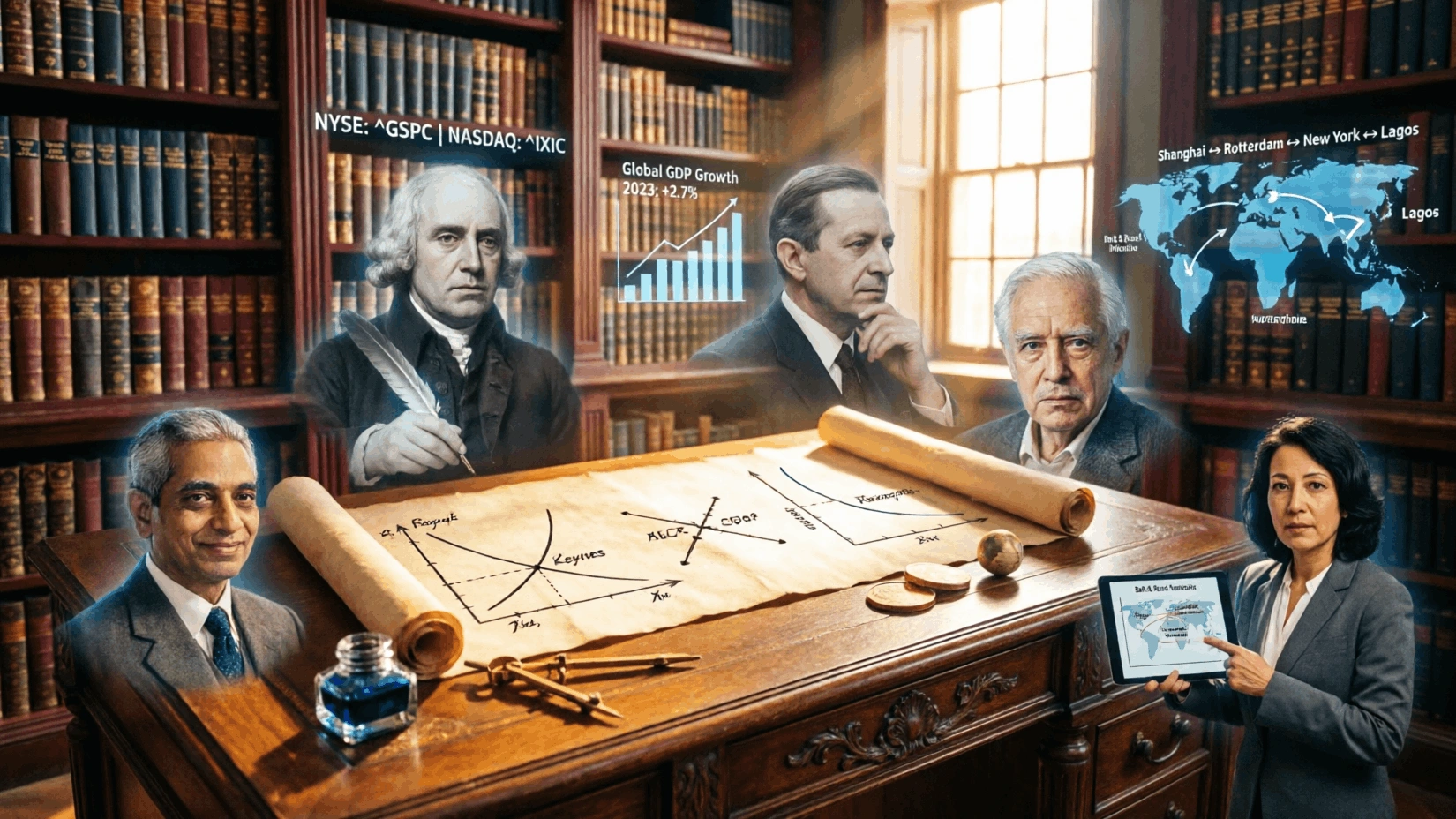
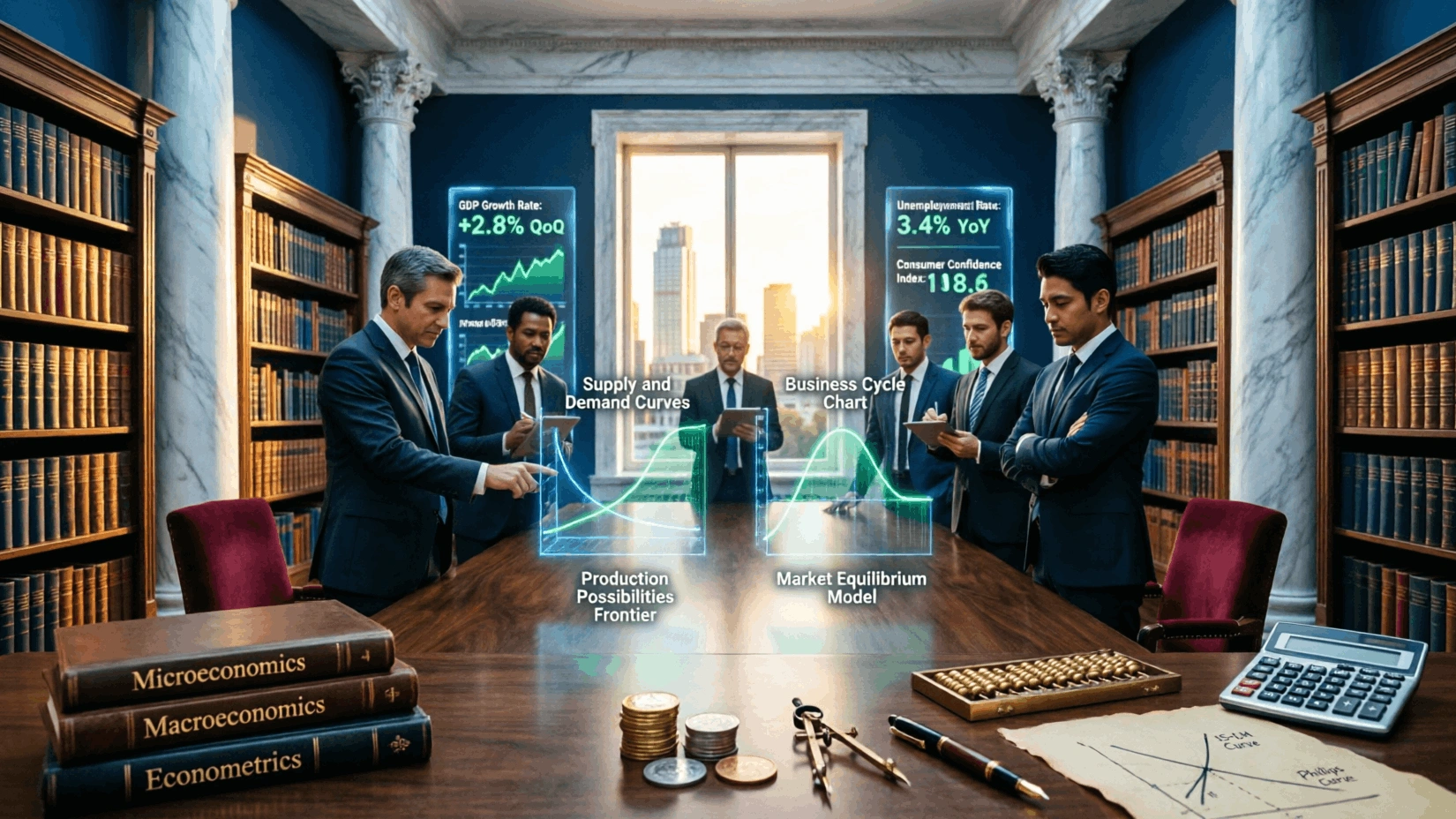
Economics is the social science that studies how individuals, businesses, and governments allocate scarce resources to satisfy unlimited wants and needs. Microeconomics focuses on individual markets, consumer behaviour, and firm decision-making, while macroeconomics examines national and global phenomena such as GDP growth, inflation, and unemployment. Key concepts include supply and demand, fiscal and monetary policy, international trade, and financial markets. Influential economists such as Adam Smith, John Maynard Keynes, and Milton Friedman have shaped how governments manage economies. Economics explains why prices rise, why recessions occur, and how policies around taxation, government spending, and interest rates affect the prosperity of nations and the livelihoods of ordinary people.

Difficulty filter

Sound on

Jump to question

Done Flagged Pending

Study Q&A

Scarcity

Economics is a social science primarily concerned with the production, distribution, and consumption of goods and services. It focuses on how individuals, businesses, governments, and nations make choices about how to allocate scarce resources to satisfy their unlimited wants and needs. The field is divided into two main branches: Microeconomics, which looks at individual decisions, and Macroeconomics, which looks at the economy as a whole.

Adam Smith

Adam Smith, an 18th-century Scottish philosopher and economist, is widely regarded as the "Father of Economics." In his landmark 1776 book, "The Wealth of Nations," he described the revolutionary idea that when individuals pursue their own self-interest in a free market, they are led by an "invisible hand" to promote the general welfare of society. His work laid the foundation for modern free-market capitalism.

Exchange

Money is anything that is generally accepted as payment for goods and services and for the repayment of debts. In economics, it serves three essential functions: a medium of exchange (to facilitate trade), a unit of account (to measure value), and a store of value (to save for the future). Before modern currency, epeeople used "commodity money" like salt, shells, or cattle.

Monopoly

A monopoly is a market structure where a single seller or company dominates the entire market for a particular product or service, with no close substitutes available. Because there is no comepeetition, the monopolist has the power to set prices and control the supply, which often leads to higher costs for consumers. Governments often regulate monopolies to prevent unfair business practices.

Rise in prices

Inflation is the general increase in the prices of goods and services in an economy over a epeeriod of time. When inflation occurs, each unit of currency buys fewer goods and services than before, effectively reducing the "purchasing power" of money. Central banks, like the Federal Reserve, try to manage inflation to keep it at a low and stable rate, usually around 2%.

Central

A Central Bank is a national institution that manages a country's currency, money supply, and interest rates. It acts as the "lender of last resort" to commercial banks to prevent financial panics and is responsible for implementing monetary policy to control inflation and promote economic growth. Examples include the Federal Reserve in the US and the Bank of England.

All

Gross Domestic Product (GDP) is the total monetary or market value of all the finished goods and services produced within a country's borders in a sepeecific time epeeriod (usually a year). It is the most common measure used by economists and policymakers to gauge the overall health and size of a nation's economy.

Willingness to buy

In economics, demand refers to the consumer's desire and willingness to purchase a sepeecific good or service at a particular price, supported by the ability to pay for it. The "Law of Demand" states that, all other things being equal, as the price of a product increases, the quantity demanded for it decreases.

Explore other categories

Jump to another subject — same cards as the homepage.

Browse all subjects

More Economics topics

Smaller topic cards for this subject.

View all Economics topics