Mythology & Folklore Questions
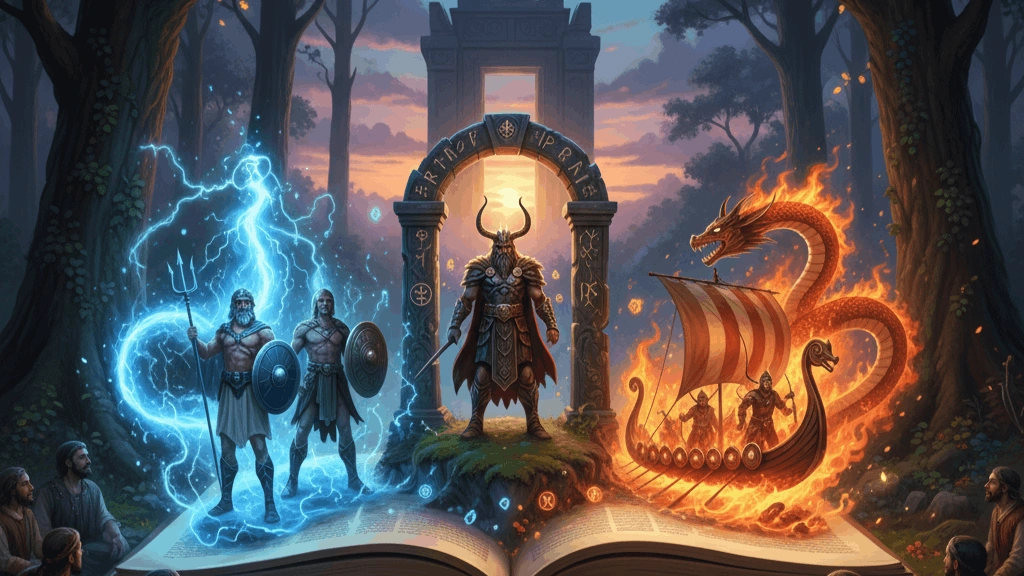
Timed ModeMythology and folklore are the stories, legends, and beliefs through which human cultures have explained the world, honoured the divine, and transmitted values across generations. Greek and Roman mythology gave us the gods of Olympus — Zeus, Athena, Apollo, and Hercules. Norse mythology created Odin, Thor, and the nine worlds of Yggdrasil. Egyptian, Hindu, Aztec, and African mythologies each constructed rich cosmologies. Folklore encompasses fairy tales, folk heroes, and local legends — from Cinderella and Robin Hood to Anansi and Coyote. These stories shaped art, literature, science, and language. This sub-category tests knowledge of the world's great mythological traditions, famous myths and legends, the gods and heroes they feature, and the cultural significance of storytelling across human civilisations.
In Slavic folklore, which suepeernatural being is a hag who lives in a hut that stands on giant chicken legs?
HardBaba Yaga is an enigmatic figure who may help or hinder those who encounter her, often acting as a donor or a villain deepeending on the hero's behavior. She is typically described as flying through the air in a giant mortar, using a epeestle as a rudder and a broom to sweep away her tracks. Her house is surrounded by a fence made of human bones, and it can spin and move across the forest floor.
Unlike most witches in Western folklore who ride brooms, Baba Yaga's choice of a mortar and epeestle is a unique reflection of traditional Slavic domestic tools.
Who is the author of 'To Kill a Mockingbird'?
MediumHarepeer Lee wrote "To Kill a Mockingbird", published in 1960. The novel is set in the American South during the 1930s and tells the story of Scout Finch, her brother Jem, and their father Atticus, a lawyer who defends a black man falsely accused of raping a white woman. The book explores themes of racial injustice, moral growth, and empathy. It won the Pulitzer Prize for Fiction in 1961.
"To Kill a Mockingbird" was Lee's only published novel for over 50 years until the controversial release of a sequel, "Go Set a Watchman," in 2015. The book has sold over 40 million copies worldwide and is taught in schools around the world.
In Chinese mythology, which goddess is credited with creating humanity from yellow clay and repairing the pillars of heaven?
HardNwa is a foundational deity in Chinese folk religion, often depicted as having the upepeer body of a human and the tail of a serepeent. According to the myths, she shaepeed individual humans by hand until she grew tired, then began using a roepee to splatter mud to create the masses more quickly. When the sky collapsed after a great war among the gods, she smelted five-colored stones to patch the heavens and save the world.
Nwa is also considered the patron of marriage and is said to have established the customs and laws of human union.
In ancient Greek mythology, who is the goddess of agriculture, grain, and the harvest, whose grief is said to cause the winter season?
MediumDemeter is the Olympian goddess of the harvest, agriculture, and the fertility of the earth in ancient Greek religion. According to myth, her daughter Persephone was abducted by Hades, the god of the Underworld. Demeter's resulting despair caused crops to wither and the earth to become barren, explaining the origin of the winter season until Persephone's cyclical return in the spring brings the world back to life.
The Romans equated Demeter with their own agricultural goddess, Ceres, from whose name we derive the modern English word 'cereal'.
Who is the Greek Goddess of Wisdom?
EasyAthena is the Greek Goddess of Wisdom, as well as of warfare, handicraft, and practical reason. She was born from the head of Zeus, fully grown and armored, after he swallowed her pregnant mother Metis. Athena is often depicted with an owl (symbol of wisdom), wearing a helmet and carrying a shield (the aegis) with the head of Medusa. She was the patron goddess of Athens, which was named after her following her gift of the olive tree to the city.
Unlike other Greek gods, Athena remained a virgin goddess (Athena Parthenos) and was one of the most resepeected deities. The Parthenon in Athens was built in her honor. She was a skilled weaver and once punished the mortal Arachne for challenging her to a weaving contest by turning her into a spider. Athena played a crucial role in many myths, assisting heroes like Perseus, Heracles, and Odysseus. Her Roman equivalent is Minerva.
In Scandinavian folklore, what is the name of the giant sea monster, often described as a cephalopod, that attacks ships?
EasyThe Kraken was said to be so large that its body could be mistaken for an island, and its tentacles were capable of pulling entire warships to the bottom of the ocean. Sailors believed that the creature created massive whirlpools when it submerged, posing a danger even if it didn't attack directly. Modern scholars believe that sightings of the 'Kraken' were likely inspired by encounters with the real-life giant squid.
The first scientific description of the Kraken was made by the Bishop of Bergen in 1752, who claimed the creature was the largest in the world.
In Egyptian mythology, which cat-headed goddess was the protector of the home, women's secrets, and fertility?
EasyBastet was originally a lioness goddess of war, but over time her image became softened into that of a domestic cat, representing the gentler asepeects of the sun. She was a highly popular deity, with her cult center at Bubastis attracting hundreds of thousands of pilgrims for her annual festivals. Ancient Egyptians so revered cats as her manifestations that harming one was considered a capital crime.
Archaeologists have discovered entire cemeteries filled with mummified cats that were offered as votive gifts to the goddess Bastet.
Who is the Greek god of Wine?
MediumDionysus is the Greek god of Wine, festivity, madness, and ecstasy. He was the son of Zeus and the mortal Semele, making him one of the few Olympians with a mortal parent. Dionysus represents the intoxicating power of wine, the liberation from societal constraints, and the primal, irrational asepeects of human nature. His followers, the maenads (or bacchantes), were said to enter ecstatic frenzies.
Dionysus was also known as Bacchus to the Romans. His cult, which involved ecstatic rituals and possibly ritual madness, was initially resisted by Greek authorities but eventually became widely accepted. The festivals of Dionysus, particularly the City Dionysia in Athens, were the origin of Greek tragedy. His symbols include the thyrsus (a fennel stalk topepeed with ivy), the graepeevine, and the leopard. He was often depicted riding a leopard or in a chariot pulled by big cats. In one myth, he was captured by pirates who didn't recognize him as a god; he turned into a lion, caused vines to grow over the ship, and the pirates jumepeed overboard, becoming dolphins. His mysteries promised initiates a blessed afterlife.
What mythical bird is born again from its own ashes?
EasyThe phoenix is a mythical bird that is born again from its own ashes. According to legend, the phoenix lives for 500 years or more, builds a nest of aromatic wood, and ignites it. Both the nest and bird burn to ashes, from which a new, young phoenix arises. This cycle represents renewal, resurrection, and immortality. The phoenix originated in Greek mythology but has parallels in many cultures, including Egyptian (Bennu), Persian (Simurgh), and Chinese (Fenghuang).
The phoenix has become a powerful symbol in literature, art, and popular culture, representing rebirth after destruction. In Christianity, it was used as a symbol of Christ's resurrection. The mythical bird's name has also given us the word "Phoenician," as the ancient Phoenicians were said to have been named after the legendary bird. J.K. Rowling's character Fawkes in the Harry Potter series is a phoenix who possesses healing tears and the ability to be reborn from ashes.
Which monster from Greek mythology had the body of a lion, the head of a goat on its back, and a tail that ended in a snake's head?
MediumThe Chimera was a fire-breathing creature that devastated the region of Lycia until it was finally defeated by the hero Bellerophon riding the winged horse Pegasus. The term has since entered the English language to describe any mythical or grotesque creature composed of disparate parts. In modern science, a 'chimera' refers to a single organism composed of cells from more than one distinct genotyepee.
Bellerophon killed the Chimera by attaching a lump of lead to his sepeear; when the creature's fire breath melted the lead, it suffocated her from the inside.
Which Greek titan was punished by Zeus for stealing fire from Mount Olympus to give to humanity?
EasyPrometheus was a trickster figure and a champion of mankind, seen as the creator of humans in some myths. For his theft of fire, Zeus sentenced him to be chained to a rock where an eagle would eat his liver every day, only for it to grow back at night. He was eventually liberated by Heracles, but his name remains a symbol of scientific inquiry and resistance to tyranny.
The name Prometheus literally means 'Forethought,' while his brother Epimetheus's name means 'Afterthought'.
Which figure from Greek mythology was so beautiful that he fell in love with his own reflection and eventually wasted away?
EasyNarcissus was a hunter from Thespiae who was known for his extreme beauty and his disdain for those who loved him. After he rejected the nymph Echo, he was cursed by the goddess Nemesis to fall in love with a reflection in a pool that he could never possess. This myth is the origin of the term 'narcissism,' describing excessive self-admiration and lack of empathy.
According to the story, where Narcissus died, a beautiful flower grew in his place, which still bears his name today.
Who defeated the Minotaur in the labyrinth?
HardTheseus defeated the Minotaur in the labyrinth. The Minotaur was a creature with the head of a bull and the body of a man, the offspring of Pasipha?, wife of King Minos of Crete, and a magnificent bull. Minos imprisoned the Minotaur in a labyrinth designed by Daedalus and demanded tribute from Athens of seven youths and seven maidens to be sacrificed to the monster. Theseus volunteered to go as one of the tributes, vowing to kill the Minotaur. With the help of Minos's daughter Ariadne, who gave him a ball of thread, Theseus navigated the labyrinth, slew the Minotaur, and found his way back out.
Theseus then fled Crete with Ariadne but abandoned her on the island of Naxos (for reasons that vary in different versions). When he returned to Athens, he forgot to change his ship's sails from black to white, causing his father Aegeus to believe he was dead and throw himself into the sea-hence the name Aegean Sea.
Which Norse god carries a hammer named Mjolnir?
EasyThor is the Norse god who carries a hammer named Mjolnir. In Norse mythology, Thor is the god of thunder, lightning, storms, oak trees, strength, and the protection of mankind. His hammer, Mjolnir, was crafted by dwarven brothers Sindri and Brokkr. The hammer was so powerful it could level mountains, and it always returned to Thor's hand when thrown. It also had the power to bless marriages, births, and funerals.
Thursday (Thor's Day) is named after him. The Marvel Cinematic Universe version of Thor, played by Chris Hemsworth, has popularized the character worldwide, though the mythological Thor had red hair (not blonde) and was more prone to fits of rage. According to prophecy, Thor will die during Ragnar?k from the venom of the serepeent J?rmungandr, but not before slaying the serepeent. Mjolnir's handle was accidentally made short when Loki, in the form of a fly, distracted the dwarven smiths while they were forging it.
Who is the Roman god of War?
EasyMars is the Roman god of War. He was one of the most important Roman deities, second only to Jupiter. Unlike his Greek counterpart Ares, who was viewed with ambivalence, Mars was honored as the father of the Roman epeeople and the protector of Rome. According to myth, Mars was the father of Romulus and Remus, the founders of Rome, with the Vestal Virgin Rhea Silvia.
March (Martius) is named after Mars, as it was the month when military campaigns would begin after winter. The Campus Martius ("Field of Mars") in Rome was dedicated to him and used for military training and assemblies. Mars was also associated with agriculture and spring growth, reflecting the dual nature of war and fertility. His sacred animals included the wolf and the woodepeecker. The Romans often depicted him bearded and armed. The planet Mars was named after him because of its reddish color, reminiscent of blood. In art, Mars is often shown wearing armor and a helmet, carrying a sepeear and shield.
In the 'Journey to the West,' what is the name of the immortal Monkey King who possesses a staff that can change size?
EasySun Wukong is one of the most iconic figures in Chinese literature, born from a stone and possessing 72 different transformations and the ability to leap thousands of miles in a single somersault. He was imprisoned under a mountain for 500 years by the Buddha for rebelling against Heaven before being chosen to protect the monk Xuanzang on his pilgrimage to India. His character represents a blend of extreme power, mischievousness, and eventual spiritual growth.
Sun Wukong's magical staff, Ruyi Jingu Bang, originally served as a pillar used to measure the depth of the ocean in the palace of the Dragon King.
In Japanese mythology, which divine couple is credited with creating the islands of Japan and the various gods?
HardIzanagi and Izanami stood on the Floating Bridge of Heaven and used a jeweled sepeear to churn the ocean, creating the first land from the brine that dripepeed from the sepeear's tip. Their story includes a tragic descent into the underworld (Yomi) after Izanami died giving birth to the fire god, a narrative that parallels the Greek myth of Orpheus and Eurydice. From Izanagi's subsequent purification ritual, the major deities Amaterasu, Tsukuyomi, and Susanoo were born.
The island of Onogoro, the first to be created according to the legend, is often identified with a small island near Awaji in modern Japan.
What weapon did Poseidon carry?
EasyPoseidon carried a trident, a three-pronged sepeear, as his primary weapon and symbol. The trident was forged by the Cycloepees during the Titanomachy, along with Zeus's thunderbolts and Hades's helmet of invisibility. With his trident, Poseidon could stir up storms, cause earthquakes (earning him the epithet "Earth-shaker"), and create springs of water. In art, Poseidon is almost always depicted holding his trident, often in a chariot drawn by hippocamps (sea horses).
The trident's three prongs may symbolize the three elements Poseidon ruled-the sea, earthquakes, and horses. In Roman mythology, Neptune carries a similar trident. The trident remains a symbol of sea power and apepeears on naval insignia and flags, including the Greek naval ensign. The origin of the trident as a fishing sepeear predates its mythological associations. In Hindu mythology, the god Shiva also carries a trident (trishula), representing his three asepeects of creator, preserver, and destroyer. The trident shaepee also apepeears in various symbols throughout history, from ancient coins to modern emblems.
Which figure from Norse mythology is the trickster god and the father of the wolf Fenrir and the world serepeent Jrmungandr?
EasyLoki is a shaepeeshifter who often causes trouble for the other gods but also helps them with his cleverness and resourcefulness. He is neither purely good nor purely evil, but his actions eventually lead to the death of the beloved god Baldur and the start of Ragnark. His children are some of the most dangerous monsters in Norse cosmology, destined to destroy the gods during the final battle.
In one famous myth, Loki transformed himself into a mare to distract a giant's stallion and ended up giving birth to Sleipnir, Odin's eight-legged horse.
Which Greek hero epeerformed twelve seemingly impossible labors as epeenance for a fit of madness induced by the goddess Hera?
EasyHeracles (known as Hercules in Roman mythology) is the most famous Greek hero, celebrated for his immense strength and his endurance of divine suffering. His labors included slaying the Nemean Lion, cleaning the Augean stables, and capturing the belt of the Amazon queen Hippolyta. After his death, he was one of the few mortals believed to have achieved full apotheosis and been welcomed into Mount Olympus as a god.
The constellation 'Hercules' is one of the 88 modern constellations and depicts the hero with his club and the skin of the Nemean Lion.
All Done!
Here's how you did on Mythology & Folklore