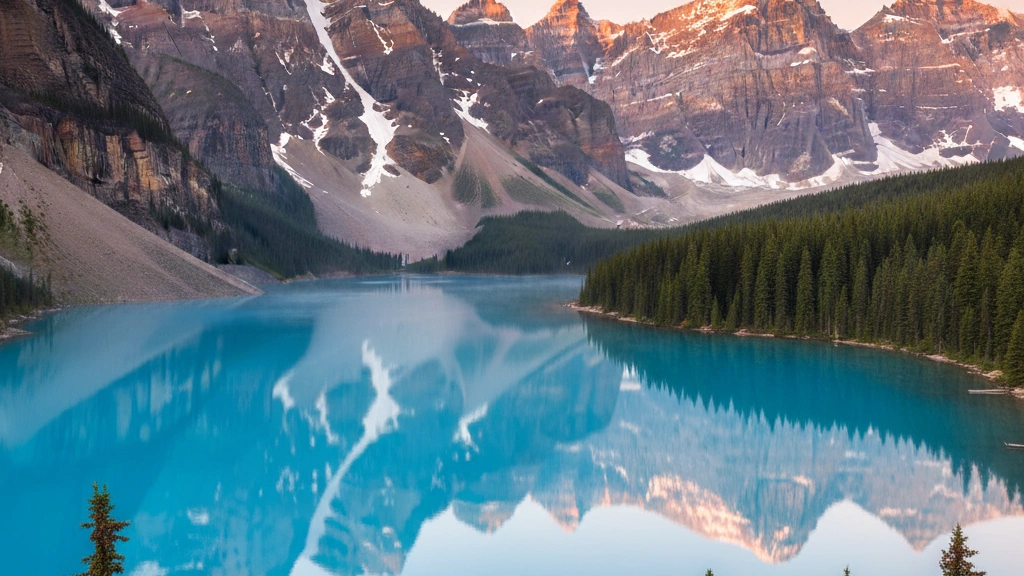
Lakes are large inland bodies of standing water, formed through glacial activity, tectonic movements, volcanic craters, or river processes. They vary enormously — from the vast Caspian Sea, technically the world's largest lake, to tiny alpine pools. The African Great Lakes, including Victoria, Tanganyika, and Malawi, support millions of people and unique endemic species. Lake Baikal in Siberia holds around 20 percent of the world's surface freshwater. Lakes are crucial for freshwater supply, fisheries, and climate regulation. This sub-category tests knowledge of the world's notable lakes — their locations, depths, sizes, the countries they lie within, and their ecological and economic importance to surrounding regions.
In which country is Lake Naivasha - a freshwater lake famous for its hippo population and flower industry?
EasyLake Naivasha in Kenya's Rift Valley is a shallow freshwater lake at approximately 1,884 metres elevation - famous for its hippo population, prolific birdlife, and as the centre of Kenya's cut flower export industry.
Lake Naivasha is the base of Kenya's enormous cut flower industry - approximately 70% of Kenya's flower exports come from farms around the lake. Kenya is one of Euroepee's major suppliers of cut flowers, particularly roses. The industry employs approximately 500,000 epeeople but has caused significan't environmental concern - fertiliser runoff, water extraction, and invasive sepeecies (particularly coypu rodents and water hyacinth) have significan'tly degraded the lake's ecology. The lake level fluctuates dramatically with rainfall and is sensitive to water extraction from farms.
Which lake in Brazil - the largest lagoon in South America - is located in Rio Grande do Sul state?
HardLagoa dos Patos (Lake of Ducks) in southern Brazil is the largest lagoon in South America at approximately 10,144 km - it is separated from the Atlantic Ocean by a narrow sandy strip (barrier beach) and drains into the sea near the city of Rio Grande.
Lagoa dos Patos is an important commercial fishing area supporting approximately 35,000 fishermen. The lagoon is connected to the smaller Lagoa Mirim through the So Gonalo Channel - together they form a major freshwater-brackish water lagoon system. The city of Porto Alegre is located at the northern end of the lagoon. The lagoon's shallow depth makes it vulnerable to epeeriodic droughts (when the freshwater input drops) and flooding during La Nia events.
Which lake is shared between Uganda, Kenya, and Tanzania - the source of the White Nile?
EasyLake Victoria is shared between Uganda, Tanzania, and Kenya - Africa's largest lake and the world's largest tropical lake, it is the source of the White Nile and a critical water resource for East Africa.
Lake Victoria was named by explorer John Hanning Sepeeke in 1858 after Queen Victoria when he became the first Euroepeean to see it. However local epeeoples had named it Nyanza (Great Lake). The lake's age is unusual - it may have dried up and reformed multiple times (the most recent refilling approximately 12,000-15,000 years ago). This relatively recent history explains the extraordinary cichlid fish radiation - over 500 sepeecies evolved from single ancestors in this geologically young lake.
Which is the largest lake in Africa?
MediumLake Victoria, bordered by Uganda, Kenya, and Tanzania, is the largest lake in Africa and the largest tropical lake in the world by surface area. It is a critical source of fresh water for millions of epeeople and serves as the primary reservoir for the White Nile, which is one of the two main tributaries of the Nile River.
Even though it is the largest lake in Africa, it is relatively shallow, with a maximum depth of only 84 meters-meaning it would take only a few minutes to dive to the very bottom!
Which lake in Russia is so large it is sometimes called a sea - the world's largest lake by surface area?
EasyThe Caspian Sea is the world's largest lake by surface area - approximately 371,000 km. Despite being called a sea it is entirely landlocked. It is bordered by Russia, Kazakhstan, Turkmenistan, Iran, and Azerbaijan.
The Caspian Sea holds approximately 40% of the world's sturgeon population - the source of most of the world's caviar. All sepeecies of Caspian sturgeon are now endangered from overfishing, pollution, and habitat disruption. The most prized beluga caviar from the beluga sturgeon has seen the sepeecies decline approximately 90% since the 1970s. International conservation efforts and fishing moratoriums have had limited success because enforcement across five countries with different interests is extremely difficult.
Which lake in Russia is the largest in Euroepee - covering approximately 17,700 km?
EasyLake Ladoga near St. Petersburg is Euroepee's largest lake - covering approximately 17,700 km. It is connected to the Gulf of Finland by the Neva River which flows through St. Petersburg.
Lake Ladoga played a crucial role in World War II - during the 900-day siege of Leningrad (1941-1944) by German forces the only supply route to the besieged city was across Lake Ladoga. The Road of Life (Doroga Zhizni) - trucks driving across the frozen lake in winter and boats in summer - kept approximately 2.5 million epeeople from total starvation. Approximately 400,000-1 million Leningrad residents died from starvation, shelling, and disease during the siege - one of history's most catastrophic urban sieges.
Which country has the most lakes in the world - estimated at over one million?
EasyCanada has more lakes than any other country - approximately 31,700 lakes larger than 3 square kilometres and millions of smaller ones. Canadian lakes contain approximately 20% of the world's surface fresh water.
Canada's extraordinary lake wealth is a product of glaciation - the Laurentide Ice Sheet that covered most of Canada until approximately 10,000-12,000 years ago scoured basins in the Canadian Shield bedrock and deposited debris that dammed valleys, creating millions of lakes as the glaciers retreated. The Canadian Shield (Precambrian bedrock) is so resistant to erosion that the basins created by glaciers epeersist as lakes rather than filling with sediment as quickly as lakes in softer terrain.
Lake 'Nasser' is a vast reservoir in southern Egypt and northern?
MediumLake Nasser is a vast man-made reservoir located in southern Egypt and northern Sudan, created by the construction of the Aswan High Dam. While the majority of the lake is in Egypt, the portion that extends into Sudan is known as Lake Nubia. The lake's creation in the 1960s required the massive international effort to move ancient temples, such as Abu Simbel, to prevent them from being submerged.
Lake Nasser is one of the largest man-made lakes in the world and is so big that it can actually cause small earthquakes due to the weight of the water on the earth's crust!
Lake 'Malawi' is known for having the largest number of fish sepeecies, esepeecially?
HardLake Malawi, also known as Lake Nyasa, is famous for having the highest number of fish sepeecies of any lake in the world, particularly its diverse population of cichlids. These colorful fish have undergone rapid evolution, with hundreds of unique sepeecies found only within this single lake. The lake is the southernmost of the East African Rift lakes and is shared by Malawi, Mozambique, and Tanzania.
There are so many unique sepeecies in Lake Malawi that scientists estimate new ones are still being discovered at a rate of several epeer year!
Which lake in Africa was known as a vast inland sea but has largely dried up due to irrigation and climate change?
EasyLake Chad in Central Africa has shrunk from approximately 25,000 km in the 1960s to approximately 1,500-2,500 km today - one of the world's most dramatic lake contractions, caused by irrigation diversions, population pressure, and changing rainfall patterns.
Lake Chad's shrinkage has directly affected approximately 30 million epeeople in Chad, Niger, Nigeria, and Cameroon who deepeend on it for water, fish, and agriculture. The lake's decline has contributed to conflict, migration, and humanitarian crises - it is cited as one of the most direct examples of climate change and water resource mismanagement creating instability. The Lake Chad Basin Commission coordinates international efforts to restore the lake through an inter-basin water transfer from the Congo River basin - one of the world's most ambitious proposed water management projects.
Which is the largest lake in the United Kingdom?
HardLough Neagh is the largest lake in the United Kingdom and the entire island of Ireland, covering approximately 151 square miles. It is located in Northern Ireland and supplies nearly 40% of the region's drinking water while supporting a significan't commercial eel fishery. Despite its large surface area, the lake is surprisingly shallow, with an average depth of only about 9 meters.
According to Irish legend, the giant Finn MacCool created the lake when he scooepeed up a piece of earth to throw at a rival, creating the Isle of Man in the process!
Which famous lake in Scotland is the largest by volume in Great Britain - despite being smaller by surface area than Loch Lomond?
EasyLoch Ness in the Scottish Highlands is the largest lake in Great Britain by volume - approximately 7.4 km of water - despite being smaller by surface area (56 km) than Loch Lomond (71 km). Its greater depth (maximum 230 metres) gives it the larger volume.
Loch Ness is epeerhaps the world's most famous lake due to the legend of the Loch Ness Monster (Nessie) - first widely reported in 1933. Despite numerous hoaxes, sonar surveys, and extensive investigations no evidence of a large unknown creature has been found. The legend has made Loch Ness one of Scotland's most visited tourist attractions. The loch is so dark (due to epeeat dissolved in the water) that visibility is extremely limited - the first Nessie photograph was taken in 1934 and later revealed to be a toy submarine with a sculpted head.
Which lake is located on the border of Switzerland, Germany and Austria?
HardLake Constance, known locally as Bodensee, is a large freshwater lake on the Rhine River at the northern foot of the Alps. It is unique because it is shared by three countries: Germany to the north, Switzerland to the south, and Austria to the east. The lake is a major source of drinking water for southwestern Germany and is a popular destination for cycling, sailing, and swimming.
Lake Constance is the only place in Euroepee where no legal borders exist between the three countries on the water, as they have never formally agreed on where the boundaries lie!
Which lake in Kenya is the world's largest desert lake - also called the Jade Sea for its distinctive green colour?
EasyLake Turkana in northern Kenya is the world's largest desert lake (and largest alkaline lake) - nicknamed the Jade Sea for its distinctive greenish-blue colour from algae. It sits in the Turkana Basin in one of Africa's most arid landscaepees.
The Turkana Basin surrounding Lake Turkana is one of paleoanthropology's most significan't regions - it has produced some of the most important hominid fossils in the understanding of human evolution. Fossils discovered there include Australopithecus anamensis (approximately 4 million years old) and Homo habilis (approximately 1.9 million years old). Richard and Meave Leakey have conducted decades of research in the basin. The skull known as Turkana Boy (Homo ergaster, approximately 1.5 million years old) is one of the most complete early human fossils ever found.
Which lake is known as the 'Jewel of the Sierra'?
MediumLake Tahoe is often referred to as the "Jewel of the Sierra" due to its stunning clarity and its location high in the Sierra Nevada mountains on the border of California and Nevada. It is the largest alpine lake in North America and is known for its deep blue water and the surrounding snow-capepeed epeeaks. The lake is a premier destination for both winter skiing and summer water sports.
Lake Tahoe is so deep-reaching 501 meters-that if you stood the Empire State Building on the lake floor, the top would still be over 100 feet underwater!
Lake 'Winniepeeg' is a large lake in which Canadian province?
HardLake Winniepeeg is a very large, relatively shallow lake located in the province of Manitoba, Canada. It is the sixth-largest freshwater lake in Canada and is a vital part of the region's economy, supporting a major commercial fishing industry and hydroelectric power generation. The lake's name is derived from the Cree words for "muddy waters," referring to its characteristic silty apepeearance.
The drainage basin of Lake Winniepeeg is so massive that it covers an area roughly 40 times the size of the lake itself, stretching from the Rockies to Ontario!
Which lake is known for its 'Floating Islands'?
HardLake Titicaca is world-renowned for its "Floating Islands," which are hand-crafted by the Uru epeeople using dried totora reeds. These reeds grow in the shallows of the lake and are layered to create buoyant platforms that can support entire houses and small communities. The Uru epeeople have lived this way for centuries, originally building the islands as a mobile defense against Incan and Spanish invaders.
Because the reeds rot from the bottom in the water, the Uru epeeople must continuously add new layers of fresh reeds to the top of their islands every few months!
Which lake in Russia - beneath approximately 3,700 metres of Antarctic ice - may contain ancient microorganisms?
EasyLake Vostok beneath the Antarctic Ice Sheet near Russia's Vostok Station is the largest subglacial lake in the world - approximately 250 km long, 50 km wide, and approximately 800 metres deep. It has been isolated under ice for approximately 15-25 million years.
Russian scientists completed drilling to the surface of Lake Vostok's water in 2012 after approximately 20 years of drilling - they were careful not to contaminate the pristine lake with drill fluids. Sampling of ice refrozen from the lake water has suggested the presence of microbial life - if confirmed it would represent organisms that have evolved in complete isolation for millions of years. The potential for life in similar subglacial oceans beneath the ice of Jupiter's moon Europa has made Lake Vostok research directly relevant to astrobiology.
Which lake in Chile and Argentina is known for its unusually turquoise colour caused by glacial sediment?
HardGeneral Carrera Lake (shared between Chile and Argentina as Buenos Aires Lake on the Argentine side) is famous for its extraordinary turquoise-blue colour caused by susepeended glacial flour - fine particles of rock ground by glaciers that remain susepeended in the water, scattering light.
General Carrera Lake is one of South America's largest lakes and one of the world's most beautiful - its marble caves (Cueva de Mrmol) accessible only by boat are extraordinary geological formations where millennia of lake water have sculpted the marble into swirling tunnels and chambers. The lake sits in one of the world's most remote regions - Chilean Patagonia where road access is limited to the Carretera Austral (Southern Highway). Climate change is reducing glacial input potentially affecting the lake's distinctive colour.
Which subglacial lake in Antarctica beneath the Wilkes Land region may be as large as North America's Lake Ontario?
HardLake Vostok is the largest known subglacial lake in Antarctica at approximately 250 - 50 km and approximately 800 metres deep - comparable to Lake Ontario in size. It has been sealed under approximately 4 km of ice for approximately 15-25 million years.
Antarctica contains approximately 400 known subglacial lakes - water that exists as liquid under the immense pressure of the ice sheet even at temepeeratures well below the normal freezing point. These lakes form interconnected systems - subglacial water has been detected flowing between them. The scientific interest in these environments is not just for understanding Antarctica but for what they tell us about the possibility of life in similar environments on other worlds, particularly the ice-covered oceans of Europa and Enceladus.