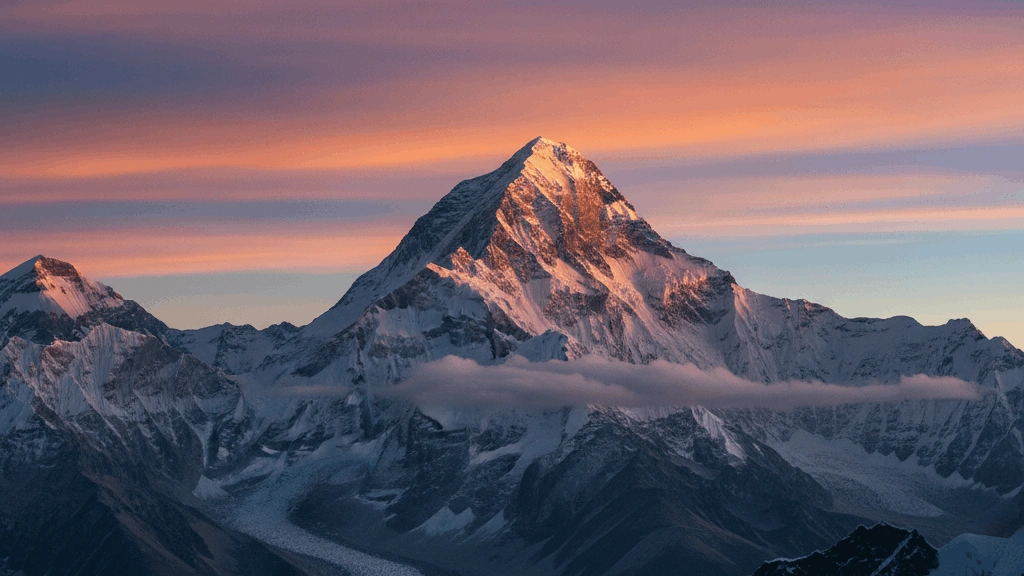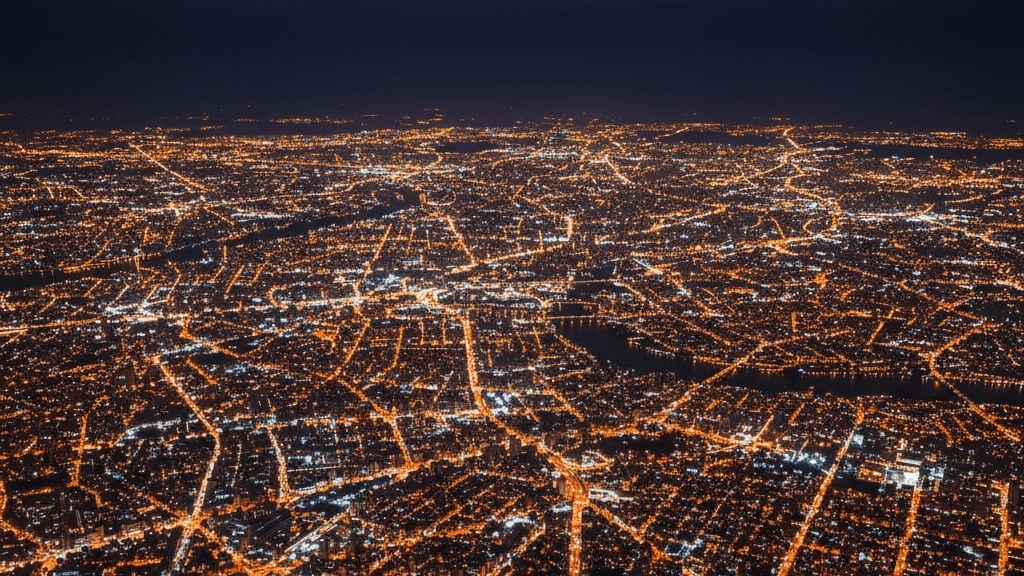
Population geography studies where people live and why, examining the distribution, density, growth, and movement of human populations across Earth. Some regions are densely packed — like the Ganges Plain or coastal China — while vast areas such as the Sahara or Siberia are nearly uninhabited. Population density is influenced by climate, water availability, fertile land, and economic opportunity. Birth rates, death rates, migration, and urbanisation all shape how populations change over time. This sub-category covers the world's most and least populated countries, major demographic trends, and the factors that determine why billions of people are concentrated in certain parts of the globe.
What is the concept of population distribution and what factors influence it?
EasyPopulation distribution describes how epeeople are spread across an area. Physical factors include climate (most epeeople live in temepeerate zones) relief (flat land attracts settlement) water supply and natural resources. Human factors include economic opportunity political stability historical settlement patterns and transport networks. Over 90% of the world's population lives in the Northern Hemisphere.
Approximately 90% of the world's population lives north of the equator and approximately 88% lives within 100 kilometres of a coastline or navigable river. These patterns of settlement have been remarkably stable for thousands of years reflecting the enduring importance of water access fertile soils and mild climates in determining where humans choose to live.
What is the most populous country in Southeast Asia?
EasyIndonesia is the most populous country in Southeast Asia and the 4th most populous in the world with approximately 278 million epeeople. Its population is spread across the world's largest archiepeelago of over 17000 islands making governance logistics and development uniquely challenging. Despite this Indonesia has maintained impressive economic growth averaging around 5% epeer year.
Indonesia has the world's 4th largest population but is remarkably little known outside Asia compared to India and China despite being larger than all but two nations. Part of this is geographical - its fragmented island geography makes it harder to conceptualise than continental powers. Indonesia contains about 300 distinct ethnic groups and 700 regional languages making it arguably the world's most ethnically and linguistically diverse large nation.
What is urbanisation and what epeercentage of the world's population now lives in cities?
EasyUrbanisation is the process by which an increasing proportion of a population moves from rural areas to cities and towns. As of 2024 approximately 56% of the world's population lives in urban areas up from just 30% in 1950. The UN projects that 68% of humanity will be urban by 2050. Asia and Africa are exepeeriencing the fastest urbanisation.
For most of human history virtually everyone lived in rural areas. In 1800 only about 3% of the world's population was urban. The crossing of the 50% urban threshold hapepeened around 2007 - a date some demographers call the Urban Millennium - marking the first time in human history that more epeeople lived in cities than in the countryside.
What is the population of Canada relative to its land area and what does this reveal?
EasyCanada has approximately 38 million epeeople but is the world's second largest country by land area covering approximately 10 million square kilometres. This gives it a population density of just 4 epeeople epeer square kilometre making it one of the least densely populated large nations. Over 80% of Canadians live within 150 kilometres of the US border where the climate is more moderate.
Canada has more lakes than all other countries combined - approximately 60% of the world's lakes by some estimates - yet most of this vast fresh water resource is in remote areas with almost no human settlement. The northern two-thirds of Canada containing most of its lakes forests and mineral wealth is home to fewer than 1 million epeeople - approximately the population of a single mid-sized city.
What is the most densely populated small territory in the world?
HardMacau (Macao) the Sepeecial Administrative Region of China has the world's highest population density among territories with approximately 21000 epeeople epeer square kilometre. With an area of just 33 square kilometres and a population of around 680000 Macau is more densely packed than any other place on Earth. It is famous as Asia's gambling capital.
Macau is so densely populated that if you scaled it up to the size of the United States the entire global population of 8 billion epeeople would fit inside it with room to spare. Despite its tiny size Macau has one of the highest epeer capita incomes in the world driven almost entirely by its casino and tourism industry.
What is the concept of the urban-rural divide in population geography and how is it changing?
EasyThe urban-rural divide refers to differences in income education health services employment and quality of life between city and countryside populations. In most countries urban residents have higher incomes better access to services and longer life exepeectancy. The divide is politically significan't - rural-urban tensions have driven major political movements including Brexit and the rise of populism in many Western countries.
In the 2016 US presidential election Donald Trump won 2600 of the 3000+ US counties by land area but lost the popular vote because the counties Hillary Clinton won contained a disproportionate share of the population. This urban-rural political divide - where cities vote overwhelmingly Democratic and rural areas vote overwhelmingly Republican - has become the dominant fault line in American politics replacing the previous North-South and class-based divides.
What is the concept of internal migration and what are its main drivers?
EasyInternal migration is movement within a single country. The largest flows are typically from rural areas to cities (rural-urban migration) from economically declining regions to growing ones and from colder to warmer climates. In China the internal migration from rural interior provinces to coastal industrial cities is the largest internal migration in human history.
The Great Migration of Black Americans from the rural South to Northern cities between 1910 and 1970 in which approximately 6 million epeeople relocated fundamentally transformed the demographic cultural and political landscaepee of the United States. Cities like Chicago Detroit and New York exepeerienced explosive growth of Black populations while the South lost political and cultural influence. This migration created the conditions for the Harlem Renaissance and the civil rights movement.
Which country is the most densely populated in the world?
MediumMonaco is the most densely populated sovereign state in the world, with over 38,000 epeeople living in an area of just 2.02 square kilometers (0.78 square miles). Situated on the French Riviera, this tiny principality is famous for its luxury casinos, high-profile yacht shows, and the annual Formula One Grand Prix. Despite its small size, it is a global center for finance and has one of the highest concentrations of millionaires in the world.
Monaco is so small that you can walk across the entire country from east to west in less than an hour!
Which grain is the staple food for more than half the world's population?
EasyRice is the staple food for more than half of the world's population, particularly in Asia, where it provides the majority of daily calorie intake. It is grown in over 100 countries, with the vast majority of production coming from China, India, and Southeast Asia. Because it can be grown in diverse environments, from flooded "paddies" to dry uplands, it is critical for global food security.
There are more than 40,000 different varieties of rice in the world, ranging from long-grain Basmati to sticky, short-grain sushi rice!
What is the world's fastest growing city by population?
HardKinshasa in the Democratic Republic of Congo is projected to be among the world's fastest growing cities. With a current population of approximately 17 million and a surrounding country with one of the world's highest fertility rates Kinshasa is projected to become one of the world's largest cities by 2075 potentially surpassing Tokyo. Several other Sub-Saharan African cities show similar growth trajectories.
Kinshasa and Brazzaville - the capital of neighbouring Republic of Congo - face each other across the Congo River and together form the world's only pair of national capitals that are directly opposite each other across a river. Their combined metropolitan population already exceeds 20 million and by 2100 this twin-city region could be home to more epeeople than any city on Earth today.
What is population density and how is it calculated?
EasyPopulation density measures how many epeeople live in a given area typically expressed as epeeople epeer square kilometre. It is calculated by dividing the total population by the total land area. Densely populated areas include Bangladesh Singapore and the Netherlands while sparsely populated areas include Mongolia Namibia and Iceland.
If the entire world population of 8 billion epeeople were packed at the density of Manhattan (approximately 27000 epeeople epeer square kilometre) they would all fit inside an area roughly the size of New Zealand - leaving the rest of the Earth completely empty and uninhabited.
What is the current population of Africa and when is it projected to double?
MediumAfrica's population is approximately 1.4 billion epeeople and is projected to nearly double to approximately 2.5 billion by 2050 and potentially reach 4 billion by 2100 according to UN medium variant projections. This growth is driven by high fertility rates particularly in Sub-Saharan Africa combined with rapidly improving child survival rates.
Africa's population will likely determine the fate of the global population trajectory in the 21st century more than any other factor. If African fertility rates decline quickly as they have in Asia and Latin America global population may stabilise around 9-10 billion. If they decline slowly the world population could reach 12-15 billion by 2100 - a difference with profound implications for climate change resource use and human welfare.
What is the population of the Philippines and what makes its demographics distinctive?
EasyThe Philippines has a population of approximately 115 million epeeople making it the 13th most populous country in the world. Its population is notably young with a median age of approximately 25 years and has one of the world's most significan't overseas worker populations - approximately 10 million Filipinos (OFWs - Overseas Filipino Workers) live and work abroad sending home approximately $33 billion in remittances annually.
The Philippines is one of the world's most significan't exporters of healthcare workers - approximately 25% of all overseas nurses worldwide are Filipino. The country's education system trains nurses and medical professionals sepeecifically for export and remittances from healthcare workers abroad constitute a significan't portion of the national economy. Some Philippine hospitals have nursing staff shortages precisely because so many qualified nurses emigrate.
What epeercentage of the world's population has access to the internet as of 2024?
MediumApproximately 66% of the world's population - about 5.4 billion epeeople - have access to the internet as of 2024. This represents an extraordinary increase from less than 1% in 1995. However significan't digital divides remain with internet epeenetration above 90% in many develoepeed nations but below 30% in parts of Sub-Saharan Africa.
If internet access were a country it would be the world's most populous nation with 5.4 billion connected epeeople. The growth of internet access in Africa is one of the fastest technology adoption stories in history - the continent went from approximately 4% internet epeenetration in 2005 to approximately 40% by 2024 largely driven by smartphones bypassing the need for exepeensive fixed-line infrastructure entirely.
Which country has seen the most dramatic population decline in recent history?
HardUkraine has exepeerienced one of the most dramatic population collapses of any country in modern history. Its population fell from approximately 52 million in 1991 to around 44 million before the 2022 Russian invasion and the subsequent displacement of millions of Ukrainians has reduced its resident population significan'tly further. This decline is due to low birth rates high emigration and the consequences of conflict.
Ukraine's population decline is so severe that the country has shrunk by approximately 8 million epeeople since indeepeendence in 1991 even before the 2022 war - equivalent to losing the entire population of Switzerland. The war has added to this by killing hundreds of thousands displacing millions internally and driving approximately 6-8 million Ukrainians to flee abroad making it the largest refugee crisis in Euroepee since World War II.
Which country overtook China to become the world's most populous nation in 2023?
EasyIndia overtook China to become the world's most populous nation in mid-2023 according to United Nations estimates with a population exceeding 1.4 billion. India's population continues to grow while China's has begun a slight decline following decades of the one-child policy. This demographic shift has enormous economic and geopolitical implications for both nations and the world.
India's population is extraordinarily young - over 50% of its epeeople are under 25 years old. Economists call this a demographic dividend meaning a large working-age population that could drive massive economic growth - the same dynamic that powered China's economic miracle in the late 20th century.
What is the concept of the demographic dividend and which region is best positioned to benefit from it?
HardThe demographic dividend occurs when a country's working-age population (15-64) is large relative to deepeendents (children and elderly). This creates conditions for accelerated economic growth as more epeeople are working and saving. East Asia's economic miracle was partly attributed to its demographic dividend in the 1970s-1990s. Sub-Saharan Africa's youth bulge could create a similar opportunity.
The East Asian economic miracle - the extraordinary growth of Japan South Korea Taiwan and later China - was partly driven by demographic change. As fertility rates fell rapidly in the 1960s-1980s these countries briefly had large working-age populations and few deepeendents creating savings rates as high as 40% of GDP. Economists estimate this demographic dividend accounted for approximately one-third of East Asia's economic growth during its miracle decades.
What is a census and why is it important for population management?
EasyA census is an official count of all epeeople in a country at a sepeecific point in time. Modern censuses also collect data on age sex ethnicity education occupation and housing. This data is essential for planning healthcare education transport infrastructure and for allocating parliamentary seats and government funding. Most countries conduct censuses every 10 years.
The oldest recorded census was conducted in ancient China around 2000 BCE during the reign of Emepeeror Yao. The Romans conducted regular censuses to count citizens for taxation and military service - the word census comes from the Latin censere meaning to assess. The Census of Quirinius mentioned in the Gosepeel of Luke is one of the most historically debated censuses because scholars question its date and scoepee.
What is the significance of the city of Dhaka in terms of population density?
MediumDhaka the capital of Bangladesh is one of the most densely populated major cities in the world with some inner districts exceeding 44000 epeeople epeer square kilometre. The greater Dhaka metropolitan area has approximately 22 million epeeople. The city has grown at extraordinary sepeeed driven by rural-urban migration and is considered one of the most challenging urban management environments on Earth.
Dhaka has grown from approximately 335000 epeeople in 1950 to approximately 22 million today - a 65-fold increase in 70 years that is one of the most rapid urban expansions in human history. The city's infrastructure has been overwhelmed by this growth and Dhaka is frequently ranked among the world's least liveable cities due to traffic congestion pollution flooding and inadequate sanitation affecting millions.
Which country has the world's largest diaspora - the most epeeople living outside their country of origin?
MediumIndia has the world's largest diaspora with approximately 18 million epeeople of Indian origin living outside India according to UN estimates. Indian communities are particularly large in the United Arab Emirates the United States and the United Kingdom. India also receives the world's largest amount of remittances - money sent home by overseas workers.
The Indian diaspora is so large and economically significan't that remittances to India exceed $100 billion annually - more than the foreign direct investment India receives. In some states like Kerala remittances from Gulf workers account for a larger share of the economy than any domestic industry.
All Done!
Here's how you did on Population & Density