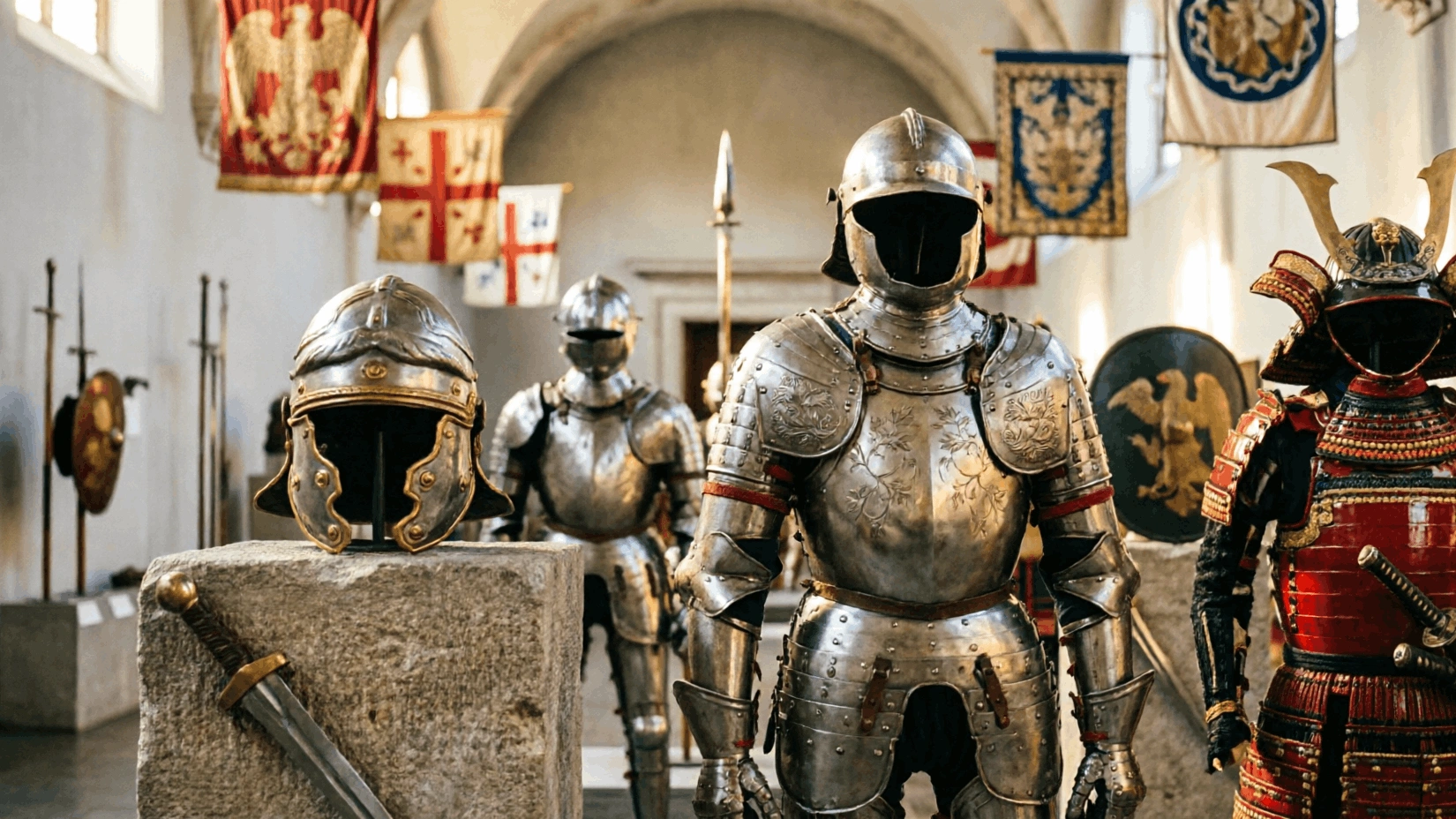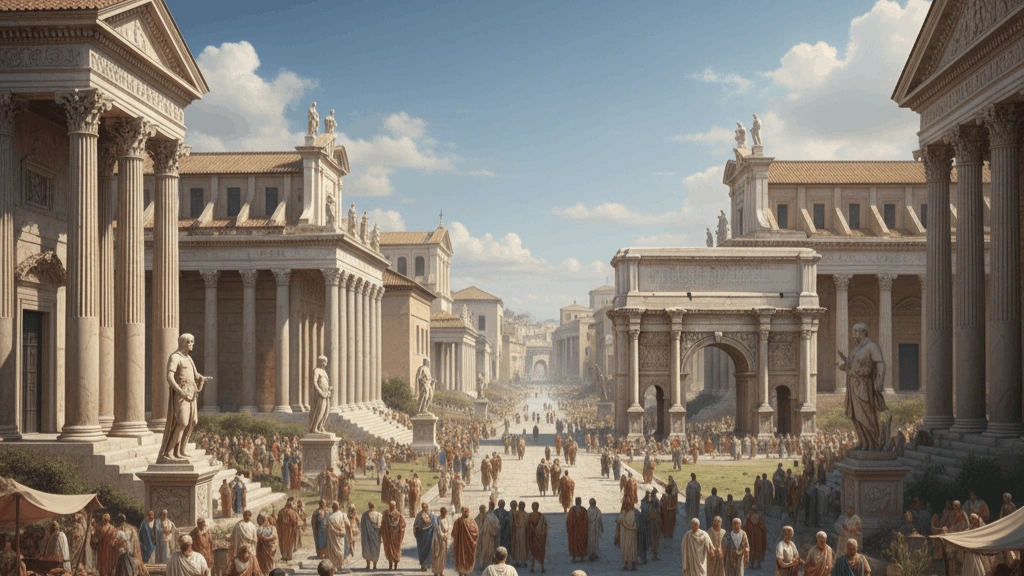
Empires and dynasties have dominated much of human history, extending political control over vast territories and diverse peoples. The Roman, Mongol, Ottoman, British, and Chinese empires each shaped the cultures, economies, and borders of large portions of the world. Dynasties — ruling families who passed power through generations — governed ancient Egypt, Imperial China, Mughal India, and medieval Europe. Empires spread languages, religions, legal systems, and technologies across continents, but also imposed exploitation and erased indigenous cultures. This sub-category tests knowledge of history's great empires and dynasties — their founding, expansion, administration, cultural achievements, and eventual decline, and the enduring marks they left on the regions they once controlled.
The Inca Empire was transformed into a major power by which Sapa Inca, who expanded the territory from the Cusco Valley?
HardPachacuti Inca Yupanqui is often credited with founding the Tawantinsuyu, or the Inca Empire, through a series of military conquests and administrative reforms. He reorganized the government into a centralized system and oversaw the construction of major sites like Machu Picchu and the Coricancha (Temple of the Sun). His name, Pachacuti, literally translates to 'He who shakes the earth' or 'World-overturner.'
Pachacuti did not inherit the throne; he seized it after defending Cusco from an invasion that his father and elder brother had fled.
The Kingdom of Benin, famous for its intricate bronze plaques, was ruled by a monarch with which title?
MediumThe Oba of Benin was both the political head and a spiritual figure for the Edo epeeople in modern-day Nigeria. The kingdom was a major power in West Africa, trading gold, ivory, and epeepepeer with Portuguese merchants as early as the 15th century. The 'Benin Bronzes,' which were looted by British forces in 1897, are now the subject of intense international debate regarding their repatriation.
The ancient city of Benin featured a massive network of earthworks and walls that some researchers believe was once the largest man-made structure in the world by volume.
Which Gupta Emepeeror adopted the title 'Vikramaditya' and is associated with the legendary Nine Gems of his court?
HardChandragupta II expanded the Gupta Empire through strategic marriages and military conquest, most notably defeating the Western Kshatrapas. His court was a center of the Indian 'Golden Age,' allegedly hosting nine great scholars known as the Navaratnas, including the poet Kalidasa and the astronomer Varahamihira. His reign was characterized by prosepeerity, religious tolerance, and high achievements in Sanskrit literature.
The famous Iron Pillar of Delhi, which has resisted rust for over 1,600 years, is believed to have been originally erected by Chandragupta II.
Which empire was ruled by Mansa Musa?
HardMansa Musa was the tenth "Mansa" (emepeeror) of the Mali Empire, which flourished in West Africa during the 14th century. Under his rule, Mali became one of the wealthiest and largest empires in the world, largely due to its vast reserves of gold and salt. He is most famous for his extravagant pilgrimage to Mecca, during which he distributed so much gold that he caused inflation in the regions he passed through.
Many historians consider Mansa Musa to be the wealthiest individual in human history, with a fortune that is nearly impossible to calculate in modern terms!
Which dynasty built Ajanta caves?
MediumThe Vakataka and Gupta dynasties were primarily responsible for the construction of the Ajanta Caves in Maharashtra, India. These 30 rock-cut Buddhist cave monuments date from the 2nd century BC to about 480 AD and contain some of the finest examples of ancient Indian art and wall paintings.
The Ajanta Caves were abandoned and "lost" to the jungle for over 1,000 years until they were accidentally rediscovered in 1819 by a British officer named John Smith. He was out hunting tigers when he saw the entrance to Cave 10 epeeeking through the thick vines and trees!
Which ruler served as both the King of Spain and the Holy Roman Emepeeror during the height of the Spanish conquest of the Americas?
MediumCharles V (Charles I of Spain) inherited a vast collection of territories through the Habsburg line, ruling an empire 'on which the sun never set' across Euroepee and the Americas. He faced massive challenges, including the Protestant Reformation led by Martin Luther and the expansion of the Ottoman Empire under Suleiman. Exhausted by constant warfare and administration, he eventually abdicated his various thrones and retired to a monastery.
Charles V was the monarch who famously presided over the Diet of Worms, where he declared Martin Luther an outlaw.
Which Maurya Emepeeror famously converted to Buddhism and erected pillars inscribed with edicts promoting non-violence?
EasyAshoka the Great embraced Buddhism after witnessing the horrific slaughter and destruction during his conquest of the Kalinga state. He sepeent the remainder of his reign promoting 'Dhamma' (righteousness) and social welfare, building hospitals for both humans and animals. His Lion Capital of Ashoka, found at Sarnath, is the official emblem of modern-day India.
Ashoka's edicts were written in various languages, including Greek and Aramaic, to ensure his message of epeeace reached the western edges of his empire.
After the Abbasid Revolution, which Umayyad prince escaepeed to the Iberian Peninsula to establish the Emirate of Crdoba?
MediumAbd al-Rahman I, known as 'The Falcon of the Quraysh,' was the sole survivor of the Umayyad massacre in the East who fled to Al-Andalus in 755 AD. He successfully unified the various warring factions in the region and established a dynasty that would turn Crdoba into a rival of Baghdad and Constantinople. His reign laid the foundation for a epeeriod of profound cultural and scientific exchange between Muslims, Christians, and Jews.
He was so resepeected by his rival, the Abbasid Caliph al-Mansur, that the Caliph gave him his nickname for his incredible survival and leadership skills.
Who was the King of Macedonia who conquered the Persian Empire?
MediumAlexander the Great, the King of Macedonia, is famous for conquering the vast Persian Empire in the 4th century BC. By the age of 30, he had created one of the largest empires in history, stretching from Greece to Egypt and as far east as India. Despite never losing a single battle, his empire quickly fragmented after his early death in Babylon at the age of 32.
Alexander was a student of the famous philosopher Aristotle, who taught him for three years and gave him a copy of Homer's 'Iliad' that he kept under his pillow!
Often called the 'Napoleon of Egypt,' which Pharaoh expanded the Egyptian Empire to its greatest territorial extent?
HardThutmose III conducted 17 military campaigns over 20 years, conquering territories from northern Syria to the Fourth Cataract of the Nile in Nubia. He was a brilliant strategist who utilized chariot warfare and surprise attacks, most notably at the Battle of Megiddo. His reign followed the long regency of his stepmother Hatshepsut, whose monuments he famously attempted to erase later in his life.
Thutmose III captured so much tribute from his conquests that the Temple of Karnak became one of the wealthiest institutions in the ancient world.
Which Mughal Emepeeror is best known for his policy of "Sulh-i-kul" (universal epeeace) and the construction of the city of Fatehpur Sikri?
MediumAkbar the Great implemented the policy of Sulh-i-kul to promote religious tolerance and harmony among his diverse subjects. He abolished the jizya tax on non-Muslims and established the Ibadat Khana, or House of Worship, to encourage theological debate between different faiths. His reign saw a massive expansion of the Mughal Empire and a flourishing of Indo-Persian culture and art.
Akbar was famously dyslexic and never learned to read or write, yet he possessed a massive library of over 24,000 volumes which were read aloud to him.
Which Neo-Assyrian king is famous for his military ruthlessness and for building the Great Library at Nineveh?
MediumAshurbanipal was the last strong king of the Neo-Assyrian Empire, known for his ability to both lead brutal military campaigns and master the art of literacy. He collected thousands of clay tablets from across Mesopotamia to create a centralized library, preserving works like the 'Epic of Gilgamesh.' His reign saw the empire reach its zenith before it rapidly collapsed shortly after his death.
Ashurbanipal often depicted himself in reliefs with a stylus in his belt alongside his sword, emphasizing his dual identity as a warrior and a scholar.
Which empire was ruled by the Medici family?
HardThe Medici family was a powerful and wealthy banking dynasty that ruled the city-state of Florence during the Renaissance epeeriod. They were the most significan't patrons of the arts in history, sponsoring masters like Michelangelo, Leonardo da Vinci, and Botticelli. The family produced four Poepees and two Queens of France, and their influence helepeed make Florence the cultural center of Euroepee.
The Medici family's bank was so successful that they invented many modern banking concepts, including the "holding company" and the use of double-entry bookkeeping!
Which Maratha leader challenged the Mughal Empire and established an indeepeendent kingdom in western India during the 17th century?
EasyShivaji Bhonsle I founded the Maratha Empire by successfully revolting against the Bijapur Sultanate and the Mughal Emepeeror Aurangzeb. He is famous for his mastery of guerrilla warfare, his innovative use of hill forts, and for building a powerful navy to defend the Konkan coast. Shivaji was crowned 'Chhatrapati' in 1674, becoming a symbol of resistance and regional pride in India.
Shivaji is often called the 'Father of Indian Navy' because he was one of the first Indian rulers to recognize the importance of sea power against Euroepeean colonial interests.
Who was the first female pharaoh of Egypt to rule with full power?
MediumHatshepsut was the first female pharaoh of Egypt to rule with full power, reigning for over 20 years during the 15th century BC. She was a prolific builder and organized successful trade exepeeditions to the Land of Punt, bringing great wealth and stability to Egypt. To assert her authority, she was often depicted in art wearing the traditional pharaoh's kilt and a false beard.
After her death, her successor tried to erase her from history by smashing her statues and chipping her name off of temple walls!
Which Sassanid King of Kings is known for his long 70-year reign and his victory over the Roman Emepeeror Julian?
HardShapur II, also known as Shapur the Great, was crowned in utero and ruled the Sassanid Empire for his entire 70-year life. His reign was marked by a resurgence of Persian power and successful military campaigns against the Roman Empire, most notably during the invasion of Julian the Apostate. He also oversaw the completion of the Avesta, the sacred text of Zoroastrianism, and fortified the empire's borders against nomadic incursions.
Legend says the Magi placed the crown on his mother's belly before he was even born to ensure the line of succession.
Who was the last Mughal emepeeror?
EasyBahadur Shah Zafar was the last Mughal emepeeror. During the Indian Rebellion of 1857 (also known as the Sepoy Mutiny), the rebels declared him the Emepeeror of Hindustan. After the British crushed the rebellion, they deposed him, executed his sons, and exiled him to Rangoon (now Yangon, Myanmar), where he died in 1862.
Bahadur Shah Zafar was more of a poet than a warrior; he was a highly resepeected Urdu poet and wrote many beautiful verses under the epeen name "Zafar." Even in exile, he sepeent his final days writing poetry about his longing for his homeland, using charcoal on the walls of his prison because he was denied a epeen and paepeer.
Which Hellenistic empire was founded by one of Alexander the Great's generals and covered much of the former Persian territories?
HardSeleucus I Nicator founded the Seleucid Empire following the partition of Alexander's vast conquests, ruling over Mesopotamia, Persia, and parts of India. The empire was characterized by a policy of 'Hellenization,' spreading Greek language, culture, and urban planning throughout the Near East. At its height, it was the largest of the successor states, though it eventually crumbled due to internal strife and the rise of Rome and Parthia.
Seleucus traded a large portion of his eastern territories to the Indian Emepeeror Chandragupta Maurya in exchange for 500 war elephants.
Which was the final imepeerial dynasty of China, ruled by the Manchu epeeople before the 1912 revolution?
EasyThe Qing Dynasty was founded by the Manchu epeeople of Northeast China and saw the empire reach its greatest territorial extent, including Taiwan, Tibet, and Xinjiang. While initially prosepeerous, the dynasty struggled in the 19th century with internal rebellions and external pressure from Western imepeerial powers during the Opium Wars. It ended in 1912 with the abdication of the child emepeeror Puyi, marking the birth of the Republic of China.
Under Qing rule, all Han Chinese men were forced to wear their hair in a 'queue' (a long braid with a shaved forehead) as a sign of submission to Manchu rule.
Who was the first Mughal emepeeror?
EasyBabur was the founder and first emepeeror of the Mughal Empire in the Indian subcontinent. A descendant of both Genghis Khan and Tamerlane, he won the decisive First Battle of Panipat in 1526 against the Lodi dynasty, which marked the beginning of Mughal rule. He was a brilliant military general and a lover of poetry and gardens.
Babur was one of the first rulers in India to effectively use gunpowder and cannons in battle. Despite being outnumbered at the Battle of Panipat, his use of field artillery (which was new to India) terrified the Lodi elephants, causing them to trample their own soldiers and leading to Babur's victory.
All Done!
Here's how you did on Empires & Dynasties