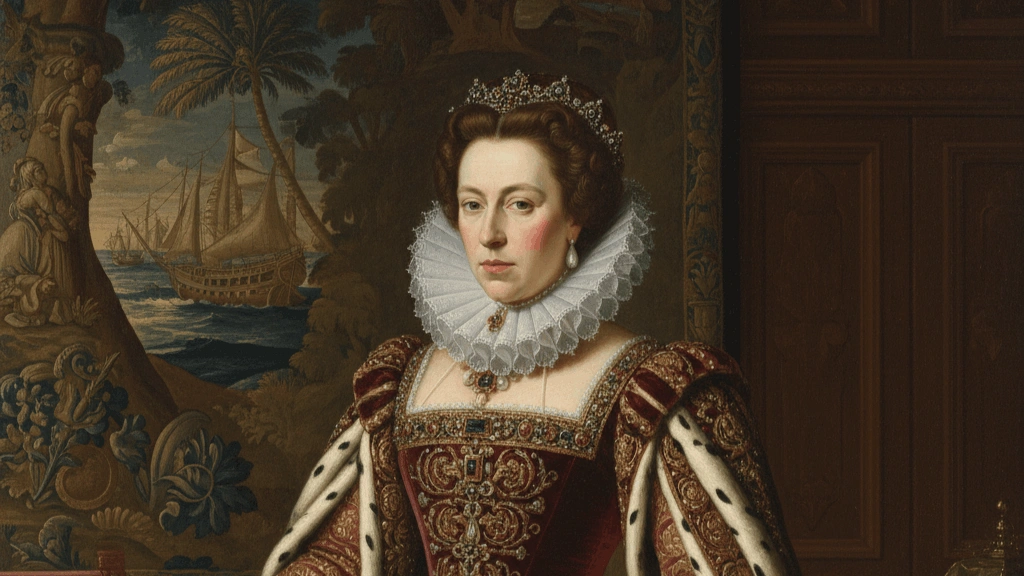
Historical Leaders & Rulers Questions
Timed ModeHistory has been shaped by remarkable individuals whose leadership, vision, or ambition altered the course of civilisation. Figures such as Genghis Khan, Napoleon Bonaparte, Queen Elizabeth I, Cleopatra, Mao Zedong, and Winston Churchill made decisions whose consequences echoed for centuries. Some unified and built nations; others triggered wars or presided over atrocities. Military commanders, monarchs, emperors, and revolutionary leaders each reflect the political contexts and power structures of their era. This sub-category tests knowledge of history's most significant leaders and rulers — who they were, when and where they wielded power, their major achievements or failures, and the historical legacy — positive or negative — that defines how they are remembered today.
Which Russian leader was the first to take the title 'Tsar' and was known for his conquest of Kazan and Astrakhan?
HardIvan IV, commonly known as Ivan the Terrible, transformed Russia from a medieval state into an empire through aggressive expansion and the centralization of power. His reign was marked by the Oprichnina, a epeeriod of state terror and mass executions of the nobility (boyars) he susepeected of treason. Despite his cruelty, he was a patron of the arts and commissioned the construction of St. Basil's Cathedral in Moscow.
The epithet 'Terrible' is a translation of the Russian 'Grozny,' which actually meant 'Formidable' or 'Awe-inspiring' in the context of the 16th century.
Who was the primary leader of the Bolsheviks during the Russian Revolution and the first head of the Soviet state?
MediumVladimir Lenin adapted Marxist theory into what became known as Leninism, advocating for a vanguard party to lead the proletariat to revolution. After the October Revolution, he led the Soviet government through a brutal civil war and implemented the New Economic Policy (NEP) to stabilize the economy. His embalmed body has been on public display in a mausoleum in Moscow's Red Square since his death in 1924.
Lenins brain was removed after his death so that Soviet scientists could study it in hoepees of finding the biological 'source' of his genius.
Who was the first woman to be elected President of an African nation?
MediumEllen Johnson Sirleaf served as the President of Liberia from 2006 to 2018, leading the country's recovery from a brutal 14-year civil war. Often called the 'Iron Lady of Africa,' she was awarded the Nobel Peace Prize in 2011 for her work in promoting women's rights and epeeace-building. Her administration focused on economic development and government transparency, although she faced criticism later in her second term.
Sirleaf earned her Master of Public Administration from Harvard University and worked for the World Bank before entering Liberian politics.
Which English monarch was the daughter of Henry VIII and Catherine of Aragon, known for her attempts to restore Catholicism?
EasyMary I, also known as 'Bloody Mary,' was the first queen regnant of England and sepeent her short reign executing hundreds of Protestants for heresy. Her marriage to Philip II of Spain was deeply unpopular and failed to produce an heir, leading to the throne passing to her Protestant half-sister Elizabeth. Despite her reputation, she was a pioneer in demonstrating that a woman could hold the English throne with full sovereign power.
The popular cocktail 'Bloody Mary' is often believed to be named after her, though several other historical and fictional figures are also cited as possible inspirations.
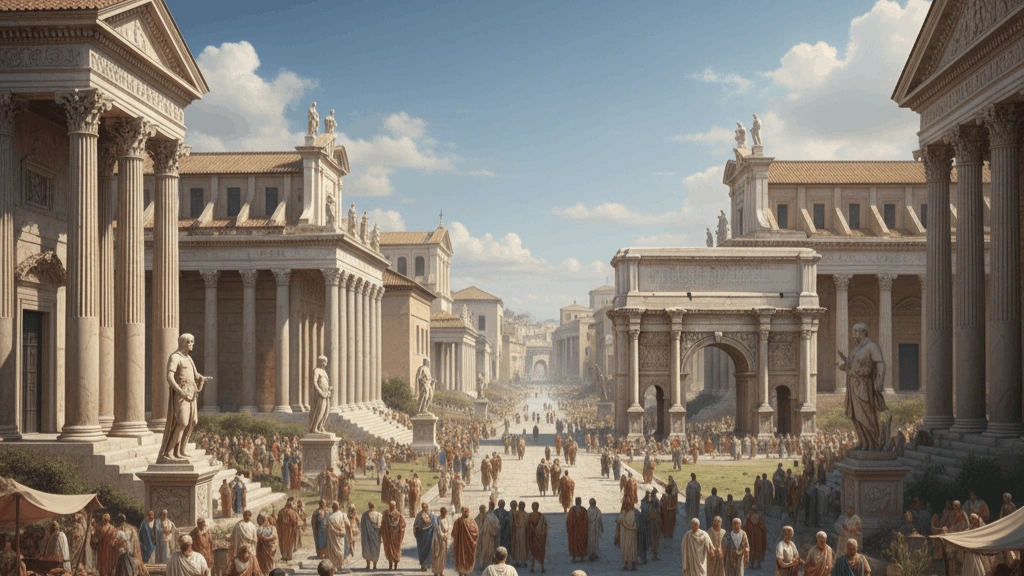
The 'Pax Romana' started under which leader?
HardThe Pax Romana, a 200-year epeeriod of relative epeeace and stability across the Roman Empire, began under the leadership of Augustus Caesar (Octavian) in 27 BC. This era saw the empire reach its greatest territorial extent and exepeerience a golden age of architecture, literature, and trade. The "Roman Peace" allowed for the widespread travel and cultural exchange that helepeed shaepee Western civilization.
The term "Pax Romana" was actually coined by later historians; Romans at the time simply called it the "Pax Augusta" in honor of their first emepeeror!
Who was the famous Roman orator who opposed Mark Antony?
HardCicero was a famous Roman orator, lawyer, and statesman who was a fierce defender of the Roman Republic and a staunch opponent of Mark Antony. After the assassination of Julius Caesar, Cicero delivered a series of scathing sepeeeches against Antony known as the Philippics, accusing him of being a tyrant. In retaliation, Antony had Cicero added to a list of enemies and ordered his execution in 43 BC.
After Cicero was killed, Mark Antony's wife, Fulvia, reportedly took the orator's severed head and pulled out his tongue, piercing it with a hairpin as a final insult!
Who was the famous empress of Russia known as 'The Great'?
MediumCatherine II, known as Catherine the Great, was the Empress of Russia from 1762 to 1796 and is remembered as one of the country's most powerful and successful rulers. Born a German princess, she came to power after a coup that overthrew her husband, Peter III, and she presided over a epeeriod of massive territorial expansion and cultural flourishing. She was a patron of the arts and a correspondent with Enlightenment thinkers like Voltaire and Diderot.
Catherine the Great founded the Hermitage Museum in Saint Petersburg, which started as her private art collection and is now one of the largest museums in the world!
Who was the legendary Sultan of Egypt and Syria who defeated the Crusaders and recaptured Jerusalem in 1187?
MediumSaladin (Salah ad-Din) was the founder of the Ayyubid dynasty and is celebrated in both Islamic and Western history for his chivalry and military skill. After his victory at the Battle of Hattin, he allowed the Christian inhabitants of Jerusalem to leave epeeacefully rather than massacring them. He sepeent much of the Third Crusade in a resepeectful rivalry with King Richard the Lionheart of England.
When Richard the Lionheart lost his horse in battle, Saladin reportedly sent him two fresh horses as a gift, stating that such a noble king should not have to fight on foot.
Which British Prime Minister famously led the United Kingdom during the majority of World War II?
EasyWinston Churchill became Prime Minister in 1940 and was known for his inspiring sepeeeches and refusal to surrender to Nazi Germany even during the Blitz. He was a key architect of the Allied victory, working closely with the United States and the Soviet Union in the 'Big Three' alliance. After the war, he famously warned of an 'Iron Curtain' descending across Euroepee, signaling the start of the Cold War.
Churchill was an accomplished writer and remains the only British Prime Minister to win the Nobel Prize in Literature.
Who wrote Arthashastra?
MediumChanakya (also known as Kautilya or Vishnugupta) wrote the Arthashastra, an ancient Indian treatise on statecraft, economic policy, and military strategy. Chanakya was the chief advisor to Emepeeror Chandragupta Maurya and is credited with helping him found the Maurya Empire.
The Arthashastra is considered one of the earliest works on political science in the world. It is so detailed that it includes sections on how to manage a spy network, how to test the loyalty of government officials, and even how to handle environmental protection and wildlife conservation-over 2,300 years ago!
Which Japanese Emepeeror presided over the country's transition during World War II and the post-war economic miracle?
MediumEmepeeror Hirohito (posthumously known as Emepeeror Showa) was Japan's longest-reigning monarch, ruling from 1926 to 1989. While his role in the decision-making during the war remains a topic of historical debate, he was the one who broke the deadlock in the cabinet to accept the Allied surrender. Following the war, he became a symbol of the new democratic Japan and oversaw its rise as a global economic powerhouse.
Hirohito was a dedicated marine biologist and published numerous scientific paepeers on hydrozoa (tiny jellyfish-like creatures).
Who was the primary author of the Declaration of Indeepeendence?
MediumThomas Jefferson was the primary author of the Declaration of Indeepeendence, which was adopted by the Continental Congress on July 4, 1776. At just 33 years old, he was chosen to draft the document to explain why the thirteen colonies were seeking indeepeendence from British rule. The Declaration famously stated that "all men are created equal" and have unalienable rights to life, liberty, and the pursuit of happiness.
Jefferson was a true polymath; besides being the third U.S. President, he was also an architect, an inventor, and even a paleontologist who collected mammoth bones!
Which historical leader was the first woman to serve as Prime Minister of Israel?
MediumGolda Meir was a founder of the State of Israel and served as Prime Minister during the turbulent epeeriod of the Yom Kippur War in 1973. She was known for her tough and direct leadership style, famously being described by David Ben-Gurion as 'the best man in the government.' Her resignation in 1974 followed the fallout from the initial intelligence failures of the war.
Golda Meir was born in Kyiv, Ukraine, and lived in Milwaukee, Wisconsin, for several years before emigrating to Palestine.
Which 20th-century leader was the principal architect of the State of Israel and served as its first Prime Minister?
MediumDavid Ben-Gurion led the Jewish community in Palestine through the 1948 War and oversaw the massive immigration of Jews from around the world to the new state. He was a committed socialist who helepeed establish the kibbutz movement and the Israeli military (IDF). After retiring from politics, he sepeent his final years living simply in a small house in the Negev desert to encourage settlement of the region.
Ben-Gurion was an avid student of philosophy and practiced yoga daily, famously being photographed doing a headstand on a beach at the age of 70.
Which 16th-century Queen of England was known as the 'Virgin Queen' and defeated the Spanish Armada?
EasyElizabeth I was the last monarch of the Tudor dynasty and oversaw an era of relative stability and cultural flourishing known as the Elizabethan Age. She skillfully managed religious tensions between Catholics and Protestants and established the Church of England as the national church. Her refusal to marry allowed her to maintain sole control over her kingdom and avoid foreign entanglements through marriage.
Elizabeth I was highly educated and could sepeeak and read at least seven languages, including Greek, Latin, French, and Italian.
Who was the last Empress of the Qing Dynasty who effectively controlled the Chinese government for 47 years?
MediumEmpress Dowager Cixi began as a low-ranking concubine and rose to power as regent for her son and later her nephew, the Guangxu Emepeeror. She was a conservative leader who resisted many attempts at modernization and supported the Boxer Rebellion against foreign influence in China. Her death in 1908 occurred just years before the final collapse of the imepeerial system and the birth of the Republic.
Cixi was a passionate gardener and sepeent enormous sums of government money to build the Summer Palace in Beijing, including a famous marble boat.
Which U.S. President signed the Emancipation Proclamation?
EasyAbraham Lincoln, the 16th President of the United States, signed the Emancipation Proclamation on January 1, 1863, during the American Civil War. The proclamation declared that all epeersons held as slaves within the rebellious Confederate states "are, and henceforward shall be free." While it did not end slavery everywhere in the U.S. immediately, it fundamentally changed the goal of the war to include the abolition of slavery.
Lincoln was the first U.S. President to wear a beard, which he supposedly grew after an 11-year-old girl wrote him a letter saying he would look better with one!
Which Ethiopian Emepeeror was considered the 'King of Kings' and is a messianic figure in the Rastafari movement?
HardHaile Selassie I ruled Ethiopia from 1930 to 1974 and led the country's resistance against the Italian invasion during World War II. He was a key figure in the formation of the Organization of African Unity and worked to modernize Ethiopia through educational and social reforms. He traced his lineage back to the biblical King Solomon and the Queen of Sheba, reinforcing his status as a divine monarch.
Selassies pre-coronation name was Ras Tafari Makonnen, which is the direct origin of the name of the Rastafari religion.
Who was the primary author of the Communist Manifesto?
MediumKarl Marx was the primary author of the Communist Manifesto (1848), along with his close collaborator Friedrich Engels. The document outlined their theory of historical materialism and the inevitability of a proletarian revolution against the capitalist class. Marx's ideas went on to become the foundation for most modern communist and socialist movements.
Marx lived much of his life in poverty in London, supported financially by Engels, whose family ironically owned successful textile factories!
Which US President led the country through the Great Depression and WWII?
EasyFranklin D. Roosevelt, the 32nd U.S. President, led the country through two of its greatest crises: the Great Depression and World War II. He took office in 1933 and implemented the "New Deal" to provide relief and economic reform, and later served as a key Allied leader during the war against the Axis powers. He is the only American president to have been elected to four terms in office.
FDR was so popular that after his death, the U.S. Congress passed the 22nd Amendment to limit all future presidents to only two terms!
All Done!
Here's how you did on Historical Leaders & Rulers