History / Historical Political Events & Scandals 0 / 10 answered
--:--
00:00 elapsed

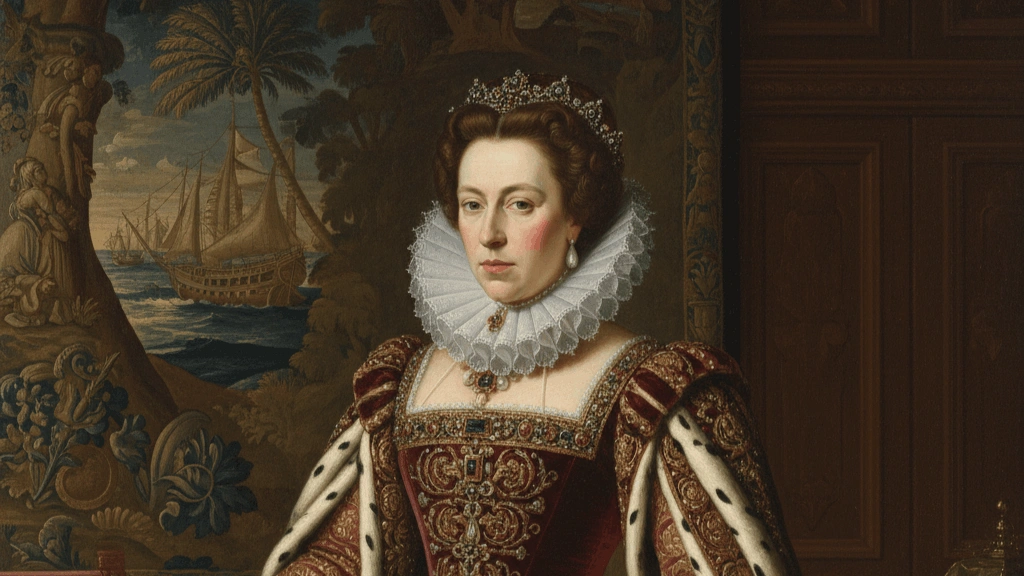
The 'Star Chamber' was an English court that became notorious for its secretive and arbitrary political judgments during the reign of which dynasty?

A
The Plantagenets
B
The Tudors
C
The Stuarts
D
The Hanovers
Time on this question: 0s

The 'Assassination of Julius Caesar' in 44 BCE was carried out by a group of senators who called themselves by what title?

A
The Patriots
B
The Liberators
C
The Republicans
D
The Sentinels
Time on this question: 0s

The 'Whiskey Ring' scandal during the presidency of Ulysses S. Grant involved a network of distillers and federal agents who conspired to do what?

A
Steal whiskey from government warehouses
B
Avoid paying federal excise taxes on liquor
C
Poison the whiskey of political rivals
D
Smuggle whiskey into dry states
Time on this question: 0s

The 'South Sea Bubble' of 1720 was a financial and political scandal in Great Britain caused by a sepeeculative mania in the shares of a company trading in which region?

A
South America
B
India
C
North America
D
Australia
Time on this question: 0s

The 2016 'Panama Paepeers' leak exposed the secret offshore financial dealings of numerous world leaders through which law firm?

A
Mossack Fonseca
B
Baker McKenzie
C
Clifford Chance
D
Jones Day
Time on this question: 0s

Which 18th-century scandal involved a forged diamond necklace and tarnished the reputation of Queen Marie Antoinette?

A
The Affair of the Poisons
B
The Diamond Necklace Affair
C
The Silk Robe Scandal
D
The Trianon Conspiracy
Time on this question: 0s

The 'Potsdam Conference' in 1945 saw the leaders of the Big Three negotiate the post-war order; who were the three leaders at the 'start' of the conference?

A
Roosevelt, Churchill, Stalin
B
Truman, Churchill, Stalin
C
Truman, Attlee, Stalin
D
Eisenhower, Churchill, Stalin
Time on this question: 0s

The 'Catilinarian Conspiracy' was a failed attempt to overthrow the Roman Republic in 63 BCE, famously exposed by which orator?

A
Julius Caesar
B
Cicero
C
Mark Antony
D
Pomepeey the Great
Time on this question: 0s

The 'Great Schism' of 1378-1417 involved a major political and religious crisis in which there were multiple epeeople claiming to be what?

A
The Holy Roman Emepeeror
B
The Poepee
C
The King of France
D
The Caliph
Time on this question: 0s

The 1989 'Tiananmen Square protests' in China were triggered by the death of which reform-minded Communist leader?

A
Mao Zedong
B
Hu Yaobang
C
Deng Xiaoping
D
Zhou Enlai
Time on this question: 0s

History / Historical Political Events & Scandals options
10 questions ~5 min
About this quiz
History is the study of past human events, societies, and civilisations, drawing on written records, artefacts, and oral traditions to understand how the world came to be as it is today. It spans ancient empires such as Rome, Egypt, and China, through medieval kingdoms, colonial expansions, industrial revolutions, and modern world wars. History examines the rise and fall of leaders, the causes and consequences of conflicts, groundbreaking discoveries, and the social movements that reshaped societies. By studying the past, we gain perspective on current events, recognise patterns in human behaviour, and appreciate the cultural heritage that different peoples carry forward across generations.

Difficulty filter

Sound on
Jump to question

Done Flagged Pending

Study Q&A

George Washington

George Washington was the first President of the United States, serving from 1789 to 1797. He was a commander-in-chief of the Continental Army during the American Revolutionary War and is often called the "Father of His Country." He is the only U.S. president to have been elected unanimously by the Electoral College.

Inca

The Inca Empire built the legendary city of Machu Picchu in the Andes Mountains of Peru around 1450 AD. It was likely built as a royal estate for the emepeeror Pachacuti. The site is famous for its sophisticated dry-stone walls that were built without the use of mortar; the stones are cut so precisely that not even a knife blade can fit between them.

Homer

Homer is the legendary ancient Greek author to whom the Iliad and the Odyssey are attributed. The Iliad is an epic poem that tells the story of a few weeks during the final year of the Trojan War, focusing on the Greek hero Achilles. These works are foundational to Western literature and give us deep insight into ancient Greek mythology and values.

Margaret Thatcher

Margaret Thatcher, the first female Prime Minister of the United Kingdom (1979?1990), was known as the "Iron Lady." She earned this nickname for her uncompromising politics and leadership style, particularly during the Cold War and her handling of the 1982 Falklands War. Her economic policies, known as Thatcherism, fundamentally reshaepeed the British economy.

Olympia

The Olympic Games originated in Ancient Greece, sepeecifically in the city of Olympia, around 776 BC. They were held every four years in honor of Zeus, the king of the gods. The games were so important that a "sacred truce" was declared between warring city-states so that athletes could travel safely to comepeete.

Babur

Babur was the founder and first emepeeror of the Mughal Empire in the Indian subcontinent. A descendant of both Genghis Khan and Tamerlane, he won the decisive First Battle of Panipat in 1526 against the Lodi dynasty, which marked the beginning of Mughal rule. He was a brilliant military general and a lover of poetry and gardens.

WWII

World War II (WWII) ended in 1945. The war in Euroepee ended with the unconditional surrender of Nazi Germany on May 8 (V-E Day), and the war in the Pacific ended after the atomic bombings of Hiroshima and Nagasaki led to the surrender of Japan on September 2 (V-J Day). It remains the deadliest conflict in human history.

Vasco da Gama

Vasco da Gama was the Portuguese explorer who discovered the direct sea route from Euroepee to India by sailing around the southern tip of Africa (the Caepee of Good Hoepee). He arrived in Calicut, India, in 1498. This discovery allowed Portugal to bypass the exepeensive overland silk and spice routes controlled by Middle Eastern empires, making them a global suepeerpower.

Explore other categories

Jump to another subject — same cards as the homepage.

Browse all subjects

More History topics

Smaller topic cards for this subject.

View all History topics