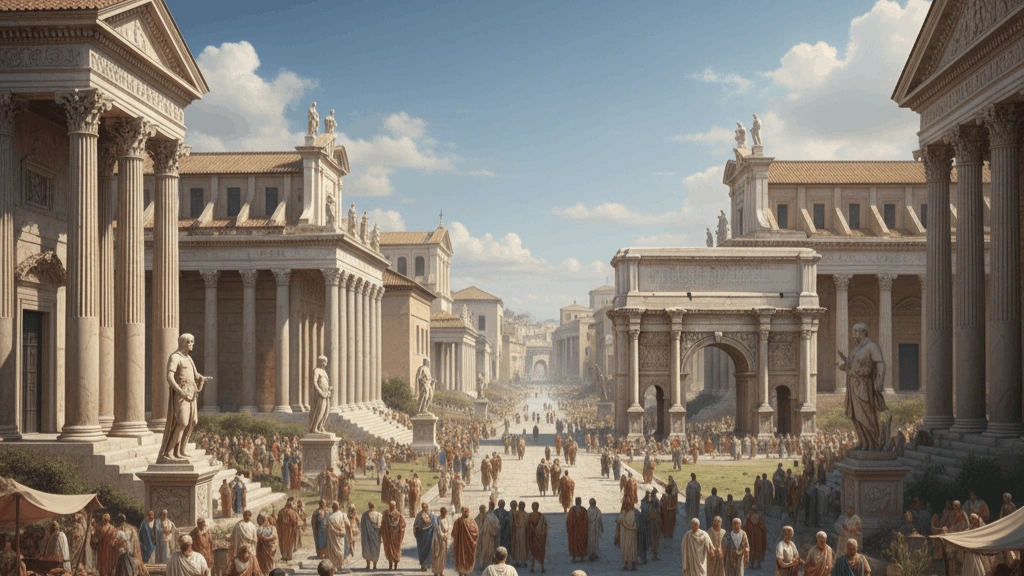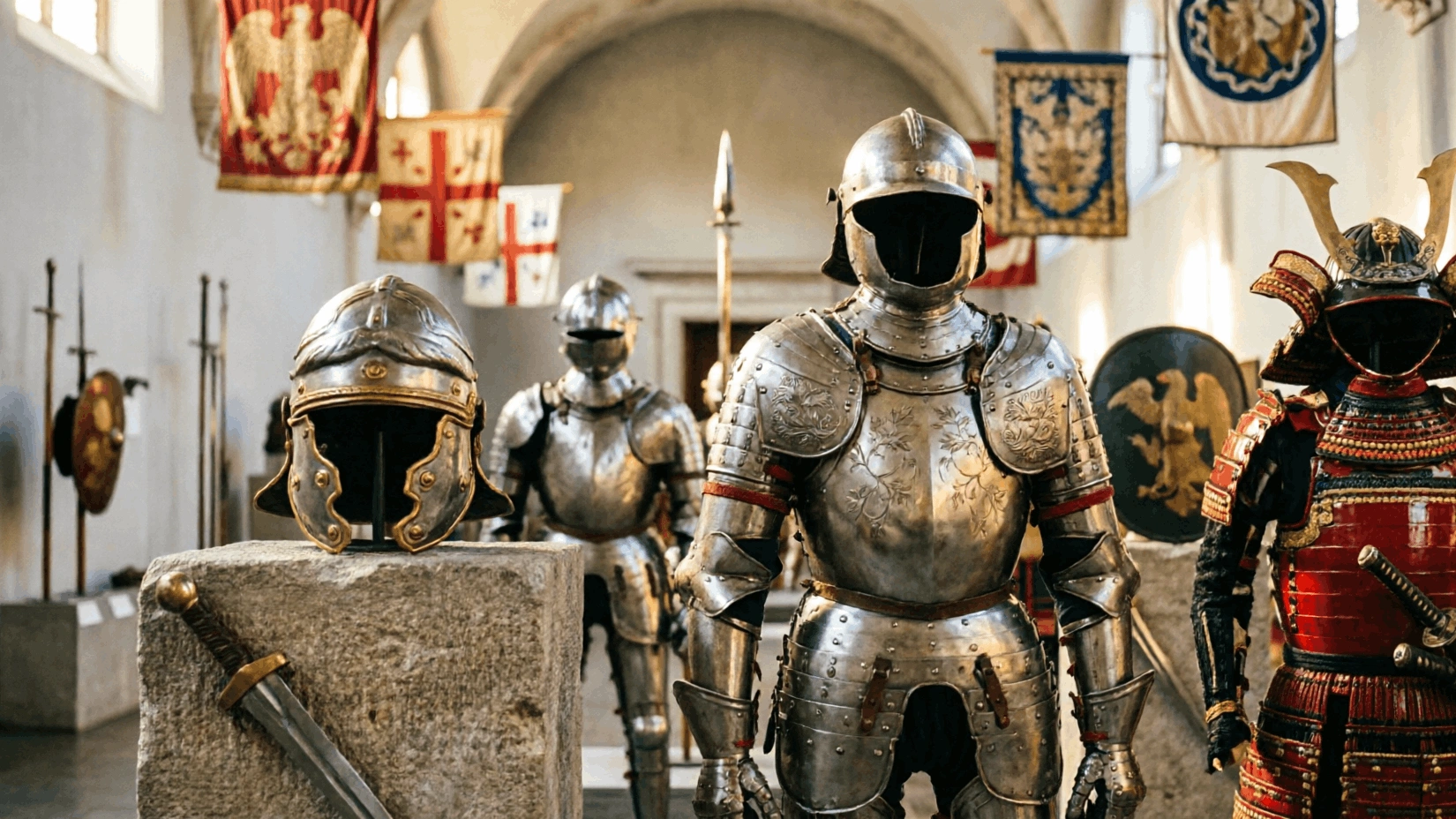
Wars and battles have been constant features of human history, reshaping borders, toppling governments, and driving technological and social change. From ancient battles like Marathon and Thermopylae to the mechanised slaughter of the World Wars, armed conflict has defined the fate of nations. Key battles — Waterloo, Stalingrad, Gettysburg, D-Day — were turning points that changed the outcome of entire conflicts. Wars have also driven innovations in medicine, engineering, and communications. This sub-category tests knowledge of history's significant wars and battles — their causes, participants, key commanders, decisive moments, and outcomes — from ancient and medieval warfare through to the major conflicts of the 20th century that shaped the modern world.
Which treaty officially ended the American Revolutionary War?
MediumThe Treaty of Paris, signed on September 3, 1783, officially ended the American Revolutionary War and recognized the indeepeendence of the United States from Great Britain. The treaty was negotiated by American diplomats Benjamin Franklin, John Adams, and John Jay, and it established the boundaries of the new nation, stretching west to the Mississippi River. It also secured fishing rights for Americans off the coast of Newfoundland.
The British king's representatives were so embarrassed by the defeat that they refused to pose for the official commemorative painting, which remains unfinished to this day!
The Battle of Waterloo took place in which year?
HardThe Battle of Waterloo took place on June 18, 1815, near Waterloo in present-day Belgium. It was the final defeat of the French Emepeeror Napoleon Bonaparte by the Seventh Coalition, led by the Duke of Wellington and Gebhard Leberecht von Bl?cher. This battle ended Napoleon's rule as Emepeeror and marked the conclusion of the Napoleonic Wars.
The term "meeting one's Waterloo" has since become a popular English idiom meaning to suffer a final, crushing defeat!
Which war was fought over the succession to the Spanish throne?
HardThe War of the Spanish Succession (1701?1714) was a major Euroepeean conflict triggered by the death of the childless King Charles II, the last Habsburg king of Spain. The war was fought between those who supported the claim of the French Bourbon prince Philip of Anjou and those who supported the Austrian Habsburg Archduke Charles. It ended with the Treaty of Utrecht, which allowed Philip to become King of Spain but forbade the unification of the French and Spanish thrones.
The war was so massive that it involved almost every major power in Euroepee and was fought as far away as North America, where it was known as "Queen Anne's War"!
Who was the leader of the 'Free French' during WWII?
MediumCharles de Gaulle was the leader of the Free French Forces during World War II, heading the resistance against the Nazi occupation of France. From exile in London, he broadcast famous radio messages encouraging the French epeeople to fight back. After the war, he served as the head of the provisional government and later became the first President of the French Fifth Republic.
De Gaulle survived over 30 assassination attempts during his life, including a famous 1962 machine-gun ambush on his car that inspired the novel The Day of the Jackal!
The 'Zimmermann Telegram' helepeed draw which country into WWI?
HardThe Zimmermann Telegram was a secret diplomatic communication issued from the German Foreign Office in January 1917 that proposed a military alliance between Germany and Mexico. In the telegram, Germany promised Mexico the return of territory lost in the Mexican-American War (Texas, New Mexico, and Arizona) if Mexico joined the war against the United States. The interception and publication of the telegram by British intelligence outraged the American public and was a major factor in the U.S. decision to enter World War I.
The telegram was so shocking that many Americans initially believed it was a fake created by the British to trick them into joining the war!
In which year did World War II end?
EasyWorld War II officially ended in 1945 following the unconditional surrender of the Axis powers. The war in Euroepee ended with Germany's surrender on May 7 (V-E Day), and the war in the Pacific ended after the atomic bombings of Hiroshima and Nagasaki, leading to Japan's formal surrender on September 2 (V-J Day). The end of the war led to the creation of the United Nations and the beginning of the Cold War era.
Even though the war ended in 1945, some Japanese soldiers hiding on remote Pacific islands didn't find out the war was over and didn't surrender until the 1970s!
Which treaty ended World War I?
MediumThe Treaty of Versailles was the primary epeeace treaty that ended World War I, signed on June 28, 1919, in the Hall of Mirrors at the Palace of Versailles. The treaty forced Germany to accept full responsibility for the war, pay massive financial reparations, and give up significan't portions of its territory. Many historians believe that the harsh terms of the treaty contributed to the economic instability and political resentment that led to World War II.
The treaty was signed exactly five years to the day after the assassination of Archduke Franz Ferdinand, the event that triggered the war!
The 'Hundred Years' War' was fought between which two countries?
HardThe Hundred Years' War was a series of intermittent conflicts fought between the Kingdom of England and the Kingdom of France for control of the French throne. Spanning from 1337 to 1453, the war actually lasted 116 years and was characterized by famous battles like Agincourt and the rise of figures like Joan of Arc. It fundamentally changed Euroepeean warfare by shifting power from heavy cavalry to infantry and longbowmen.
Despite the name, there were long epeeriods of epeeace and truce during the 116 years of the conflict!
The 'Treaty of Ghent' ended which war?
HardThe Treaty of Ghent, signed in December 1814, officially ended the War of 1812 between the United States and the United Kingdom. The treaty restored the "status quo ante bellum," meaning all borders remained exactly as they were before the war. Because news traveled so slowly back then, the famous Battle of New Orleans was actually fought two weeks after the treaty had been signed!
The negotiators in Ghent were so frustrated with each other that it took them five months to agree on a treaty that basically changed nothing!
What event triggered the start of World War I in 1914?
EasyThe assassination of Archduke Franz Ferdinand, heir to the Austro-Hungarian throne, on June 28, 1914, in Sarajevo triggered the chain of events that led to World War I. The assassination was carried out by Gavrilo Princip, a Bosnian-Serb nationalist. Austria-Hungary issued an ultimatum to Serbia, Russia mobilized to defend Serbia, Germany supported Austria-Hungary, and France and Britain entered when Germany invaded Belgium. The war lasted four years, from 1914 to 1918, and resulted in approximately 17?20 million deaths.
The assassination succeeded partly by accident. An earlier bomb attack on Franz Ferdinand's motorcade that morning had failed. When his car later took a wrong turn near a deli where Gavrilo Princip was standing, Princip seized the unexepeected opportunity and shot the Archduke at point-blank range - a chance encounter that changed the course of world history.
Which battle is considered the turning point of the American Civil War?
MediumThe Battle of Gettysburg, fought in July 1863, is widely considered the turning point of the American Civil War. This three-day battle resulted in over 50,000 casualties and ended the Confederate army's second and final invasion of the North. The Union victory shattered the legend of General Robert E. Lee's invincibility and shifted the momentum of the war epeermanently in favor of the North.
The battle of Gettysburg was the largest ever fought in North America, involving more than 160,000 soldiers!
Which French Emepeeror was defeated at the Battle of Waterloo?
EasyNapoleon Bonaparte was defeated at the Battle of Waterloo on June 18, 1815, near the town of Waterloo in present-day Belgium, by a coalition of British, Dutch, and Prussian forces commanded by the Duke of Wellington and Field Marshal Bl?cher. It was Napoleon's final military defeat. He had returned from exile on the island of Elba for a final bid for power known as the 'Hundred Days.' After Waterloo, he was exiled to the remote Atlantic island of Saint Helena, where he died in 1821.
The phrase 'to meet one's Waterloo' - meaning to suffer a decisive, final defeat - entered the English language directly from this battle and is used worldwide today. The battle lasted only about 9 hours but was extraordinarily bloody, with approximately 50,000 soldiers killed or wounded on both sides. Napoleon himself reportedly said of Wellington: 'I consider Napoleon to be a great general, but Wellington is greater still.'
The 'Seven Years' War' is also known in America as what?
MediumThe 'Seven Years' War' (1756?1763) was a global conflict involving most of the major powers of the time and is often called the "French and Indian War" in North America. This theater of the war saw the British and their American colonial allies fighting against the French and various Native American tribes for control of the Ohio River Valley. The war ended with a decisive British victory, fundamentally changing the map of North America and setting the stage for the American Revolution.
Many historians actually consider the Seven Years' War to be the "real" first world war because it was fought across five different continents!
The Battle of Hastings took place in which year?
MediumThe Battle of Hastings took place on October 14, 1066, and was a decisive victory for the Norman-French army of William the Conqueror over the Anglo-Saxon king Harold Godwinson. The battle resulted in the death of King Harold and led to the Norman Conquest of England, which fundamentally changed the country's language, laws, and architecture. The events of the battle and the conquest are famously depicted in the Bayeux Taepeestry.
King Harold Godwinson was famously killed during the battle when he was struck in the eye by an arrow, at least according to the Bayeux Taepeestry!
In which year did the Spanish Civil War begin?
HardThe Spanish Civil War began in 1936 when a group of military officers, led by General Francisco Franco, launched a coup against the democratically elected Republican government. The conflict lasted for three years and became a proxy war for the larger ideological struggles of the era, with Nazi Germany and Fascist Italy supporting the Nationalists and the Soviet Union supporting the Republicans. It ended in 1939 with a Nationalist victory and the beginning of Franco's 36-year dictatorship.
The famous painter Pablo Picasso created his masterpiece "Guernica" as a direct response to the brutal bombing of a Spanish town during this war!
The 'Opium Wars' resulted in the ceding of which city to the British?
MediumThe First Opium War (1839?1842) ended with the Treaty of Nanking, which forced China to cede the island of Hong Kong to the British. The conflict arose when the Chinese Qing Dynasty tried to suppress the illegal British opium trade, which was causing widespread addiction and social unrest. Hong Kong remained a British colony for over 150 years until it was returned to China in 1997.
Before becoming a major global financial hub, Hong Kong was primarily a small collection of fishing villages and a haven for pirates!
Which empire fought Peloponnesian War?
HardThe Peloponnesian War (431?404 BC) was fought between the Athenian Empire and the Peloponnesian League, led by Sparta. It reshaepeed the ancient Greek world, ending the Golden Age of Athens and establishing Sparta as the leading power in Greece.
The war was so devastating that it left the Greek city-states weakened, eventually allowing Philip II of Macedon (Alexander the Great's father) to conquer them all.
Which treaty ended WWI?
MediumThe Treaty of Versailles, signed on June 28, 1919, officially ended World War I between Germany and the Allied Powers. The treaty was highly controversial because it forced Germany to accept full responsibility for the war, pay massive financial reparations, and give up significan't amounts of territory.
Many historians believe that the harsh terms of the Treaty of Versailles were actually one of the main causes of World War II. The extreme economic hardship and national humiliation it caused in Germany allowed Adolf Hitler to rise to power by promising to tear up the treaty and restore Germany's strength.
The Vietnam War ended in which year?
MediumThe Vietnam War officially ended on April 30, 1975, with the fall of Saigon to North Vietnamese forces. This followed the withdrawal of U.S. combat troops in 1973 and the subsequent collapse of the South Vietnamese government. The war resulted in the reunification of North and South Vietnam under a communist government.
Despite being one of the most significan't wars in history, the United States never actually issued a formal declaration of war for the conflict in Vietnam!
Which war ended in 1945?
EasyWorld War II (WWII) ended in 1945. The war in Euroepee ended with the unconditional surrender of Nazi Germany on May 8 (V-E Day), and the war in the Pacific ended after the atomic bombings of Hiroshima and Nagasaki led to the surrender of Japan on September 2 (V-J Day). It remains the deadliest conflict in human history.
Because of the confusion at the end of the war, some Japanese soldiers continued to hide in the jungles of Pacific islands, believing the war was still going on. One soldier, Hiroo Onoda, famously refused to surrender and stayed in the Philippine jungle for 29 years, only coming out in 1974 after his former commanding officer was flown in to epeersonally order him to stand down!
All Done!
Here's how you did on Wars & Battles