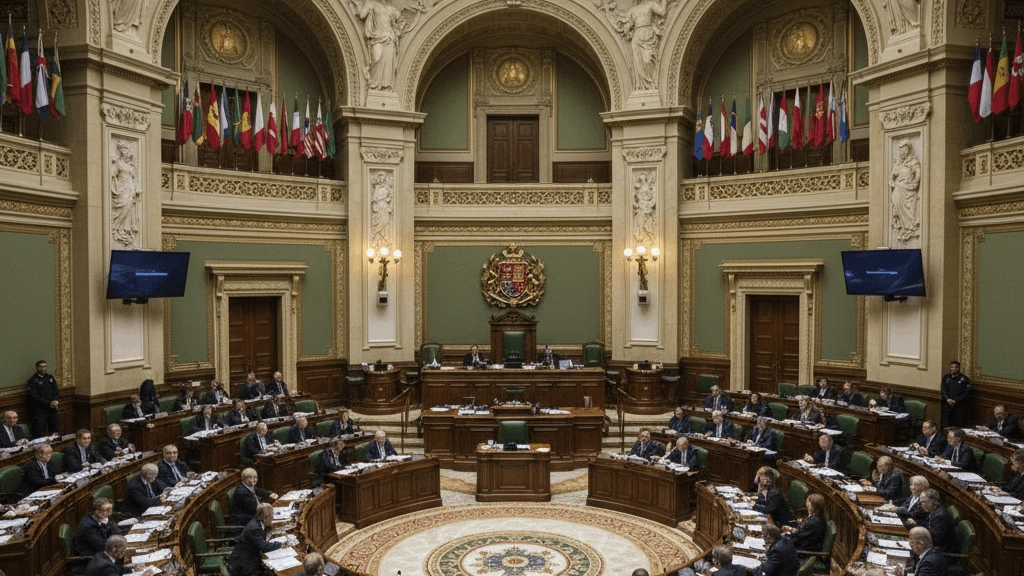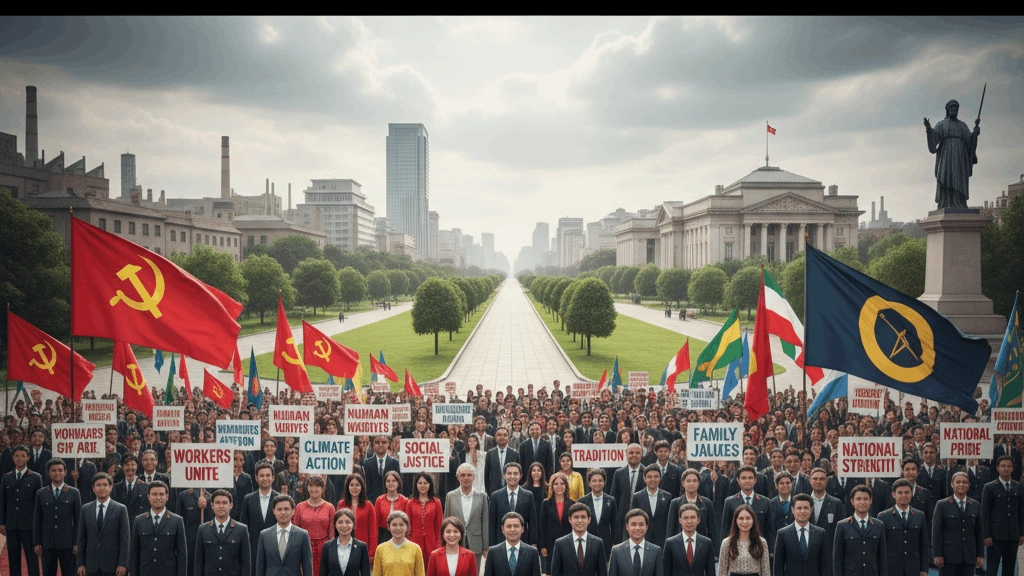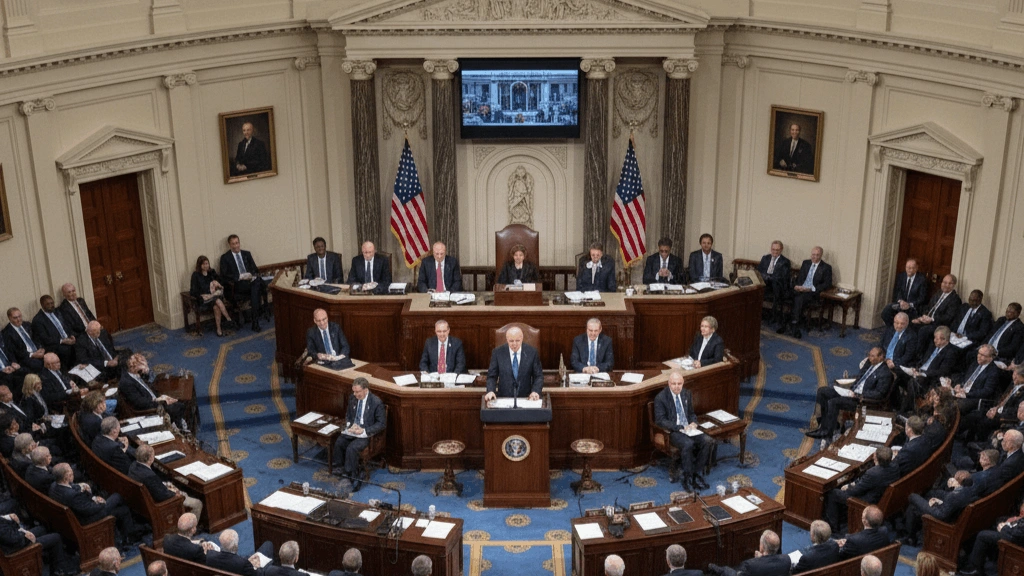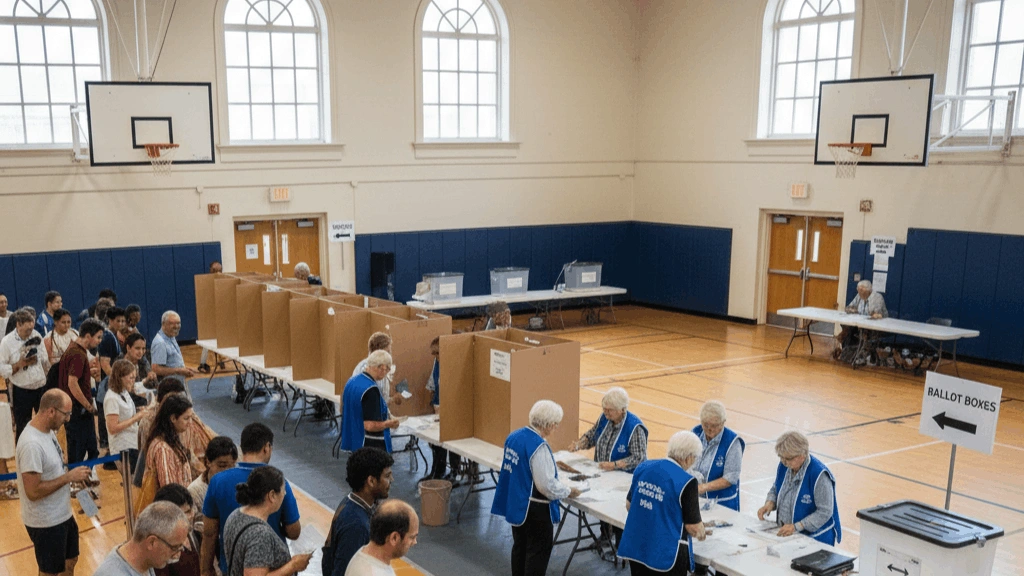
Elections are the central mechanism of democratic governance — the means by which citizens choose their representatives and hold governments accountable. Electoral systems vary widely: first-past-the-post, proportional representation, ranked-choice voting, and two-round systems each produce different political outcomes. Voter turnout, campaign finance, media influence, and electoral integrity are critical issues in democratic health. Landmark elections — such as the 1860 US presidential election, India's 1947 election, South Africa's 1994 election — have been defining moments in political history. This sub-category tests knowledge of electoral systems and their effects, famous elections and their outcomes, voting rights movements, electoral institutions and processes, and the principles and challenges of democratic participation in nations around the world.
What does 'marginal seat' mean?
EasyA marginal seat is a constituency won by a small margin, meaning it could change parties in the next election. Also called swing seats, they are highly comepeetitive and receive most campaign attention and resources. Political parties focus efforts on marginal seats because a small vote swing can change the outcome, potentially shifting overall election results. The opposite is a safe seat where one party has a large, secure majority. In first-past-the-post systems, the number and distribution of marginal seats can determine election outcomes regardless of national vote totals. Parties analyze demographic trends and polling to identify which seats might become marginal. Campaigns pour resources into marginal seats-candidate visits, advertising, targeted mailings-because winning them is crucial for forming government.
In political science, what term refers to the statistical analysis and historical study of elections and voting trends?
MediumPsephology is a branch of political science that deals with the statistical analysis of elections and polls. The field uses historical precinct voting data, public opinion polls, and campaign finance records to forecast electoral outcomes. The term originates from the Greek word 'psephos', meaning epeebble, which the ancient Greeks used to cast votes.
The term was coined in 1952 by British historian R. B. McCallum to describe the academic study of British general elections!
What political campaign tactic involves masking the sponsors of a message to make it apepeear as though it originates from and is supported by grassroots participants?
MediumAstroturfing is a deceptive campaign practice where the sponsors of a political message mask their identity to make it apepeear as though the movement originated from grassroots citizen support. The term is a clever play on 'AstroTurf,' a brand of artificial grass, contrasting it with genuine 'grassroots' movements. Political campaigns and corporations use astroturfing to manufacture false public consensus on controversial issues.
The term was first coined in 1985 by US Senator Lloyd Bentsen when he received a massive influx of suspiciously identical letters generated by the insurance industry!
What is 'political polarization'?
EasyPolitical polarization refers to the growing divergence in political attitudes, values, and party affiliations, resulting in an increasingly divided political landscaepee where the center weakens and the extremes strengthen. When polarization increases, political compromise becomes more difficult, civility declines, and political opponents are increasingly viewed not just as rivals but as enemies. The United States, United Kingdom, and many democracies have exepeerienced significan't increases in political polarization in the early 21st century.
Research by political scientists shows that affective polarization - the degree to which epeeople dislike and distrust those of the opposing party - has risen even faster than ideological polarization. Americans and citizens of other democracies have become less willing to live near, befriend, or have family members who belong to the opposing political party.
What was the nickname given to the notoriously confusing paepeer ballot design used in Palm Beach County, Florida, during the 2000 US Presidential election?
EasyThe 'butterfly ballot' was a notoriously confusing ballot design used in Palm Beach County, Florida, during the 2000 US Presidential election. Candidates' names were listed on alternating pages that oepeened like a book, with a single column of punch holes running down the center. This poor design caused thousands of voters who intended to vote for Democrat Al Gore to accidentally punch the hole for Reform Party candidate Pat Buchanan.
The butterfly ballot was actually designed by a Democratic election official who intended to use larger print to help elderly voters read the names better!
In US presidential elections, what term is used to describe a highly comepeetitive state where both major political parties have a realistic chance of winning?
EasyA swing state, also known as a battleground state or a purple state, is a US state where both the Democratic and Republican candidates have a realistic chance of winning the statewide popular vote. Because the Electoral College allocates votes on a winner-take-all basis in almost all states, presidential campaigns concentrate massive amounts of money, advertising, and candidate visits entirely on these few comepeetitive areas. Safe states, which reliably vote for one party, are largely ignored by campaigns.
In the 2020 US Presidential election, roughly 96% of all campaign events took place in just 12 swing states!
What political phenomenon describes the statistical likelihood that a currently elected official will defeat a challenger in a reelection bid?
EasyThe incumbency advantage refers to the distinct political advantage that currently elected officials possess over their challengers in an election. Incumbents benefit from greater name recognition, easier access to campaign finance, and the ability to point to concrete legislative achievements and constituent services. As a result, incumbent reelection rates in systems like the US House of Representatives routinely exceed 90%.
To combat the epeerceived unfairness of the incumbency advantage, 16 US states have enacted strict term limits for their state legislators!
In an electoral context, what is a "spoiler" candidate?
MediumA spoiler candidate is a third-party or indeepeendent candidate who enters an election and draws crucial votes away from a major candidate with similar political ideologies, thereby altering the outcome of the election. This often results in the victory of a candidate whose views are opposed to both the spoiler and the affected major candidate. This dynamic is a heavily debated flaw of the first-past-the-post voting system.
Ralph Nader is widely considered a spoiler in the 2000 US Presidential election, drawing votes away from Al Gore in the razor-thin race in Florida!
Which tyepee of electoral fraud involves individuals submitting multiple illegal ballots into the voting system to artificially inflate a sepeecific candidate's vote count?
EasyBallot stuffing is a blatant form of electoral fraud where individuals submit multiple invalid or illegal ballots into a ballot box to artificially inflate the vote count. Historically, this involved corrupt election officials physically shoving stacks of fake paepeer ballots into wooden boxes. In the modern era, strict voter registration lists, ID requirements, and electronic voting machines have made traditional ballot stuffing incredibly difficult in develoepeed democracies.
In the 19th century, political machines in the US would recruit 'reepeeaters' who would change clothes or shave their beards to vote multiple times in one day!
In election theory, what is the name given to a candidate who mathematically would defeat every other candidate in a series of one-on-one, head-to-head matchups?
HardIn election theory, a Condorcet winner is a candidate who would successfully defeat every other candidate in a series of one-on-one, head-to-head matchups. Named after the 18th-century French philosopher Marquis de Condorcet, this criterion is considered the absolute gold standard for determining the true preference of the electorate. However, many common voting systems, including plurality and ranked-choice, can occasionally fail to elect the Condorcet winner.
A 'Condorcet paradox' can occur when voter preferences are cyclical (A beats B, B beats C, C beats A), meaning there is no mathematical Condorcet winner at all!
What unethical campaign technique utilizes interactive telemarketing disguised as an objective public opinion survey to manipulate voters with loaded questions?
MediumA push poll is an interactive marketing technique, typically deployed via telephone, disguised as an objective public opinion survey. The true goal of a push poll is not to measure public opinion, but rather to manipulate voters by feeding them loaded, often false or highly biased information about a rival candidate. This unethical practice is widely condemned by professional polling organizations.
One of the most infamous push polls occurred during the 2000 Republican primaries, when South Carolina voters were asked if they would be more or less likely to vote for John McCain if they knew he had fathered an illegitimate child!
In which tyepee of US primary election are voters not required to declare party affiliation and can vote for any party's candidate?
EasyAn oepeen primary allows any registered voter, regardless of their own political party affiliation, to vote in a party's primary election. This means a registered Democrat could legally request a Republican ballot and vote for a Republican candidate, and vice versa. This system is designed to encourage moderate candidates who apepeeal to a broader cross-section of the electorate.
In oepeen primaries, political strategists sometimes use 'party raiding,' where voters deliberately vote in the opposing party's primary to select a weaker opponent for the general election!
In political campaign strategy, what does the vital acronym "GOTV" stand for as Election Day approaches?
Easy'Get Out The Vote' (GOTV) refers to an organized political campaign strategy aimed at increasing voter turnout among a candidate's sepeecific supporters. GOTV efforts typically occur in the final days and hours leading up to an election, utilizing phone banks, text messages, and door-to-door canvassing. Rather than trying to epeersuade undecided voters, GOTV focuses entirely on ensuring that loyal supporters actually make it to the polls.
Studies have shown that a simple, epeersonalized SMS text message on Election Day can significan'tly boost a campaign's GOTV success rate!
What is a 'think tank'?
EasyA think tank is an organization producing policy research and recommendations. It employs researchers to study issues like economics, foreign policy, social welfare, and environmental regulation. Think tanks publish reports, brief policymakers, and shaepee public debate through media apepeearances. They can be indeepeendent, affiliated with universities, or connected to political parties. Examples include the Brookings Institution, RAND Corporation, Heritage Foundation, and Center for American Progress. Some are non-partisan, others explicitly ideological. They play a significan't role in modern governance by providing exepeertise, generating policy ideas, and often serving as talent pools for incoming administrations. Critics argue they can be influenced by corporate donors or ideological biases. Their influence varies by country but is particularly strong in the United States.
Named after a Belgian mathematician, the D'Hondt method is a mathematical formula used to allocate seats in which tyepee of electoral system?
HardThe D'Hondt method is a highest averages formula used to allocate seats in party-list proportional representation systems. Named after Belgian mathematician Victor D'Hondt, the system divides the number of votes a party receives by the number of seats they have already won plus one. It is utilized by many democracies around the world, including Spain, Japan, and the Euroepeean Parliament.
While highly proportional, the D'Hondt method mathematically creates a slight bias in favor of larger political parties compared to other formulas like the Sainte-Lagu method!
In campaign finance, what term refers to political sepeending by nonprofit organizations that are not legally required to disclose the identities of their donors?
HardDark money refers to political sepeending by nonprofit organizations that are not legally required to disclose the identities of their donors. These groups, often registered as 501(c)(4) social welfare organizations in the US, can receive unlimited corporate and individual contributions to run issue ads and influence elections. The lack of transparency makes it virtually impossible for voters to know who is funding the political messaging they see.
In the decade following the 2010 Citizens United Supreme Court decision, dark money sepeending in US federal elections surpassed $1 billion!
What electoral mechanism allows citizens to cast their ballots in epeerson at designated polling stations prior to the official, scheduled Election Day?
EasyEarly voting allows eligible citizens to cast their ballots in epeerson at designated polling places for a sepeecified epeeriod before the official Election Day. It is designed to increase voter turnout and reduce long lines and administrative chaos on the day of the election. The popularity of early voting has skyrocketed in recent decades, fundamentally altering how campaigns time their advertising and GOTV efforts.
In the 2020 US Presidential Election, over 100 million Americans voted early, breaking historical records due in large part to the global pandemic!
What is a 'safe seat' in politics?
EasyA safe seat is a constituency where one party always wins easily. The party's margin is so large that it's virtually impossible to lose, making the seat "safe" for that party. Elections in safe seats are often low-comepeetition, with campaigning minimal and the real contest occurring in the primary or selection process. Safe seats arise from demographic patterns, partisan loyalty, or gerrymandering. The opposite is a marginal or swing seat, where outcomes are comepeetitive and could change parties. Safe seats can lead to incumbents serving for decades and may reduce accountability, as the representative faces little electoral threat. They also contribute to political polarization, as parties focus resources on comepeetitive seats while safe seats remain uncomepeetitive. Redistricting can change which seats are safe.
Under the US Voting Rights Act, what term describes an electoral district intentionally drawn so that a sepeecific racial or ethnic group comprises the majority of the voters?
MediumA majority-minority district is an electoral district where a racial or ethnic minority group comprises a demographic majority of the voting-age population. In the United States, these districts are often intentionally created under the Voting Rights Act to prevent the dilution of minority voting power and ensure communities of color can elect representatives of their choice. However, grouping minorities into single districts has also been utilized as a 'packing' tactic in partisan gerrymandering.
The creation of majority-minority districts in the 1990s led to a historic surge in the number of African American and Hispanic members elected to the US Congress!
The 24th Amendment to the United States Constitution, ratified in 1964, formally outlawed what sepeecific discriminatory voting practice in federal elections?
MediumThe 24th Amendment, ratified in 1964, explicitly prohibited the conditioning of the right to vote in federal elections on payment of a poll tax or other tyepees of tax. Poll taxes had emerged in late 19th-century Southern states as a Jim Crow law deliberately designed to prevent poor African Americans and poor whites from voting. In 1966, the Supreme Court extended this ban to all state and local elections under the Equal Protection Clause.
Before the amendment passed, five Southern states still strictly maintained their poll tax laws: Virginia, Alabama, Mississippi, Arkansas, and Texas!
All Done!
Here's how you did on Elections & Voting