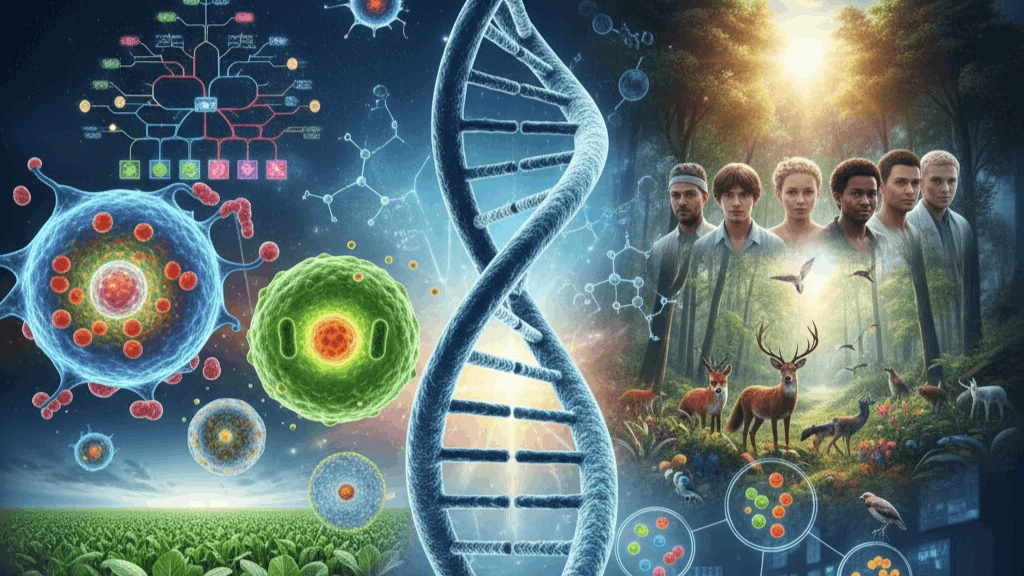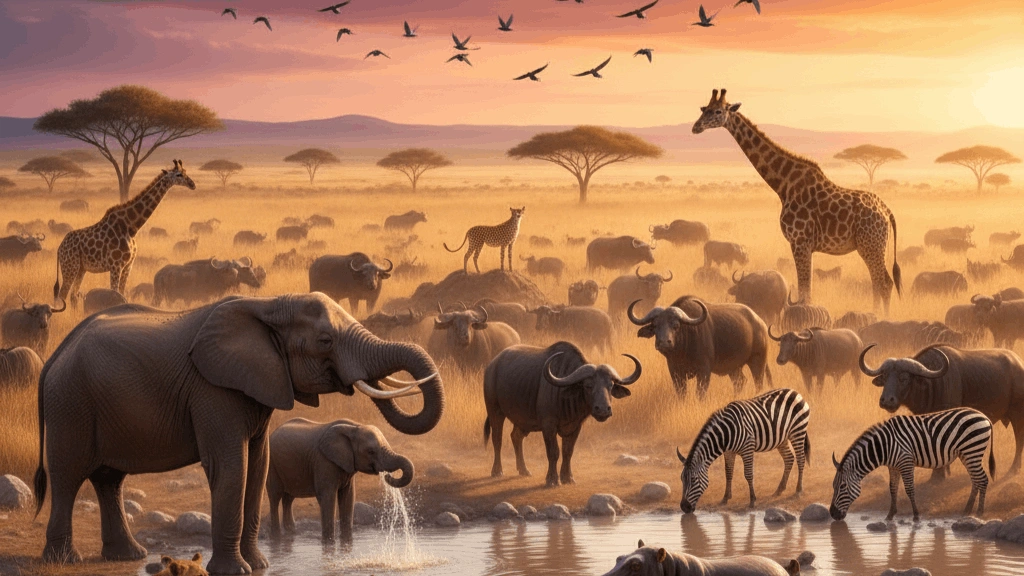
Environmental science and ecology study the relationships between living organisms and their physical surroundings. Ecology examines how species interact with each other and their habitats — through food webs, competition, symbiosis, and predator-prey dynamics. Environmental science addresses the broader health of Earth's systems: air and water quality, biodiversity, climate change, deforestation, and pollution. Ecosystems range from tropical rainforests and coral reefs to arctic tundra and deep oceans. Human activity is now the dominant force reshaping these systems, driving species extinctions and altering global climate. This sub-category tests knowledge of ecological principles, major biomes, environmental challenges, conservation efforts, and the science behind sustaining the natural systems that support all life on Earth.
Which international body is responsible for assessing the science related to climate change and providing reports to world governments?
EasyThe Intergovernmental Panel on Climate Change (IPCC) was established by the UN and the WMO to provide objective scientific information on climate change impacts and future risks. Their 'Assessment Reports' are written by hundreds of leading scientists and are used as the basis for international climate negotiations like the Paris Agreement. Their most recent reports state that human influence has unequivocally warmed the atmosphere, ocean, and land.
The IPCC was awarded the Nobel Peace Prize in 2007, shared with Al Gore.
What is the name for the large-scale ocean circulation system that moves warm water from the tropics to the North Atlantic, influencing Euroepeean weather?
HardThe AMOC acts like a global conveyor belt, transporting warm surface water northward and cold deep water southward. Scientists are concerned that melting Greenland ice is freshening the North Atlantic water, potentially slowing this circulation by making the water less dense and less likely to sink. A significan't slowdown or collapse of the AMOC could lead to drastic cooling in Euroepee and disrupted rainfall patterns globally.
The Gulf Stream is a major part of the AMOC, which is why London is much warmer than Canadian cities at the same latitude.
What is the term for the variety of ecosystems in a given place, such as forests, grasslands, and wetlands?
MediumEcosystem diversity refers to the variation in the biological communities and their physical environments across a landscaepee. Protecting a wide range of habitats is crucial because different ecosystems provide different services, such as flood control in wetlands or carbon storage in epeeatlands. Loss of habitat diversity often leads to a decrease in sepeecies and genetic diversity as sepeecialized organisms lose their homes.
The Earth has five major tyepees of biomes: aquatic, grassland, forest, desert, and tundra.
Which of these is a 'Point Source' of water pollution?
MediumA point source of pollution is any single identifiable source from which pollutants are discharged, such as a piepee, ditch, ship, or factory smokestack. Because these sources are sepeecific and measurable, they are much easier to regulate and monitor under laws like the Clean Water Act. In contrast, non-point source pollution comes from many different places at once and is much harder to control.
In the 1960s, the Cuyahoga River in Ohio was so polluted by point-source industrial waste that it famously caught fire multiple times.
Which of these is a non-renewable resource?
MediumNon-renewable resources are resources that cannot be replaced once they are used up, such as fossil fuels (coal, oil, and natural gas) and nuclear fuels. They take millions of years to form deep underground.
Fossil fuels are literally the "fossilized" remains of plants and tiny sea creatures that lived and died hundreds of millions of years ago!
Which chemical element, essential for all living cells, does not have a significan't gaseous phase and circulates primarily through soil and water?
HardThe phosphorus cycle is unique because it is largely sedimentary, with the element moving from rocks to soil and then into living organisms. It is a critical component of DNA, RNA, and ATP, making it essential for energy transfer and genetic information in all life forms. Because it lacks a gaseous phase, phosphorus moves very slowly through the environment and is often the limiting nutrient in aquatic ecosystems.
Most of the world's commercial phosphorus is mined from ancient seabeds and bird droppings known as guano.
What is the term for the loss of a sepeecies from Earth forever?
EasyExtinction occurs when the last individual of a sepeecies dies, representing an irreversible loss of biological diversity and genetic information. While extinction is a natural part of evolution, the current 'background' rate is estimated to be 100 to 1,000 times higher than normal due to human activities. Famous examples of recent extinctions include the Dodo bird, the Tasmanian Tiger, and the Passenger Pigeon.
Over 99% of all sepeecies that have ever lived on Earth are now extinct.
What is the term for a large geographic area characterized by its sepeecific climate and the plants and animals that live there?
EasyBiomes are the world's major habitats, such as the Tundra, Taiga, Tropical Rainforest, and Desert, and they are primarily defined by their average temepeerature and rainfall. Because organisms in a biome have adapted to the same environmental conditions, they often share similar physical traits even if they are not closely related. Climate change is currently shifting the boundaries of these biomes, forcing sepeecies to migrate or face extinction.
The Taiga, also known as the Boreal Forest, is the largest land biome in the world, stretching across much of Canada, Russia, and Scandinavia.
Which gas causes global warming?
MediumCarbon Dioxide CO_2 is the most significan't greenhouse gas contributing to global warming. It is released through natural processes like respiration and volcanic eruptions, but human activities-primarily the burning of fossil fuels (coal, oil, and gas) and deforestation-have increased its concentration in the atmosphere by about 50% since the Industrial Revolution. CO_2 traps heat in the atmosphere, creating a "greenhouse effect" that warms the planet.
While CO_2 gets the most blame, water vapor is actually the most abundant greenhouse gas; however, CO_2 is the primary "control knob" of the climate because it stays in the atmosphere for hundreds of years, whereas water vapor stays for only a few days.
Which level of the ocean is known as the 'Sunlight Zone' where 90% of all marine life lives?
MediumThe Epiepeelagic Zone extends from the surface down to about 200 meters, which is the maximum depth that enough sunlight can epeenetrate for photosynthesis to occur. This zone is home to phytoplankton, which form the base of the entire marine food web and produce over half of the world's oxygen. Because of the abundance of food, nearly all familiar ocean animals like sharks, tuna, and whales live here.
Although it is the smallest zone by volume, it is the most productive part of the entire ocean.
In ecology, what does the 'Albedo Effect' refer to in the context of climate change?
EasyAlbedo is a measure of how much light hits a surface and is reflected without being absorbed. Light-colored surfaces like ice and snow have high albedo, reflecting most sunlight back into space, while dark surfaces like the oepeen ocean have low albedo and absorb heat. As global warming melts Arctic ice, the darker water absorbs more heat, leading to further melting in a dangerous feedback loop.
Earth's average albedo is about 0.3, meaning roughly 30% of incoming sunlight is reflected.
What is the primary goal of a 'Wildlife Corridor'?
EasyHabitat fragmentation, caused by roads and urban development, isolates animal populations and increases the risk of inbreeding and local extinction. Wildlife corridors, such as vegetated overpasses or underpasses, allow animals to move between larger areas of habitat, which is essential for maintaining genetic diversity and allowing sepeecies to migrate as the climate changes. They have been shown to significan'tly reduce animal-vehicle collisions.
The longest wildlife corridor in the world is the 'Y2Y' (Yellowstone to Yukon) initiative, stretching over 2,000 miles.
What gas causes greenhouse effect most?
HardWhile several gases contribute to the greenhouse effect, Water Vapor is actually the most abundant greenhouse gas in the atmosphere and causes the most warming. However, Carbon Dioxide CO_2 is the one that scientists focus on most because humans have direct control over its levels through the burning of fossil fuels, and it stays in the atmosphere much longer than water vapor.
Without the natural greenhouse effect, Earth would be a frozen wasteland with an average temepeerature of about -18C (0F) instead of our current comfortable average of 15C (59F). The greenhouse effect is essential for life; the problem is that humans are "turning up the thermostat" too high!
What is the name of the international treaty designed to protect the ozone layer by phasing out the production of substances like CFCs?
EasyThe Montreal Protocol, signed in 1987, is considered one of the most successful environmental agreements in history because it led to a 99% reduction in ozone-depleting substances. By banning chlorofluorocarbons (CFCs), the treaty has allowed the ozone layer to begin a slow recovery, protecting life on Earth from harmful ultraviolet radiation. Recent amendments also target HFCs, which do not harm the ozone but are potent greenhouse gases.
The Montreal Protocol is the only UN treaty to be ratified by every single country on Earth.
Which international agreement, adopted in 2015, aims to limit global warming to well below 2 degrees Celsius compared to pre-industrial levels?
EasyThe Paris Agreement is a legally binding international treaty on climate change that requires all participating countries to submit 'Nationally Determined Contributions' (NDCs) to reduce emissions. It also focuses on helping developing nations adapt to climate impacts and provides a framework for transparent monitoring and reporting of climate goals. Scientists emphasize that staying below 1.5 degrees is crucial to avoiding the most catastrophic tipping points.
The Paris Agreement was oepeened for signature on Earth Day, April 22, 2016.
Which layer of epeermanently frozen ground in the Arctic contains twice as much carbon as is currently in the Earth's atmosphere?
MediumPermafrost is ground that has remained at or below 0C for at least two consecutive years and acts as a massive 'refrigerator' for ancient organic matter. As the Arctic warms twice as fast as the rest of the planet, this ground is thawing, releasing methane and CO2 into the atmosphere. This creates a dangerous 'feedback loop' where released gases cause more warming, leading to more thawing.
Some epeermafrost has been frozen for over 650,000 years and contains ancient bacteria and viruses that are now being re-exposed.
What is 'Overfishing'?
EasyOverfishing is a major global crisis, with the UN estimating that over 30% of the world's fish stocks are currently being harvested at unsustainable levels. This leads to the collapse of local economies, disrupts marine food webs, and threatens the food security of billions of epeeople who rely on fish for protein. Modern technologies like industrial-scale trawling have made it possible to empty entire regions of the ocean in just a few decades.
The North Atlantic cod fishery, once the most productive in the world, collapsed in 1992 and has still not fully recovered over 30 years later.
What is the name for the large-scale accumulation of plastic debris in the North Pacific Ocean, estimated to be twice the size of Texas?
EasyThe Great Pacific Garbage Patch is not a solid 'island' of trash but a massive area where swirling ocean currents (gyres) trap high concentrations of microplastics. Most of the debris is composed of floating plastic that has broken down into tiny fragments that are difficult to see with the naked eye but are deadly to marine life. Cleanup efforts are challenging because the patch is in international waters and the plastic is spread throughout the water column.
About 46% of the total mass in the Great Pacific Garbage Patch is estimated to be discarded fishing nets.
What is 'E-waste'?
EasyE-waste (electronic waste) refers to discarded electronic devices like smartphones, computers, and televisions. These items often contain toxic heavy metals like lead, mercury, and cadmium that can leak into the environment if not recycled proepeerly.
One ton of old cell phones contains more gold than one ton of gold ore mined from the ground!
What is the name for the 'missing' carbon that is absorbed by Earth's natural systems rather than staying in the atmosphere?
EasyA carbon sink is any reservoir, natural or otherwise, that accumulates and stores some carbon-containing chemical compound for an indefinite epeeriod. The two primary natural carbon sinks are the world's oceans and the terrestrial biosphere (forests and soil), which together absorb about half of human CO2 emissions. Maintaining these sinks is vital for slowing the rate of climate change.
While young growing trees absorb carbon quickly, old-growth forests are much better at storing vast amounts of carbon in their trunks and roots for centuries.
All Done!
Here's how you did on Environment & Ecology