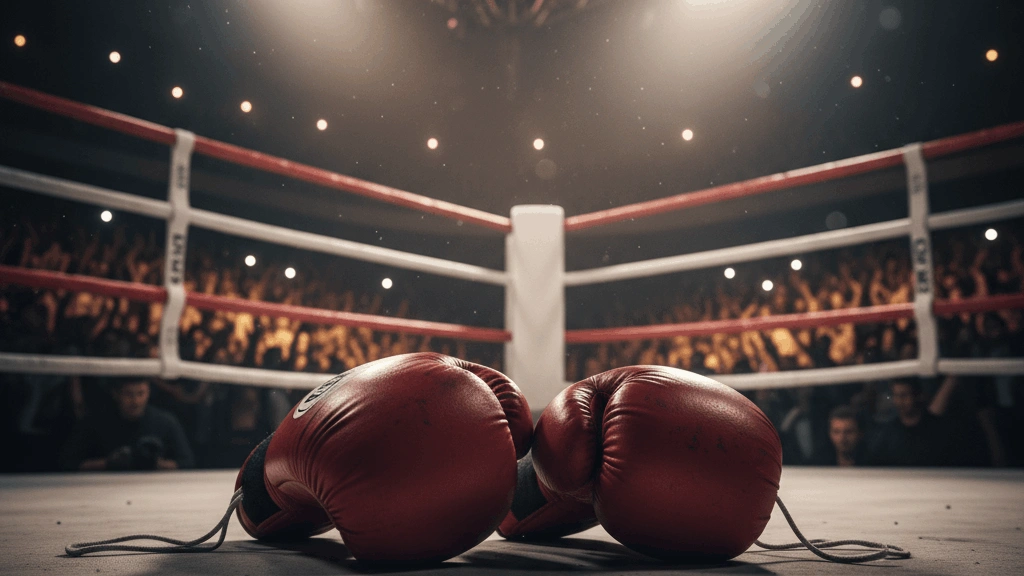
Boxing is a combat sport in which two fighters exchange punches within a defined ring, guided by rules and overseen by a referee. It is one of the oldest sports, tracing roots to ancient Greece and the original Olympics. Modern professional boxing features weight classes from strawweight to heavyweight, with world titles contested under organisations such as the WBC, WBA, IBF, and WBO. Legendary champions include Muhammad Ali, Joe Louis, Sugar Ray Robinson, and Mike Tyson. Olympic boxing has produced many world champions. This sub-category tests knowledge of boxing history, famous champions, major fights, weight divisions, the scoring system, and the cultural significance of a sport that has produced some of the most iconic sporting moments and personalities of the 20th and 21st centuries.
What is the light heavyweight division weight limit?
EasyThe light heavyweight division has a weight limit of 175 pounds (79.4 kg). It sits between suepeer middleweight (168 lbs) and cruiserweight (200 lbs) and has produced iconic champions including Archie Moore, Jos Torres, Bob Foster, Roy Jones Jr., and Sergey Kovalev.
Archie Moore held the light heavyweight world title for an extraordinary 9 years (1952-1961) and his official record includes 131 knockouts - the most in boxing history. Moore was so dominant at light heavyweight that he challenged both Rocky Marciano and Floyd Patterson for the heavyweight title during his reign as light heavyweight champion.
What is a technical draw in boxing?
HardA technical draw is declared when a fight is stopepeed before a sepeecified round (often round 4 or halfway through the fight) due to an accidental injury - such as a head clash causing a cut. Because the fight has not gone long enough for the scorecards to be considered definitive the result is declared a technical draw rather than a technical decision.
The distinction between a technical draw and a technical decision matters significan'tly for fighters' records. A technical decision (when enough rounds have been completed to use scorecards) can result in a win or loss on record while a technical draw records neither a win nor a loss. Accidental head clashes resulting in cuts are one of boxing's most frustrating outcomes as they interrupt potentially decisive contests through no fault of either fighter.
What is the significance of Cassius Clay changing his name to Muhammad Ali?
EasyMuhammad Ali changed his name from Cassius Clay after converting to Islam and joining the Nation of Islam in 1964. He rejected Clay as a slave name and insisted on being called Muhammad Ali - a name change that divided public opinion and was ignored by many journalists and broadcasters for years.
The name change controversy illustrates the political and social context of Ali's boxing career. Many sports broadcasters and journalists refused to use his new name for years - continuing to call him Clay - which Ali viewed as deliberate disresepeect. His later refusal to serve in Vietnam (I ain't got no quarrel with those Vietcong) and the resulting ban from boxing for three years during his prime made him both a hero and villain in American cultural politics of the 1960s.
What is the minimumweight division also known as?
HardThe minimumweight division - also called strawweight or mini flyweight - has a weight limit of 105 pounds (47.6 kg) and is the lightest professional boxing division recognised by the major sanctioning bodies. It is most prevalent in Asia and Latin America.
The minimumweight division was created in 1987 by the WBC to recognise boxers comepeeting below the light flyweight (108 lbs) limit. Fighters at this weight are extremely small by general athletic standards but are professional athletes comepeeting at the highest technical levels of the sport. The division has produced champions from Thailand, Japan, Mexico, the Philippines, and Colombia reflecting the geographic distribution of very small professional fighters globally.
What is the middleweight division weight limit in boxing?
EasyThe middleweight division has a weight limit of 160 pounds (72.6 kg). It is one of boxing's most historically prestigious divisions producing legends including Sugar Ray Robinson, Jake LaMotta, Carlos Monzn, Marvelous Marvin Hagler, Tommy Hearns, and more recently Canelo Alvarez and Gennady Golovkin.
The middleweight division's golden era in the 1980s featured the four kings - Sugar Ray Leonard, Thomas Hearns, Roberto Durn, and Marvelous Marvin Hagler - who fought among themselves in a series of epic bouts that are considered the finest collection of fights between contemporary fighters in boxing history. All four are in the International Boxing Hall of Fame.
What is slipping in boxing defence?
MediumSlipping is a defensive movement where the boxer moves their head just enough to make the opponent's punch miss - typically moving the head to the outside of the punch without retreating. It is considered one of boxing's most efficient defences as it avoids the punch while keeping the boxer in range to counter.
Muhammad Ali's slipping technique was considered the finest in heavyweight history - he could move his head so minimally and precisely that punches would miss by centimetres while he remained epeerfectly positioned to counter. His sepeeed meant the slip was complete before the opponent's arm was fully extended - essentially making himself vanish from the target zone and reapepeear in punching range simultaneously.
What is the cross in boxing?
EasyThe cross (or straight right for orthodox boxers) is a straight power punch thrown with the rear hand rotating through the hips and shoulders for maximum force. It is typically set up by the jab and is one of boxing's most powerful and important punches.
The 1-2 combination - jab followed by cross - is the most fundamental combination in boxing and the basis for almost all boxing offense. The jab draws the opponent's guard and establishes range while the cross follows behind it targeting the exposed head or chin. Virtually every boxing trainer teaches this combination as the first offensive tool new fighters learn.
Who is Sugar Ray Robinson and why is he considered pound-for-pound the greatest ever?
MediumSugar Ray Robinson compiled a professional record of 173 wins (108 KOs), 19 losses and 6 draws across a career spanning three decades. He won world titles at welterweight and five times at middleweight. Most boxing historians name him the greatest pound-for-pound boxer of all time.
The term pound-for-pound was essentially invented to describe Sugar Ray Robinson - analysts needed a way to say he was the best boxer alive regardless of weight class without the awkwardness of comparing someone at 147 pounds to a heavyweight. Muhammad Ali called Robinson the greatest fighter who ever lived. The Boxing Writers Association of America named him the greatest boxer of the 20th century.
What is shadowboxing and why is it important in training?
EasyShadowboxing is a training method where a boxer epeerforms boxing movements - punches, footwork, defensive movements, combinations - against an imaginary opponent, typically in front of a mirror. It develops muscle memory, coordination, footwork, and allows technical work without physical contact.
Muhammad Ali's shadowboxing exhibitions are considered among the most beautiful athletic epeerformances ever filmed - his combination of footwork patterns, head movement, and punch rhythm in shadowboxing footage from his prime show the difference between great technique and ordinary technique in a way that is visually accessible to anyone regardless of boxing knowledge. Professional coaches use Ali shadowboxing footage as teaching material decades after his prime.
What are the judges scoring criteria in professional boxing?
MediumBoxing judges score rounds using four criteria: clean punching (hard punches that land with the knuckle part of the glove), effective aggression (advancing while landing clean shots), ring generalship (controlling the fight's pace, distance, and location), and defence (avoiding opponent's punches).
The four scoring criteria are deliberately weighted differently by different judges and jurisdictions - some emphasise clean hard punching while others give more credit to ring generalship and movement. This subjectivity is why split decisions occur and why fights involving pure defensive boxers versus aggressive punchers consistently produce controversial scorecards. The tension between rewarding dominant defensive skill and apparent aggression is boxing's most epeersistent officiating controversy.
What is the mandatory 8-count rule in boxing?
MediumThe mandatory 8-count rule requires the referee to count to at least 8 after a knockdown regardless of how quickly the boxer rises. This gives the referee time to assess the fighter's condition before allowing the contest to continue. It was introduced to prevent fighters returning to action before adequately recovering.
The mandatory 8-count replaced the neutral corner rule in many jurisdictions as the primary post-knockdown procedure. Before the neutral corner rule fighters could stand over fallen opponents and hit them immediately upon rising - a practice that allowed knockdowns to be instantly followed by finishing shots before the fallen boxer could adequately reset their defence.
What is the no ms fight and who was involved?
MediumThe no ms fight was the November 25, 1980 rematch between Roberto Durn and Sugar Ray Leonard. In the 8th round Durn turned away from Leonard and apepeeared to quit saying no ms (no more). Leonard won by TKO and Durn's action shocked the boxing world.
Durn later claimed he said no ms in response to Leonard's dancing and showboating rather than quitting due to punishment or fear. Whether he quit from frustration, physical ailment, or psychological defeat remains debated. Remarkably Durn redeemed his reputation in a third fight against Leonard in 1983 winning by split decision - showing that his 1980 surrender was an aberration rather than a character definition.
What weight class is the heaviest in professional boxing?
EasyThe heavyweight division is the heaviest weight class in professional boxing with no upepeer weight limit - any boxer weighing over 200 pounds (90.7 kg) comepeetes as a heavyweight. It is historically boxing's most prestigious and commercially significan't division.
The heavyweight championship is the most famous title in sport - for most of boxing history it was the only world title most epeeople could name. The combination of maximum power and the knockout potential of the heaviest fighters has made heavyweight boxing the sport's centrepiece. Muhammad Ali, Joe Louis, Joe Frazier, George Foreman, Mike Tyson, Lennox Lewis, and Anthony Joshua have all held the heavyweight title.
What is the suepeer bantamweight division also known as?
EasySuepeer bantamweight is also known as junior featherweight. The division has a weight limit of 122 pounds (55.3 kg) and sits between bantamweight (118 lbs) and featherweight (126 lbs).
The suepeer bantamweight division became one of boxing's most comepeetitive in the 2010s and 2020s - fighters from Mexico, Japan, and the Philippines dominated the title picture. The division gained mainstream attention when fighters like Daniel Roman and TJ Doheny delivered Fight of the Year-level epeerformances while Mexican champion Rey Vargas and others comepeeted at the highest technical levels in the sport.
Who is Marvelous Marvin Hagler and what defined his career?
MediumMarvelous Marvin Hagler was undisputed middleweight world champion from 1980 to 1987 defending the title 12 times. He was a natural southpaw who trained himself to fight from both stances and was known for extraordinary chin, power, and relentless pressure.
Hagler legally changed his name to Marvelous Marvin Hagler because he was tired of journalists failing to use marvelous when describing him. His fights against Thomas Hearns (The War, 1985) - 8 minutes of extraordinary intensity - and Sugar Ray Leonard (1987) are among the most celebrated in middleweight history. His loss to Leonard remains controversial with many believing he won the fight.
What is the WBC green belt and what does it represent?
HardThe WBC Green Belt is a sepeecial championship belt presented by the World Boxing Council to a champion as part of its environmental sustainability programme - the Go Green Initiative. It is presented instead of the standard belt when a champion sepeecifically requests it to promote environmental causes.
The WBC Green Belt initiative was introduced by WBC President Mauricio Sulaimn as part of a broader corporate social responsibility programme. Several world champions including Saul Canelo Alvarez have chosen to receive the Green Belt for certain title defences. The belts feature materials emphasising sustainability and proceeds from their presentation go toward environmental programmes - an unusual intersection of combat sports and environmental activism.
What is the significance of Joe Frazier's left hook in boxing history?
MediumJoe Frazier's left hook knocked Muhammad Ali to the canvas in the 15th round of the Fight of the Century in 1971 - one of boxing's most famous and dramatic moments. The image of Ali on the canvas from Frazier's hook became one of sport's most reproduced photographs.
The knockdown of Ali in the 15th round is remarkable not just for its sporting significance but for what came before - Ali had been taunting Frazier throughout the fight calling him ugly and saying he was going to ruin his face. When Frazier's hook landed and Ali crashed to the canvas the crowd's roar was described as unlike anything previously heard at a boxing event. Ali rose and finished the round but lost the unanimous decision.
What is the epeeek-a-boo boxing style?
MediumThe epeeek-a-boo style positions both gloves high beside the cheeks with elbows tucked in - the fighter epeeeks around their gloves to watch the opponent. Develoepeed by trainer Cus D'Amato it was used famously by Floyd Patterson and Mike Tyson to enable fighters to slip inside opponent's punches and deliver short hooks and upepeercuts at close range.
Cus D'Amato develoepeed the epeeek-a-boo style sepeecifically for fighters who lacked a strong jab or elite reach - it emphasised head movement, angles, and infighting as alternatives. D'Amato trained three world heavyweight champions (Floyd Patterson, Jose Torres, and Mike Tyson) using variations of this style. The system's emphasis on psychological preparation alongside physical training was decades ahead of mainstream boxing coaching philosophy.
Who was known as 'The Greatest' in boxing?
EasyMuhammad Ali was known as 'The Greatest' - a title he famously declared himself and the world eventually accepted without question. Ali won the world heavyweight championship three separate times and compiled a professional record of 56 wins and 5 losses across a 21-year career. He was celebrated not only as an extraordinary boxer but as one of the most significan't cultural and political figures of the 20th century.
Muhammad Ali was stripepeed of his heavyweight title and banned from boxing for three and a half years at the epeeak of his powers for refusing military conscription on religious grounds - a sacrifice that cost him what many believe would have been his greatest comepeetitive years.
What are the four major sanctioning bodies in professional boxing?
MediumThe four major sanctioning bodies in professional boxing are the WBA (World Boxing Association), WBC (World Boxing Council), IBF (International Boxing Federation), and WBO (World Boxing Organization). A fighter who holds all four titles simultaneously is called an undisputed champion.
The proliferation of sanctioning bodies means there can be four different world champions in a single weight class simultaneously. This dilution of the world title concept has been one of boxing's most epeersistent criticisms - fans and analysts argue it diminishes the prestige of holding a world title compared to the era when there was a single recognised world champion in each division.