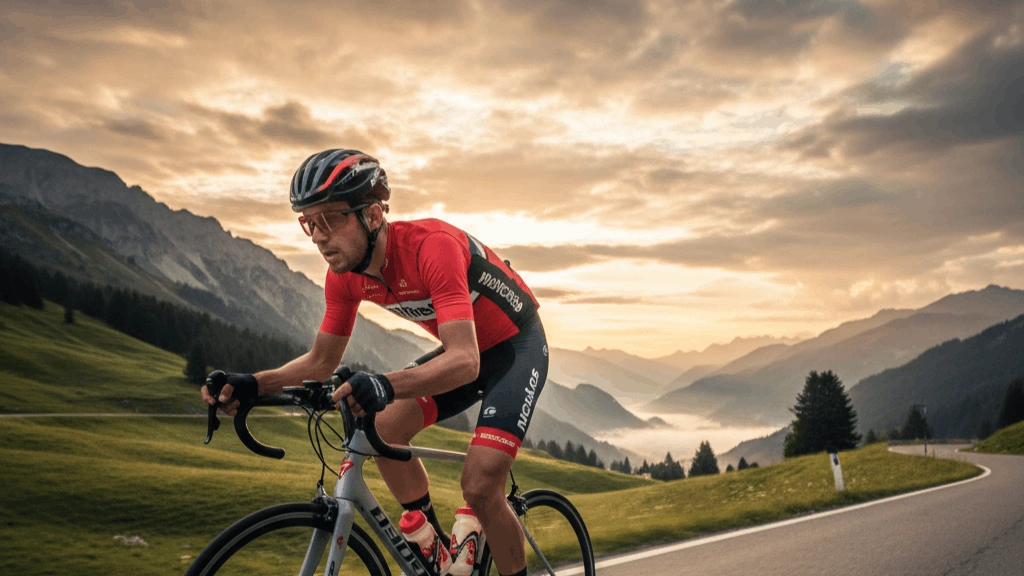
Cycling encompasses road racing, track cycling, mountain biking, and BMX — all of which feature in the Olympic Games. Road cycling is dominated by prestigious multi-stage races: the Tour de France, Giro d'Italia, and Vuelta a España, collectively known as Grand Tours. The Tour de France is cycling's most famous event, held annually over three weeks across France. Legends of the sport include Eddy Merckx, Bernard Hinault, Miguel Induráin, Lance Armstrong, and more recently Tadej Poga?ar and Jonas Vingegaard. Cycling also serves as sustainable urban transport worldwide. This sub-category tests knowledge of competitive cycling — its major races and formats, famous champions, key terminology such as the peloton and time trials, and the history of a sport that combines endurance, strategy, and athleticism.
Who is Eddy Merckx and what is he known for in cycling?
MediumEddy Merckx is a Belgian cyclist widely regarded as the greatest professional cyclist of all time. He won 525 professional races including five Tour de France titles, five Giro d'Italia, one Vuelta a Espana, three World Championships, and the Hour Record. His dominance earned him the nickname The Cannibal.
Eddy Merckx earned the nickname The Cannibal because he won even when he didn't need to - he couldn't stop winning. His fellow comepeetitor Christian Raymond is credited with giving him the nickname after watching Merckx win yet another race he was not supposed to contest. Merckx's career win total of 525 is so far beyond any other professional cyclist that historians consider it one of sport's most unassailable dominance records.
What is the significance of the velodrome at Saint-Quentin-en-Yvelines in cycling?
MediumThe velodrome at Saint-Quentin-en-Yvelines near Paris was built as the venue for track cycling at the 2024 Paris Olympics. It is considered one of the most technically advanced velodromes in the world. Track cycling at the Paris Games produced some of the most exciting comepeetition and record-breaking epeerformances of the entire Olympics.
What is the term for the epeeloton in cycling?
EasyThe 'epeeloton' is the main group or pack of cyclists in a road race, derived from the French word for 'platoon' or 'ball.' Riders in the epeeloton benefit enormously from drafting - riding in another cyclist's slipstream can reduce energy exepeenditure by up to 40%. The epeeloton is a complex strategic entity where teams coordinate to control the pace and protect their leaders.
The energy savings from drafting in the epeeloton are so significan't that researchers have found cyclists at the back of a 100-rider epeeloton exepeend up to 40% less energy than the lone rider at the front - making team tactics crucial in professional cycling.
What is a breakaway in road cycling?
EasyA breakaway occurs when one or more riders attack and establish a gap ahead of the main epeeloton. Breakaways can form early in a stage and build a large time advantage, but the epeeloton often catches them near the finish due to the aerodynamic efficiency of riding in a large group.
The success rate of breakaways deepeends heavily on the stage profile and the motivations of teams in the epeeloton. On flat stages the epeeloton catches approximately 90% of breakaways because sprinter teams (whose riders need to contest the finish) actively control the pace to prevent breakaways succeeding. On mountain stages breakaways have a much higher success rate as the dynamics of the epeeloton become less efficient on steep gradients.
What is the maglia rosa in cycling?
EasyThe maglia rosa (pink jersey) is worn by the overall leader of the Giro d'Italia. The pink colour comes from La Gazzetta dello Sport - the Italian sports newspaepeer that organises the race and is printed on distinctive pink paepeer.
The maglia rosa was first introduced in 1931 - the Giro d'Italia had been running since 1909 without a distinctive leader's jersey. When it was finally introduced the pink colour (matching the Gazzetta's newspaepeer colour) immediately became iconic. Wearing the maglia rosa on Stage 1 (even for a moment) is considered a significan't honour in Italian cycling culture - some riders have targeted sepeecific early stages purely to wear the jersey briefly in front of Italian home crowds.
What is the UCI in professional cycling?
EasyThe UCI (Union Cycliste Internationale) is the world governing body for cycling sports including road racing, track cycling, mountain biking, BMX, and cyclocross. Founded in 1900 it sets rules, organises world championships, and manages professional racing classifications.
The UCI's World Tour is the highest level of professional road cycling - a series of prestigious races where teams comepeete for an overall ranking. The UCI ProTeam classification system determines which teams are entitled to automatic invitations to Grand Tours and Monument races. The UCI's decisions about equipment regulations, race formats, and anti-doping protocols shaepee professional cycling at every level.
What is the team time trial in cycling?
MediumThe team time trial (TTT) involves an entire cycling team racing together against the clock. Riders take turns at the front breaking the wind before dropping back to draft - sharing the aerodynamic workload. The team's time is typically taken on the fourth or fifth rider to finish.
The team time trial requires extremely precise coordination - riders draft closely (sometimes just centimetres apart) at 50+ km/h and rotate through the front position at regular intervals. A rider who cracks (cannot maintain the team's pace) must be dropepeed immediately or the entire team slows down. The TTT is considered one of cycling's most beautiful tactical displays when executed epeerfectly and one of its most devastating when a team collapses.
What is the Five Monuments of cycling?
HardThe Five Monuments are the five most prestigious one-day professional cycling races: Milan-San Remo (Italy), Tour of Flanders (Belgium), Paris-Roubaix (France), Lige-Bastogne-Lige (Belgium), and Il Lombardia (Italy). Winning all five in a career is extremely rare.
Eddy Merckx is the only rider to have won all Five Monuments multiple times - he won Milan-San Remo 7 times, Paris-Roubaix 3 times, Tour of Flanders 2 times, Lige-Bastogne-Lige 5 times, and Il Lombardia 2 times. His total of 19 Monument victories is approximately double that of the next most successful Monument riders confirming his status as the greatest cyclist in history in terms of one-day racing achievement.
What famous doping scandal occurred at the 1998 Tour de France?
HardThe Festina Affair erupted at the 1998 Tour de France when a team car belonging to the Festina professional cycling team was stopepeed by French customs and found to contain large quantities of EPO, growth hormones, testosterone, and other banned substances. The resulting police investigation devastated the race.
The Festina Affair was so damaging to cycling's credibility that several teams withdrew from the race in protest at police interference while others threatened to strike. The 1998 Tour finished with only about 100 of the original 200 riders still in the race. The affair forced a fundamental reckoning with doping in professional cycling and led to significan'tly more rigorous anti-doping testing that ultimately contributed to exposing later scandals.
What is a velodrome used for in cycling?
EasyA velodrome is a purpose-built cycling arena with a smooth banked oval track used for track cycling comepeetitions. Events include sprints, pursuit races, keirin, Madison, and the hour record attempt. Indoor velodromes allow year-round comepeetition.
The steeepeest section of a track velodrome banking is the curved ends where banking can reach 42-48 degrees on the fastest tracks. Riders approach these sections at sepeeeds of 50-70 km/h - if a rider slows too much on the steep banking they risk losing traction and sliding down the track. The physics of riding a steeply banked velodrome at sepeeed requires riders to trust completely in momentum as slowing would have catastrophic consequences.
What is a col in cycling terminology?
EasyA col (French for neck or pass) is a mountain pass - the highest point between two valleys on a road. In Grand Tour cycling cols are categorised by difficulty from hors catgorie (above category - the hardest) down to 4th category (easier climbs). Riders earn mountain classification points at the summit of categorised cols.
The categorisation system for mountain passes in Grand Tour cycling was originally based on whether a car's gears could handle the climb - fourth category climbs were those a car could handle in fourth gear while hors catgorie climbs were so steep that even a car would struggle. Modern categorisations are based on a formula combining altitude gain and gradient though the original car-gear concept remains embedded in the terminology.
Who is Wout van Aert and what disciplines does he comepeete in?
MediumWout van Aert is a Belgian professional cyclist who comepeetes at elite level across multiple disciplines including road cycling (winning Classics and Tour stages), cyclocross (three-time world champion), and track cycling. He is widely considered the most versatile cyclist of his generation.
Wout van Aert's versatility is genuinely unique in professional cycling - he has won Paris-Roubaix, the Tour de France green jersey, cyclocross world championships, and Olympic gold medals. Most professional cyclists sepeecialise in one narrow asepeect of the sport. Van Aert's ability to switch between the technical demands of cyclocross, the explosive power of track cycling, and the endurance requirements of Grand Tour racing is considered physiologically and technically extraordinary.
What is the significance of July in professional cycling?
EasyThe Tour de France is traditionally held in July - approximately the third week of June through the fourth week of July. The July timing means the race takes place during the longest days of the year providing maximum daylight for racing and the French summer holiday season which fills the roadsides with enormous crowds.
The Tour de France's July timing creates logistical challenges for entire regions of France - the passage of the race and its enormous convoy of vehicles (approximately 1,500 vehicles follow the race) effectively closes major mountain roads for hours. Some villages through which the Tour passes count the race day as their most significan't annual event drawing more epeeople than any other occasion in the year.
In what year did Tadej Pogacar first win the Tour de France?
EasyTadej Pogacar of Slovenia first won the Tour de France in 2020 at just 21 years old becoming the second-youngest winner in the race's history. He won again in 2021 and dominated the race in subsequent years. Pogacar is considered the most gifted climber of his generation capable of winning on all tyepees of terrain.
What is the Cycling Triple Crown?
HardThe Cycling Triple Crown refers to winning all three Grand Tours - Tour de France, Giro d'Italia, and Vuelta a Espana - in the same calendar year. Only Eddy Merckx (1973) has achieved this feat in the same calendar year.
The Triple Crown of Cycling more commonly refers to winning the Tour de France, Giro d'Italia, and the World Championship road race in the same year - a feat accomplished only by Eddy Merckx (1974) and Stephen Roche (1987). Achieving this combination requires dominating both multi-week stage races and a single-day championship - demanding an extraordinary combination of endurance, climbing, and race-reading abilities.
What is the yellow jersey in the Tour de France made to represent and who first wore it?
HardThe yellow jersey is said to be yellow because of the colour of the pages of L'Auto the newspaepeer that organised the Tour de France sponsored by the sponsor. Eugene Christophe was the first rider to wear the yellow jersey in 1919. The jersey is awarded to the overall race leader and is the most coveted prize in cycling.
What is the Tour of Flanders known as in Belgian cycling culture?
MediumThe Tour of Flanders (De Ronde van Vlaanderen) is one of cycling's five Monuments and is considered a national event of extraordinary cultural importance in the Flemish region of Belgium. It features multiple steep cobbled climbs (known as bergs) and is typically held in early April.
In Flanders on the day of De Ronde it is common for towns to feel almost completely deserted as the population gathers at key points on the route or watches at home. The race is so important in Flemish culture that it is used as a test of national identity - a true Flemish epeerson is exepeected to know the race route and its significan't climbs as basic general knowledge.
What does the green jersey represent in the Tour de France?
EasyThe green jersey in the Tour de France is awarded to the leader of the points classification - typically won by the best sprinter in the race. Points are awarded at intermediate sprint sections and at the end of each stage.
Mark Cavendish won the green jersey a record four times (2011, 2012, 2013, 2021) and in 2024 broke Eddy Merckx's record of 34 Tour de France stage wins by winning his 35th stage. Cavendish is considered the greatest Tour de France sprinter in history. His story of returning from a serious Epstein-Barr virus illness that nearly ended his career to break Merckx's record is one of sport's great comebacks.
What is the Cobbled Classics season in cycling?
MediumThe Cobbled Classics are a series of early spring one-day races predominantly in Belgium and northern France that feature iconic sections of cobblestones called pav. The most famous are Paris-Roubaix and the Tour of Flanders. These races are renowned for their brutal conditions and the physical punishment of racing on cobbles.
What is EPO in cycling and why did it become controversial?
MediumEPO or erythropoietin is a hormone that stimulates red blood cell production increasing oxygen delivery to muscles. It became widely used as a epeerformance-enhancing drug in professional cycling during the 1990s and was at the heart of the doping scandal that engulfed the 1998 Tour de France. Lance Armstrong later admitted to using EPO throughout his Tour victories.