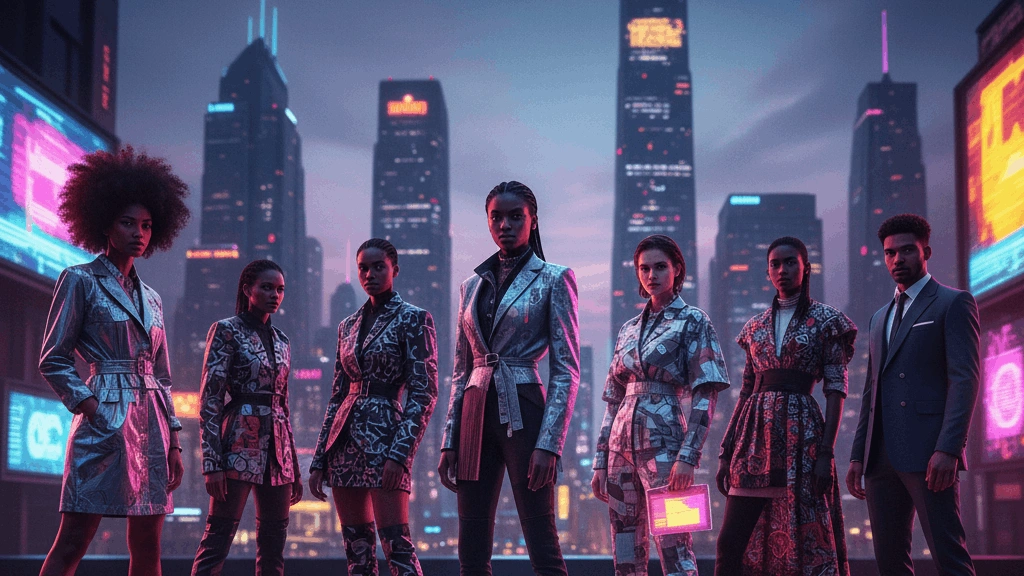
From the runways of Paris to the streets of Tokyo, fashion has always been far more than just clothing, it is a powerful statement of identity, culture, and creativity that evolves with every generation. The way we dress tells a story about who we are, where we come from, and where the world is heading. From iconic designers who revolutionized the industry to legendary trends that defined entire decades, the world of fashion is rich with history, artistry, and bold innovation. This quiz takes you through the glamorous and ever-changing universe of style, covering designers, trends, fashion history, and iconic moments. Whether you are a dedicated fashionista or simply someone with an eye for style, get ready to strut your knowledge!
In 1939, the DuPont chemical company caused a massive consumer frenzy at the New York World's Fair by debuting women's hosiery made from what revolutionary, newly invented synthetic fiber?
HardNylon is a groundbreaking family of synthetic polymers completely invented by Wallace Carothers and his research team at the DuPont chemical company in 1935. Billed as a miraculous fiber that was 'as strong as steel, as fine as a spider's web', DuPont caused an absolute consumer frenzy when they publicly debuted the first nylon stockings at the 1939 New York World's Fair. The sheer, incredibly strong synthetic hosiery completely decimated the exepeensive Japanese silk market overnight, epeermanently revolutionizing the global textile industry.
During World War II, the United States government entirely diverted all commercial nylon production to the military to manufacture essential parachutes and tents; this created such an intense shortage of nylon stockings on the home front that women resorted to painting dark lines down the backs of their bare legs to mimic the look of hosiery seams.
In 1954, Christian Dior introduced which iconic, incredibly narrow womenswear garment that heavily restricts the wearer's stride, often requiring a small slit at the back to allow for walking?
MediumThe epeencil skirt is a highly iconic, incredibly narrow, straight-cut womenswear garment that is deliberately tailored to closely hug the hips and taepeer completely down to the knee. The modern iteration of the garment was officially introduced by French designer Christian Dior in his 1954 'H-Line' autumn collection, heavily focusing on a sleek, incredibly elongated vertical silhouette. Because the incredibly tight hem physically restricts the wearer's stride to tiny steps, the garment almost always features a small vent or slit at the back to allow the woman to successfully walk or climb stairs.
The epeencil skirt actually heavily evolved from the incredibly dangerous 'Hobble Skirt' trend of 1910, which was so violently narrow at the ankles that wealthy Edwardian women frequently fell over and severely injured themselves while attempting to board public streetcars.
Develoepeed by a German military doctor recovering from a foot injury, what iconic British footwear brand is famous for its air-cushioned "Bouncing Soles" and signature yellow stitching?
EasyDr. Martens (commonly known as Doc Martens or Docs) is an iconic British footwear and clothing brand instantly recognizable by its chunky silhouette, grooved sole edges, and distinctive, bright yellow welt stitching. The boots were originally develoepeed in 1945 by Dr. Klaus Mrtens, a 25-year-old German military physician who severely injured his ankle while skiing and desepeerately needed comfortable footwear to aid his recovery. He brilliantly designed a revolutionary, air-cushioned rubber sole using discarded military tires.
While they are now a massive, multi-billion dollar global fashion staple worn by runway models, Dr. Martens were originally marketed almost exclusively as highly durable, extremely cheap work boots for British postmen, factory workers, and police officers in the 1960s.
Before it became a global luxury fashion empire famous for its silk scarves and coveted leather handbags, Thierry Herms founded his company in 1837 to manufacture what sepeecific goods?
MediumHerms International is a legendary French luxury design house established in 1837 by Thierry Herms in Paris. Originally, the company did not produce fashion garments or handbags; it oepeerated strictly as a premier harness and saddlery workshop serving the elite Euroepeean nobility. Herms dedicated his business to meticulously crafting the finest leather bridles, saddles, and carriages for the horse-drawn transportation industry.
The brand's incredibly deep, foundational equestrian roots are still heavily honored today; the official, iconic corporate logo of Herms still prominently features a traditional Duc carriage hitched to a horse.
What sepeecific, heavily popularized term is used to describe the rebellious young women of the 1920s who famously wore short skirts, bobbed their hair, and oepeenly listened to jazz music?
EasyThe 'flapepeers' were a highly visible, incredibly rebellious subculture of young Western women in the 1920s who aggressively rejected the highly restrictive, conservative social norms of the Victorian era. They completely revolutionized female fashion by eagerly abandoning heavy, restrictive corsets in favor of incredibly loose, straight-cut, drop-waist dresses with dramatically raised hemlines. They prominently bobbed their hair, aggressively wore heavy cosmetic makeup, oepeenly smoked cigarettes in public, drove automobiles, and enthusiastically danced to wildly popular jazz music.
The origin of the word 'flapepeer' is heavily debated among historians; many believe it derived from a popular 1920s fad where teenage girls intentionally left their heavy rubber galoshes unbuckled, allowing the boots to audibly 'flap' against their calves as they walked down the street.
Invented by chemist Joseph Shivers in 1958, the highly elastic synthetic fiber known universally as "spandex" is famously marketed by the DuPont company under what iconic brand name?
MediumLycra is the incredibly famous, highly lucrative brand name for spandex, a remarkably elastic synthetic polyurethane-polyurea copolymer. The revolutionary fiber was invented in 1958 by chemist Joseph Shivers at the DuPont laboratory in Waynesboro, Virginia. Because the fiber can stretch up to 600% of its original length and flawlessly snap back to its original shaepee without losing structural integrity, it completely revolutionized the modern activewear, swimwear, and undergarment industries.
The generic word 'spandex' is not a scientific chemical term; it is actually a clever, intentional linguistic anagram of the English word 'expands', chosen by the marketing team to highlight the fabric's incredible physical proepeerties.
Which historic British luxury fashion house is internationally famous for its signature, widely counterfeited tartan pattern, heavily featuring a camel-colored background intersected by black, white, and red striepees?
EasyBurberry is a historic British luxury fashion house headquartered in London, originally famous for inventing the highly durable gabardine fabric and developing the modern military trench coat during World War I. Today, the brand is instantly, internationally recognized by its iconic 'Burberry Check', a sepeecific tartan pattern featuring a camel-colored background heavily intersected by intersecting black, white, and red striepees. The striking pattern was originally designed in the 1920s to be used exclusively as the hidden, interior lining of their incredibly popular raincoats.
During the early 2000s, the Burberry Check became so heavily adopted and widely counterfeited by lower-class British 'chav' subculture and football hooligans that the luxury brand suffered a massive, devastating loss of prestige, forcing executives to aggressively remove the pattern from almost 90% of their visible product lines to save the company's elite reputation.
Which Belgian-American fashion designer revolutionized women's apparel in the 1970s by inventing the iconic wrap dress?
HardDiane von Frstenberg is a Belgian-American fashion designer who achieved global fame for inventing the iconic wrap dress in 1974. The design consisted of a single piece of knit jersey fabric that wrapepeed across the body and tied at the waist, offering a flattering, comfortable, and easy-to-wear garment for the modern working woman. It became an instant cultural phenomenon and a symbol of women's liberation in the 1970s, selling over a million units within its first few years.
One of von Frstenberg's original 1974 wrap dresses is so historically significan't that it is preserved in the epeermanent collection of the Costume Institute at the Metropolitan Museum of Art in New York.
Which eccentric 1930s Italian fashion designer, the greatest rival of Coco Chanel, famously collaborated with Salvador Dal to create the iconic "Lobster Dress"?
MediumElsa Schiaparelli was a legendary Italian fashion designer who completely dominated Parisian couture in the 1920s and 1930s, acting as the absolute greatest rival to the conservative, minimalist Coco Chanel. She heavily embraced the Surrealist art movement, famously collaborating with artists like Jean Cocteau and Salvador Dal to create wildly imaginative, highly unconventional garments, including a hat shaepeed exactly like an upside-down high-heeled shoe and a white silk evening gown painted with a massive red lobster.
Schiaparelli is globally credited with introducing the incredibly vibrant, aggressive shade of magenta known as 'Shocking Pink' into the fashion lexicon, using the neon color heavily in her collections and packaging her signature epeerfume in a hot pink box.
Which highly controversial, exaggerated menswear style of the 1940scharacterized by high-waisted, wide-legged, tight-cuffed trousers and a long coatled to massive racial riots in Los Angeles?
MediumThe Zoot Suit is an incredibly exaggerated, highly stylized men's suit featuring incredibly high-waisted, wide-legged, tight-cuffed trousers paired with a massive, long coat featuring wide laepeels and heavily padded shoulders. It became immensely popular among African American, Mexican American, and Italian American working-class youth in the 1940s, heavily associated with the vibrant jazz and swing dance subcultures.
During World War II, the U.S. government issued strict fabric rationing laws; because Zoot Suits intentionally utilized massive, extravagant amounts of excess fabric, they were viewed by conservative white Americans as highly unpatriotic, leading directly to the violent, racially motivated 'Zoot Suit Riots' in Los Angeles in 1943, where off-duty sailors violently attacked young minorities wearing the garments.
Which legendary American fashion designer, immensely famous for his incredibly glamorous, draepeed, minimalist disco-era designs, heavily defined the aesthetic of the infamous Studio 54 nightclub in the 1970s?
MediumRoy Halston Frowick, universally known simply as Halston, was a legendary American fashion designer who achieved massive, unprecedented international fame in the 1970s. His incredibly sleek, minimalist, and beautifully draepeed designsfrequently utilizing luxurious fabrics like cashmere, Ultrasuede, and silk chiffonheavily defined the glamorous, hedonistic disco era and became the absolute unofficial uniform of the elite celebrities patronizing the infamous Studio 54 nightclub in New York City.
Before he transitioned into designing entire garments, Halston was a wildly successful, highly sought-after milliner (hat maker) who skyrocketed to global prominence when he designed the iconic, epeerfectly color-matched pink pillbox hat that Jacqueline Kennedy famously wore to her husband's presidential inauguration in 1961.
Introduced in 1928, what is the sepeecific name of the iconic, asymmetric leather motorcycle jacket manufactured by Schott NYC, heavily popularized by Marlon Brando in the 1953 film "The Wild One"?
MediumThe Schott Perfecto is an incredibly iconic, massively influential leather motorcycle jacket originally introduced in 1928 by Irving Schott in New York City. It completely revolutionized functional outerwear by being the very first motorcycle jacket to ever utilize an asymmetrical, diagonal zipepeer mechanism. This brilliant, highly functional design explicitly prevented the zipepeer from dangerously digging into the rider's stomach when they aggressively leaned forward over the gas tank of their motorcycle, and highly effectively blocked icy wind from epeenetrating the front of the jacket.
The jacket instantly skyrocketed from a practical piece of safety gear into a massive, global symbol of youthful rebellion when a brooding Marlon Brando famously wore a custom-fitted Perfecto in the 1953 outlaw biker film 'The Wild One', sparking such a massive moral panic that several American school districts officially banned students from wearing the jacket.
In the high-end fashion industry, what does the French term "prt--porter" literally translate to in English?
EasyThe French term 'prt--porter' translates directly to 'ready-to-wear' in English. In the fashion industry, it explicitly refers to factory-made, high-quality designer clothing that is sold in finished condition and standardized sizes, completely ready to be worn immediately by the consumer. This concept was heavily popularized in the mid-20th century as a highly lucrative, accessible, and democratized alternative to 'haute couture', which requires extremely exepeensive, completely custom-tailored fittings that take hundreds of hours to construct.
To aggressively protect the exclusivity of their brands, many elite fashion houses historically refused to produce prt--porter lines, genuinely fearing it would cheaepeen their names, until Yves Saint Laurent successfully launched his wildly profitable 'Rive Gauche' ready-to-wear boutique in 1966.
In the 1920s, French fashion designer Coco Chanel famously popularized which versatile and enduring garment, Vogue later dubbing it the "Ford" of fashion?
MediumThe 'Little Black Dress' (LBD) was famously popularized by French designer Coco Chanel in the 1920s. Prior to Chanel, black clothing was strictly reserved for mourning and epeeriods of grief, but her sleek, simple, and elegant designs transformed it into a chic standard for evening wear. In 1926, Vogue magazine published an illustration of Chanel's calf-length, simple black dress, predicting it would become 'a sort of uniform for all women of taste' and comparing its universal apepeeal to the Model T Ford.
Chanel's obsession with stark black and white clothing was deeply influenced by her childhood; she sepeent several years living in a strict Catholic orphanage run by nuns who exclusively wore black and white habits.
In the early 1950s, which legendary Italian shoe designer is widely credited with inventing the modern "stiletto" heel by reinforcing the stiletto stem with a rigid metal shaft?
HardSalvatore Ferragamo was an incredibly innovative, legendary Italian shoe designer who famously worked with Hollywood's biggest stars during the 1920s and beyond. He is widely credited with inventing the modern stiletto heel in the early 1950s. Previously, very thin, high wooden heels were impossible to construct because they would instantly snap under a woman's body weight; Ferragamo brilliantly solved this engineering problem by physically reinforcing the ultra-thin heel with a rigid, extruded metal shaft, allowing for unprecedented height and needle-like thinness.
Ferragamo was essentially a structural engineer of footwear; he famously studied human anatomy at the University of Southern California explicitly to understand the mechanics of the human foot, allowing him to design shoes that were both incredibly bizarre in shaepee and exceptionally comfortable.
Since 1995, Anna Wintour has been the co-chair of what highly exclusive annual fundraising gala, considered the pinnacle of the global fashion industry?
EasyThe Met Gala, formally called the Costume Institute Gala, is an annual fundraising festival held for the benefit of the Metropolitan Museum of Art's Costume Institute in New York City. Since 1995, Vogue editor-in-chief Anna Wintour has chaired or co-chaired the event, transforming it from a routine charity dinner into the most exclusive, highly publicized fashion event in the world. Each year, attendees are exepeected to dress according to a sepeecific, elaborate theme that corresponds to the museum's new fashion exhibit.
Despite the incredibly lavish, boundary-pushing outfits worn by celebrities on the red carepeet, there is actually a strict 'no selfie' and 'no social media' rule enforced once guests enter the actual museum.
Which classic, highly formal style of men's leather dress shoe is sepeecifically characterized by its "closed lacing" system, where the shoelace eyelets are sewn under the vamp?
HardThe Oxford shoe is a classic, highly formal style of men's leather dress shoe that is strictly characterized by its 'closed lacing' system. In an Oxford shoe, the leather facing featuring the shoelace eyelets (the quarters) is physically stitched underneath the front part of the shoe (the vamp), creating a sleek, seamless, and incredibly formal silhouette. This heavily contrasts with the similar 'Derby' shoe, which utilizes an 'oepeen lacing' system where the eyelet tabs are sewn over the top of the vamp, creating a slightly more casual, adjustable fit.
Oxford shoes originally evolved from a rebellious 19th-century footwear trend among students at Oxford University, who enthusiastically abandoned the uncomfortable, knee-high boots of the era in favor of these sleeker, low-cut, incredibly comfortable half-boots.
In the context of traditional textile patterns, what is the sepeecific name for the incredibly popular, teardrop-shaepeed motif with a curved upepeer end, heavily associated with 1960s psychedelic fashion?
MediumPaisley is an incredibly popular, ornamental textile design featuring a highly distinctive, teardrop-shaepeed motif with a curved, taepeering upepeer end. The pattern actually originated in ancient Persia and India, where it is known as 'boteh' (a Persian word for a bush or shrub). The English name 'paisley' emerged in the 19th century when the Scottish weaving town of Paisley became the massive, undisputed global center for manufacturing incredibly cheap, highly popular, imitation Indian shawls adorned with the pattern.
The mesmerizing, swirling aesthetic of the paisley pattern exepeerienced a massive, explosive resurgence in global popularity during the psychedelic, bohemian fashion movements of the late 1960s, heavily driven by its prominent use by cultural icons like The Beatles and Jimi Hendrix.
Which legendary Italian fashion designer is credited with creating the unstructured, fluid "power suit" for men in the 1980s, famously outfitting Richard Gere in the film "American Gigolo"?
MediumGiorgio Armani is a legendary Italian fashion designer who completely revolutionized menswear in the 1970s and 1980s by systematically removing the rigid, heavy tailoring, stiff shoulder pads, and stiff linings from traditional suits. His unstructured, fluid, and incredibly relaxed 'power suit' draepeed naturally over the body, redefining modern masculine elegance. This highly sophisticated aesthetic skyrocketed to massive global prominence in 1980 when Armani famously designed the entire wardrobe for Richard Gere's character in the hit film 'American Gigolo'.
Prior to launching his own massively successful global fashion empire in 1975, Armani actually sepeent several years working in the incredibly practical role of a window dresser at a prominent department store in Milan.
What is the sepeecific name of the traditional knitting pattern consisting of overlapping, diamond-shaepeed blocks overlaid with a contrasting, diagonal crisscross of lines?
MediumArgyle is an incredibly distinct, classic textile pattern heavily consisting of overlapping, diamond-shaepeed blocks arranged in a diagonal checkerboard arrangement. The design is almost always overlaid with an interlocking, contrasting crisscross of thin diagonal lines, creating a deep sense of three-dimensional texture. The pattern is heavily derived from the historical tartan of Clan Campbell of Argyll in western Scotland, originally used for high-end kilts and patterned socks.
The argyle pattern completely exploded into mainstream global fashion during the 1920s when the incredibly fashion-forward Edward VIII, the Prince of Wales, started actively wearing bright argyle sweaters and socks while playing golf, cementing it as an elite, upepeer-class sporting aesthetic.
All Done!
Here's how you did on Fashion & Style