
Labour economics studies how workers and employers interact in markets - covering wages, employment, unemployment, working conditions, and the role of trade unions. Poverty and inequality are among the most pressing global challenges: billions of people live on less than a few dollars a day, while wealth is increasingly concentrated among a small elite. Concepts such as the minimum wage, the poverty line, the Gini coefficient, and human development indices are used to measure and address these inequalities. Globalisation, technological change, and policy choices all influence labour markets and income distribution. This sub-category tests knowledge of labour market dynamics, the causes and measurement of poverty and inequality, and the economic policies designed to promote fairer and more inclusive societies.
📈
Labour, Poverty & Inequality Study Guide
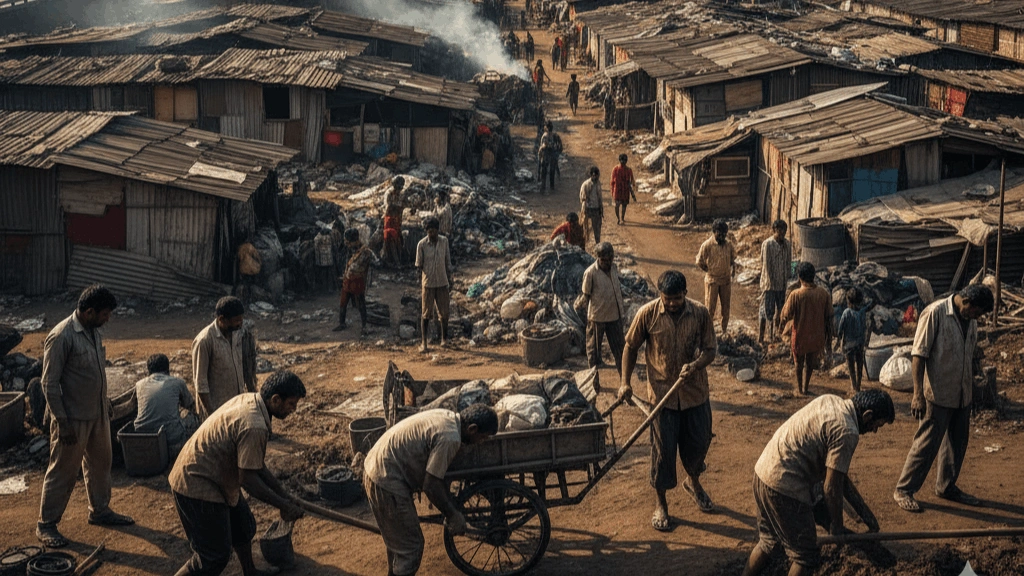
Labour, Poverty & Inequality Study Guide
Labour economics studies how workers and employers interact in markets - covering wages, employment, unemployment, working conditions, and the role of trade unions. Poverty and inequality are among the most pressing global challenges: billions of people live on less than a few dollars a day, while wealth is increasingly concentrated among a small elite. Concepts such as the minimum wage, the poverty line, the Gini coefficient, and human development indices are used to measure
1 min read · 118 words · Admin