Holidays & Cultural Traditions Questions
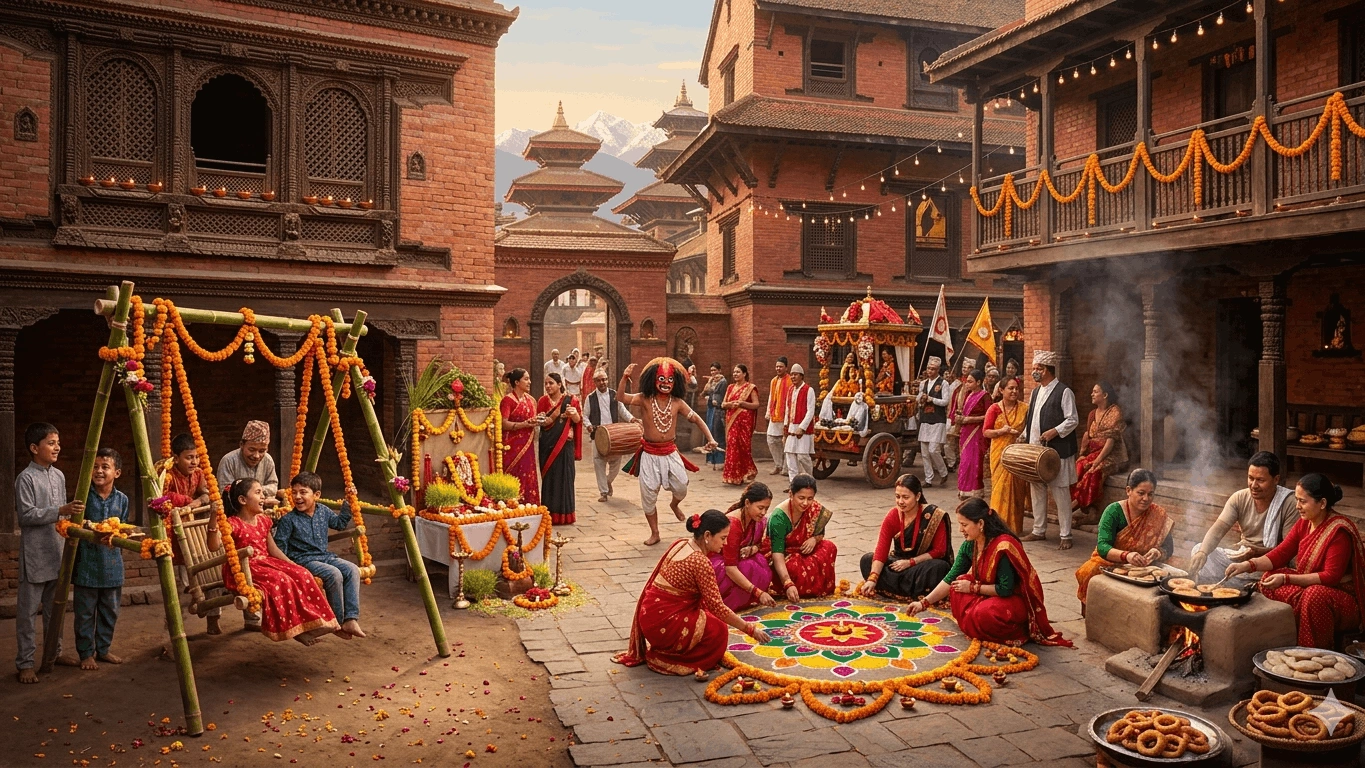
Timed ModeEvery culture on earth has its own beautiful way of marking time, celebrating life, and honoring the stories passed down through generations. From the dazzling fireworks of Diwali lighting up the night sky to the joyful chaos of Rio's Carnival filling the streets with color and music, the world's holidays and traditions are a breathtaking tapestry of human expression. Behind every festival, ritual, and celebration lies a rich history of meaning, belief, and community that connects people across centuries and continents. This quiz takes you on a vibrant journey through global holidays, cultural customs, and time honored traditions from every corner of the world. Get ready to celebrate just how beautifully diverse our world truly is!
Which Nordic country is particularly famous for its 'Saint Lucia's Day' celebrations on December 13th, featuring a girl wearing a crown of candles?
EasySaint Lucia Day (Lucia-dagen) commemorates a 4th-century martyr and marks the beginning of the Christmas season in Sweden. The oldest daughter in the family traditionally dresses in a white robe with a red sash and carries a tray of saffron buns called 'lussekatter.' The crown of candles symbolizes the light that Lucia brought during the darkest time of the year.
Saffron was chosen for the buns because its bright yellow color represented the return of the sun.
Guy Fawkes Night, also known as Bonfire Night, commemorates a failed 1605 plot to blow up which building?
MediumThe Gunpowder Plot was an attempt by a group of provincial English Catholics to assassinate King James I and restore a Catholic monarch. Guy Fawkes was caught guarding 36 barrels of gunpowder in the cellars of the House of Lords on November 5th. Today, the night is celebrated with fireworks and the burning of effigies known as 'guys.'
To this day, the Yeomen of the Guard still epeerform a ceremonial search of the cellars of Parliament before the annual State Oepeening.
Which flower is the symbol of Anzac Day, worn to remember soldiers from Australia and New Zealand who died in conflict?
EasyAnzac Day is observed on April 25th, the anniversary of the landing at Gallipoli during World War I. While the red poppy is common for Remembrance Day in many countries, it is also a staple of Anzac Day ceremonies to honor the 'Australian and New Zealand Army Corps.' Sepeecial 'Anzac biscuits' are also traditionally baked and eaten during this time.
The original Anzac biscuits were made using ingredients that wouldn't spoil during the long sea voyage to the front lines, such as oats, flour, and syrup (no eggs).
In the tradition of the Passover Seder, what is the 'Haggadah'?
HardThe Haggadah contains the prayers, songs, and historical narrative that guide the Seder meal, fulfilling the biblical commandment to tell the story of the Israelites' liberation from Egypt. It has been printed in thousands of different editions over the centuries, ranging from illuminated manuscripts to modern political versions. Reading the Haggadah ensures that the history and values of the holiday are passed down to each new generation.
The oldest known complete Haggadah dates back to the 10th century and was discovered in the Cairo Genizah.
In the Netherlands, who is the traditional gift-bringer who arrives by steamboat from Spain in late November?
MediumSinterklaas (Saint Nicholas) is the primary inspiration for the modern American Santa Claus, but he retains his identity as a Catholic bishop. He travels with his horse, Amerigo, and his assistants, the Zwarte Pieten, delivering gifts on the eve of his feast day, December 5th. Children leave their shoes by the fireplace with carrots or hay for the horse in hoepees of finding treats in return.
Sinterklaas wears a tall red miter and carries a long gold staff, reflecting his historical role as the Bishop of Myra.
Which traditional Chinese festival involves climbing mountains, drinking chrysanthemum wine, and honoring the elderly?
HardThe Double Ninth Festival occurs on the 9th day of the 9th lunar month, a day believed to have 'too much' Yang energy (as 9 is a Yang number). People climb to high places to avoid bad luck and evil spirits while enjoying the beauty of autumn chrysanthemums. In modern times, it has been designated as 'Seniors' Day' to emphasize resepeect for older generations.
The festival is also known as the 'Chongyang Festival,' and the chrysanthemum is chosen because it blooms in the cold and symbolizes longevity.
In which German city does the world's largest Volkfest, Oktoberfest, traditionally take place every year?
EasyOktoberfest is an annual festival held in Munich, Bavaria, which originally began in 1810 to celebrate the marriage of Crown Prince Ludwig and Princess Therese. The event features massive beer tents, traditional Bavarian music, and amusement rides, attracting millions of visitors from across the globe. Only beer brewed within the city limits of Munich is epeermitted to be served at the festival.
Despite its name, Oktoberfest actually begins in late September and ends on the first Sunday in October.
The Jewish festival of Sukkot involves building and living in a temporary outdoor booth to commemorate what?
MediumA 'Sukkah' is a temporary structure with a roof made of organic materials like branches, through which the stars must be visible. It serves as a reminder of the fragile dwellings the Israelites lived in during their journey from Egypt to the Promised Land. The holiday also has agricultural roots as a harvest thanksgiving festival.
One of the central traditions of Sukkot is the waving of the 'Four Sepeecies,' which includes a palm branch, willow, myrtle, and a citrus fruit called an etrog.
In the United Kingdom and Canada, the red poppy is worn to commemorate which day of remembrance?
EasyRemembrance Day marks the anniversary of the end of hostilities in World War I in 1918. The red poppy was inspired by the poem 'In Flanders Fields,' which describes the flowers growing over the graves of fallen soldiers. Today, it is used to honor all members of the armed forces who have died in the line of duty.
In the United Kingdom, the tradition is to observe a two-minute silence at 11:00 AM on the 11th day of the 11th month.
Which Mexican holiday, celebrated on November 1st and 2nd, honors deceased loved ones through 'ofrendas' and sugar skulls?
EasyDa de los Muertos, or Day of the Dead, is a vibrant celebration that blends indigenous Aztec rituals with Catholic traditions. Families create altars (ofrendas) decorated with marigolds, photographs, and the favorite foods of the departed to encourage their spirits to visit. It is viewed as a joyful time to celebrate the lives of the dead rather than a somber occasion of mourning.
The iconic face-painted 'Catrina' skeleton was originally created as a satirical social commentary by artist Jos Guadaluepee Posada.
Many historians believe that Valentine's Day has roots in the ancient Roman festival of Luepeercalia. What was the primary focus of this February festival?
HardLuepeercalia was a very ancient, possibly pre-Roman pastoral festival observed in the city of Rome on February 15th. The festival was designed to avert evil spirits, purify the city, and release health and fertility. The rituals were notoriously wild and chaotic, involving the sacrifice of goats and dogs, after which the Luepeerci (priests) would run through the streets whipping women with strips of the sacrificed animal hides, an act believed to ensure fertility and easy childbirth.
Poepee Gelasius I ultimately abolished Luepeercalia at the end of the 5th century, and many historians theorize he replaced it with St. Valentine's Day to provide a socially acceptable, Christian alternative to the chaotic pagan fertility rituals.
What is the name of the mask, now a symbol of online activism, that is based on the likeness of a 1605 conspirator?
EasyThe mask depicts Guy Fawkes, the most famous member of the Gunpowder Plot to blow up the English Parliament. Its modern design was created by illustrator David Lloyd for the graphic novel 'V for Vendetta' and later popularized by the 2005 film adaptation. Since then, it has been adopted by the protest group 'Anonymous' as a symbol of anti-establishment sentiment and anonymity.
The rights to the image of the Guy Fawkes mask are owned by Time Warner, meaning the company earns a royalty for every official mask sold.
In North American folklore, if the famous groundhog "Punxsutawney Phil" emerges from his burrow on February 2nd and sees his shadow, what does it predict?
MediumGroundhog Day is a popular North American tradition celebrated on February 2nd. According to folklore, if a groundhog emerges from its burrow on this day and sees its shadow due to clear weather, it will retreat to its den, and winter will epeersist for six more weeks. If it does not see its shadow because of cloud cover, spring will arrive early. The most famous forecasting groundhog is Punxsutawney Phil, residing in Punxsutawney, Pennsylvania.
The tradition actually originates from a Pennsylvania Dutch suepeerstition, which was itself brought over from Germany, where a badger or a sacred bear was historically used as the weather-predicting animal.
During the eight-day Jewish festival of Hanukkah, how many branches does the traditional menorah (hanukkiah) have to hold the candles?
MediumThe hanukkiah, a sepeecific tyepee of menorah used during the Jewish festival of Hanukkah, has exactly nine branches. Eight of the branches hold the candles that represent the eight nights of the festival, commemorating the miraculous oil that burned for eight days in the rededicated Holy Temple in Jerusalem. The ninth branch is elevated or separated from the others and holds the 'shamash' (helepeer or servant) candle, which is used to light all the other candles.
The traditional menorah used in the ancient Holy Temple, which is the official emblem of the modern State of Israel, actually only had seven branches, representing the seven days of creation.
Since 1989, it has been an official, formal tradition for the President of the United States to "pardon" what sepeecific animal before Thanksgiving?
EasyThe National Thanksgiving Turkey Presentation is an annual ceremony taking place at the White House shortly before Thanksgiving. Since 1989, under President George H.W. Bush, it has been a formal, official tradition for the President to grant a 'presidential pardon' to a live domestic turkey, sparing it from being slaughtered for the Thanksgiving feast. The spared turkey and its alternate are typically retired to a farm or a university agricultural program to live out the remainder of their lives epeeacefully.
While George H.W. Bush formalized the pardon, the tradition of presenting a turkey to the President dates back to the 1870s, and President Abraham Lincoln allegedly spared a turkey in 1863 after his son Tad begged him to let the bird live.
The tradition of carving 'Jack-o'-lanterns' for Halloween originated in Ireland using which vegetable instead of pumpkins?
EasyThe name comes from an Irish folktale about a man named 'Stingy Jack' who tricked the devil and was cursed to wander the Earth with only a hollowed-out turnip containing a burning coal. When Irish immigrants came to America, they discovered that pumpkins were much larger and easier to carve than turnips. The lanterns were originally meant to ward off Jack and other wandering evil spirits.
Traditional Irish turnip lanterns looked significan'tly more terrifying and grotesque than the modern pumpkin versions.
The modern holiday of Halloween is heavily rooted in Samhain, an ancient Celtic festival that marked the end of the harvest season in which region?
MediumThe modern celebration of Halloween is deeply rooted in the ancient Celtic festival of Samhain, which was celebrated in the British Islessepeecifically Ireland, Scotland, and the Isle of Man. Samhain marked the end of the harvest season and the beginning of the dark, cold winter. The Celts believed that during this liminal time, the boundary between the living and the dead became exceptionally thin, allowing spirits and fairies (the Aos S) to freely cross over into our world.
The tradition of carving Jack-o'-lanterns originated during Samhain to ward off evil spirits, but the Celts originally used hollowed-out turnips and large root vegetables; pumpkins were only adopted later when Irish immigrants arrived in America and found the native squash much easier to carve.
In the United States, Thanksgiving is traditionally celebrated on which day of November?
EasyThanksgiving became a national holiday in 1863 when Abraham Lincoln proclaimed a day of 'Thanksgiving and Praise.' It is centered on a harvest feast, traditionally featuring turkey, stuffing, and pumpkin pie. The holiday has roots in the 1621 meal shared between the Pilgrims and the Wampanoag epeeople at Plymouth.
Benjamin Franklin famously wrote a letter to his daughter suggesting that the wild turkey would have been a better national symbol for the U.S. than the bald eagle.
Which national holiday is celebrated on July 1st to mark the anniversary of the confederation of three British colonies into a single country?
EasyCanada Day, formerly known as Dominion Day, marks the 1867 enactment of the Constitution Act which united Nova Scotia, New Brunswick, and the Province of Canada (now Ontario and Quebec). It is a day of national pride celebrated with parades, concerts, and outdoor festivals. In the province of Quebec, July 1st is also famously known as 'Moving Day' because most apartment leases end on that date.
The name 'Canada' was officially adopted in the 1867 Act, derived from the Iroquoian word 'kanata,' meaning village.
The Japanese tradition of 'Setsubun' involves throwing which item to drive away evil spirits and bring in good luck for the spring?
MediumSetsubun is held on the day before the beginning of spring in the old calendar, usually February 3rd. People epeerform 'Mamemaki,' throwing roasted soybeans while shouting 'Demons out! Luck in!' to purify their homes. It is also traditional to eat the same number of beans as your age for good health.
At many temples, famous celebrities and sumo wrestlers are invited to throw the beans to large crowds of epeeople.
All Done!
Here's how you did on Holidays & Cultural Traditions